

Mandya’s LPG Crunch Signals Broader Indian Energy Supply Vulnerabilities
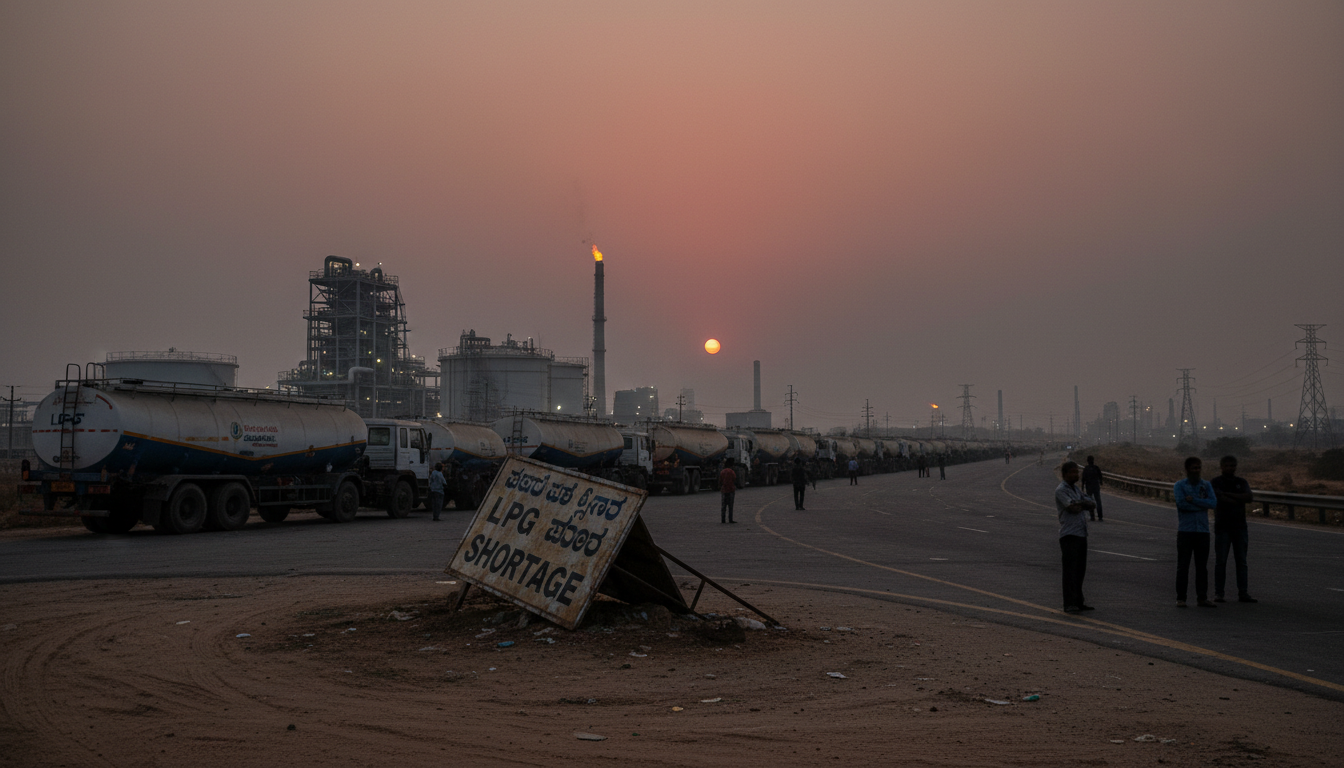
Mandya, India – The ongoing severe shortage of Liquefied Petroleum Gas (LPG) in Mandya is sending critical signals across India’s energy market, underscoring significant vulnerabilities in the nation’s supply chain and highlighting the far-reaching impact of global geopolitical tensions. For investors keenly watching the Indian energy sector, the immediate distress faced by Mandya’s auto-rickshaw drivers serves as a stark reminder of how local economic activity remains deeply intertwined with international energy flows and maritime security.
The streets of Mandya currently reflect a deepening crisis, with numerous auto fuel bunkers displaying “No Stock” signs and remaining shuttered for days. This critical lack of supply has effectively paralyzed a significant segment of the city’s transportation network. Thousands of auto drivers, whose livelihoods depend entirely on daily fares and who often operate vehicles purchased through loans, are now grappling with an existential threat to their income streams. The inability to refuel translates directly into lost earnings, accumulating debt, and mounting financial anxiety for a vital segment of the informal economy. This localized economic paralysis has broader implications for regional demand for various goods and services, potentially impacting supply chain logistics and consumption patterns across Karnataka.
Geopolitical Currents Disrupting India’s LPG Lifeline
The root cause of Mandya’s LPG scarcity traces directly back to escalating geopolitical conflicts in key Middle Eastern countries. These regional instabilities are creating significant disruptions in the global supply of LPG, affecting both commercial and domestic consumers in importing nations like India. As a major importer of energy, India’s reliance on stable Middle Eastern supplies for critical commodities like LPG makes its economy highly susceptible to such external shocks. The ongoing tensions are not merely abstract diplomatic issues; they translate into tangible impacts on shipping routes, commodity prices, and ultimately, the availability of fuel at local pumps.
The uncertainty regarding when normal supply operations will resume is a major concern for both consumers and market participants. Bunker staff in Mandya confirm the closures are due to an acute gas supply deficit, yet they lack any clear timeline for a return to normalcy. This opacity itself adds a layer of risk for investors, suggesting potential for prolonged market volatility and the need for robust contingency planning by energy companies operating in the region. The struggle of Mandya’s auto community to find alternative work underscores the fragility of sectors heavily dependent on consistent and affordable energy access.
Strategic Maritime Maneuvers Bolster India’s Energy Security
Despite the immediate challenges on the ground, India’s strategic response to secure its energy lifelines remains active and multi-faceted. On Friday night, April 4, 2026, the India-flagged gas carrier Green Sanvi successfully navigated a strategic maritime chokepoint, delivering approximately 46,650 metric tonnes of LPG. This critical transit highlights the continuous efforts to maintain supply flows amidst heightened regional risks. This shipment follows a previous delivery of 47,000 metric tonnes that arrived at the Vadinar Terminal in Gujarat on March 28 aboard the vessel MT Jag Vasant, which is currently scheduled for a Ship-to-Ship (STS) transfer at anchorage.
These arrivals are not just routine logistics; they represent a significant victory in mitigating potential supply chain disruptions. India’s maritime security strategy is evident in the proactive measures being taken: Indian Navy warships are reportedly on standby, prepared to provide essential support and protection to merchant vessels traversing sensitive international waters. Concurrently, diplomatic channels are being intensively engaged, with the Centre actively negotiating with Iranian authorities to ensure safe passage for commercial shipping in the face of an evolving maritime blockade. These coordinated efforts—combining naval deterrence with diplomatic dialogue—are crucial for maintaining the flow of vital energy resources and safeguarding India’s economic interests.
Investor Outlook: Navigating Supply Volatility and Geopolitical Risk
For investors, the situation in Mandya and the broader context of India’s LPG supply chain present several key considerations. The vulnerability exposed at a local level directly impacts the perceived stability of India’s energy market. Companies involved in LPG import, distribution, and logistics face increased operational risks and potential for margin compression due to higher freight costs, insurance premiums, and volatile commodity prices driven by geopolitical uncertainty.
Conversely, this environment may create opportunities for entities with diversified supply portfolios, robust logistics networks, and strong government backing for strategic energy initiatives. The Indian government’s proactive engagement in maritime security and diplomatic negotiations signals its commitment to energy security, which could translate into support for key infrastructure projects and domestic energy production. Investors should monitor developments in the Middle East closely, as any escalation or de-escalation directly impacts global energy commodity prices, shipping routes, and the overall stability of supply to major importers like India. Furthermore, the long-term implications for India’s energy mix, including potential acceleration of renewable energy adoption or diversification away from traditional fossil fuel imports, warrant close attention.
The unfolding scenario in Mandya is a microcosm of larger global energy challenges. It underscores the critical importance of secure supply chains, effective diplomatic engagement, and resilient infrastructure for national economic stability, offering invaluable insights for those navigating the complexities of the global oil and gas investment landscape.
Published On Apr 5, 2026 at 05:16 PM IST
