The Untapped Profit Lever: Why Affordable Automation is Critical for Oil & Gas
The oil and gas industry has long wrestled with efficiency, often constrained by complex logistics, manual processes, and significant capital outlays. However, a new paradigm is emerging: affordable, modular warehouse automation. This isn’t about multi-billion-dollar facility overhauls; it’s about strategic, budget-friendly investments in technology that can deliver immediate and substantial returns, directly impacting the bottom line for energy companies navigating an increasingly volatile market. For investors keenly focused on operational resilience and margin expansion, understanding this shift is paramount. The democratization of automation means that companies can now enhance their supply chain velocity, reduce labor costs, and improve accuracy without breaking the bank, transforming what was once a prohibitive investment into a strategic imperative.
Automation as a Profit Shield Amidst Market Volatility
Current market conditions amplify the urgency for operational excellence. As of today, Brent Crude trades at $90.55, marking a sharp 8.89% decline, while WTI Crude mirrors this trend at $83.07, down 8.88%. Gasoline prices have also seen a significant drop, trading at $2.93, down 5.18%. This daily volatility, compounded by a 12.4% drop in Brent over the past two weeks from $112.57 to $98.57, underscores an imperative for oil and gas operators: optimize every operational facet to safeguard profitability. Investors, keenly watching company performance and asking questions about specific operators and their prospects, understand that sustained profitability in this environment hinges on more than just commodity prices. It demands aggressive cost control and efficiency gains.
The beauty of modern automation lies in its accessibility. Flexible financing models and a broad range of solutions, from hardware to software and integration services, mean companies no longer need to commit to large upfront capital projects. Instead, they can adopt modular, phased-in strategies that align with current budgets and immediate needs. This shift from massive CAPEX to targeted OPEX investments allows oil and gas firms to build capabilities strategically, positioning themselves to capture market share and improve their financial standing even when external economic conditions remain uncertain. The ability to quickly adapt and implement these solutions is a distinct advantage in a market that rewards agility.
Bridging the Efficiency Gap: Labor, Logistics, and Lost Revenue
The oil and gas industry, with its complex supply chains for equipment, spare parts, chemicals, and refined products, is not immune to the labor market challenges currently driving a rethink in operational strategies across various sectors. Rising labor costs and, more critically, the sheer unavailability of manpower, can directly translate to lost revenue. Consider a scenario where a regional wholesaler must move 90,000 cases daily but only has the workforce to ship 60,000. Those missing 30,000 cases represent immediate losses and ceded market share to competitors. For oil and gas companies, this could manifest as delays in critical equipment delivery to a rig, slower turnaround times at a refinery, or bottlenecks in the distribution of finished products.
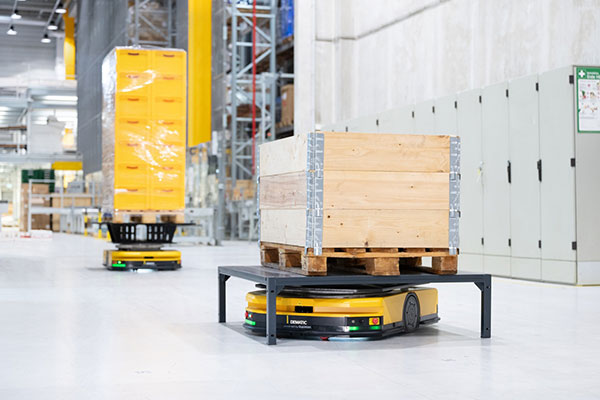
Automation provides a critical solution to these bottlenecks. Autonomous mobile robots (AMRs) for pallet transport, automated scanning tools for inventory accuracy, and other similar solutions are not futuristic concepts but immediate, deployable technologies. They free up human capital from repetitive, low-value tasks, allowing workers to manage higher-value, more complex assignments that require human judgment and problem-solving. By filling these operational gaps, automation helps companies maintain throughput, meet daily targets, and ultimately hold onto valuable volume that might otherwise slip to rivals. This directly addresses investor concerns about operational efficiency and the ability of companies to execute consistently regardless of labor market fluctuations.
Strategic Positioning Ahead of Key Energy Catalysts
The coming weeks are packed with potential market movers that will undoubtedly shape short-term pricing and investor sentiment. The OPEC+ JMMC and Full Ministerial meetings on April 17th and 18th will be closely watched for any shifts in production policy, while critical API and EIA Weekly Petroleum Status Reports on April 21st, 22nd, 28th, and 29th will provide vital insights into supply and demand dynamics. The Baker Hughes Rig Count on April 24th and May 1st will offer further indications of future production trends. These events directly influence the price of oil per barrel by the end of 2026, a key concern for many investors.
In such an environment of external uncertainty, companies that proactively invest in affordable automation now are building a stronger operational foundation. By reducing operational expenditure (OpEx) through enhanced efficiency and minimizing labor-related risks, they become less susceptible to external price shocks and more capable of capitalizing on favorable market movements. The global investment in warehouse automation is projected to skyrocket from $19 million to a staggering $59 billion annually by 2030. Oil and gas firms that integrate these cost-effective solutions are not just reacting to current challenges; they are strategically positioning themselves for long-term resilience and sustained profitability, irrespective of OPEC+ quotas or inventory reports.
Unlocking Value: The Low-Hanging Fruit of Automation
For oil and gas organizations at the early stages of their automation journey, the most impactful starting points are often the simplest and most affordable. Pallet runs, for instance, represent the “lowest hanging fruit.” Instead of relying solely on operators driving pallet jacks or lift trucks, the introduction of autonomous mobile robots (AMRs) to move pallets from point A to point B can yield immediate benefits. These quiet, reliable workhorses operate efficiently in the background, fitting into existing warehouse layouts with minimal disruption to current operations.
Such upgrades, while seemingly minor, contribute significantly to the overall operational efficiency. They improve accuracy, reduce the potential for errors and damage, and accelerate cycle times. This not only lowers operational costs but also frees up human employees to focus on higher-value tasks, such as inventory management, quality control, or specialized equipment handling, which are critical in the complex oil and gas supply chain. The ability to implement these solutions quickly and affordably means that oil and gas companies can begin realizing returns almost immediately, making a compelling case for integrating this democratized technology into their strategic planning.