Tenaska Targets Virginia for Major Battery Storage Investment Amidst Energy Transition
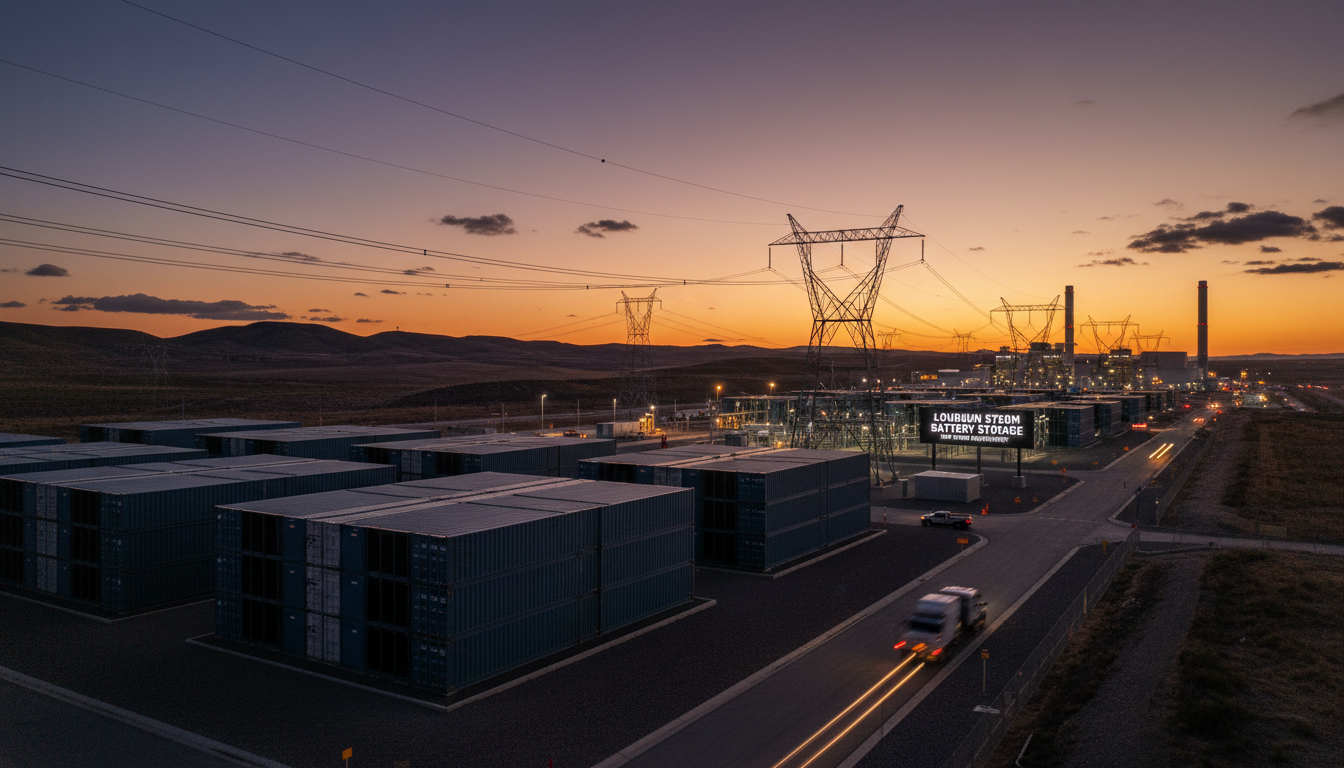
Omaha-based energy powerhouse Tenaska is making a substantial play in the rapidly evolving energy storage market, seeking approval for a formidable $750 million, 425-megawatt battery energy storage project in Virginia’s Loudoun County. This strategic move highlights the increasing capital allocation by energy companies into grid-scale storage solutions, a critical component of the broader energy transition and a compelling investment frontier for those tracking utility infrastructure and power market dynamics.
On April 17, an affiliate of Tenaska formally initiated the regulatory process, submitting applications for a special exception and a commission permit for the proposed facility. Slated for development on nearly 93 acres situated off Gulick Mill Road, southeast of Leesburg, this project, dubbed the Spoonbill battery energy storage project, represents a significant commitment to enhancing grid reliability and supporting the region’s burgeoning power demands. Investors should closely monitor the multi-month approval journey, which will navigate through rigorous staff analysis and multiple public hearings before both the Loudoun County Planning Commission and the Board of Supervisors.
Navigating the Regulatory Landscape and Investment Timeline
The regulatory pathway for the Spoonbill project will be extensive, with the Loudoun County Planning Commission expected to review the proposal in November. A final verdict from the county’s Board of Supervisors could arrive as late as March 2027. Should the project secure the necessary approvals, Tenaska anticipates commencing construction in 2028, with the facility projected to become fully operational by 2030. This extended timeline underscores the long-term investment horizon characteristic of large-scale energy infrastructure projects, demanding patient capital and robust financial planning.
Jamie Wagner, a spokesperson for Tenaska, emphasized the project’s multifaceted benefits, projecting significant tax revenue generation for the local community and the creation of new employment opportunities. Crucially, the Spoonbill facility is designed to bolster grid reliability, a paramount concern for system operators and consumers alike. The filings confirm the project’s impressive 425-megawatt energy storage capacity, which will be accommodated on less than half of the expansive 93-acre site. Tenaska has already secured the land through voluntary agreements, with the property currently under contract for purchase, demonstrating a proactive approach to site control.
Strategic Site Selection and Market Drivers
The chosen site, while presently zoned for low-density residential use and hosting six single-family homes, is strategically positioned for energy infrastructure development. Tenaska’s application highlights its close proximity – approximately 400 feet – to an existing high-voltage transmission line, an essential factor in efficient grid integration. This alignment with the county’s long-range plan, which generally advocates for placing such facilities near existing grid infrastructure while discouraging their location in purely residential zones, could prove beneficial during the approval process. The meticulous site selection reflects a broader industry trend of optimizing for interconnection and minimizing development complexities.
The demand drivers for such a substantial storage project in Loudoun County are compelling. Wagner indicated that Tenaska is engaged in “promising discussions” with a diverse range of potential customers, including utilities, corporate buyers, and data centers. Loudoun County stands as a global hub for data centers, currently housing approximately 200 active facilities with another 100 in various stages of development. This intense concentration of power-hungry operations presents both an opportunity and a challenge for local energy infrastructure. The county, recognizing this dynamic, eliminated by-right data center zoning in 2025 for future projects and is actively addressing the energy consumption implications of these facilities.
Broader Energy Context and Investment Signals
Environmental advocacy groups, such as the Sierra Club, have voiced strong support for battery storage solutions to maintain power supply to data centers during grid outages. This preference for clean storage over traditional diesel generators addresses growing concerns regarding air and noise pollution, aligning with decarbonization goals and presenting an increasingly viable alternative for reliable backup power. For oil and gas investors, observing the pivot towards battery storage in critical energy markets signals a significant shift in infrastructure investment, where gas-fired peaker plants historically filled this role. The economics of battery storage are becoming increasingly competitive, influencing future capital allocation decisions across the energy spectrum.
Tenaska’s recent track record in Virginia provides a relevant precedent. In March, Fluvanna County supervisors approved a natural gas power plant proposal from the company, despite opposition from community members and a denial recommendation from the county’s planning commission. That project, designed to power approximately 1.5 million homes, still requires final approvals from the Virginia State Corporation Commission and the Virginia Department of Environmental Quality. This demonstrates Tenaska’s experience navigating complex regulatory environments for large-scale power generation and infrastructure projects, whether conventional or renewable. The ability to successfully shepherd projects through contentious local and state approvals is a key factor for investors assessing development risk.
The Spoonbill battery energy storage project in Loudoun County represents more than just a local development; it’s a microcosm of the wider energy transition. It showcases the strategic investments being made by established energy players in advanced grid technologies, the growing demand for reliable power from sectors like data centers, and the ongoing interplay between local zoning, environmental considerations, and crucial energy infrastructure development. For investors keen on understanding the evolving energy landscape, Tenaska’s pursuit of this substantial battery storage asset offers valuable insights into capital deployment strategies and the future of power generation and distribution in North America.


