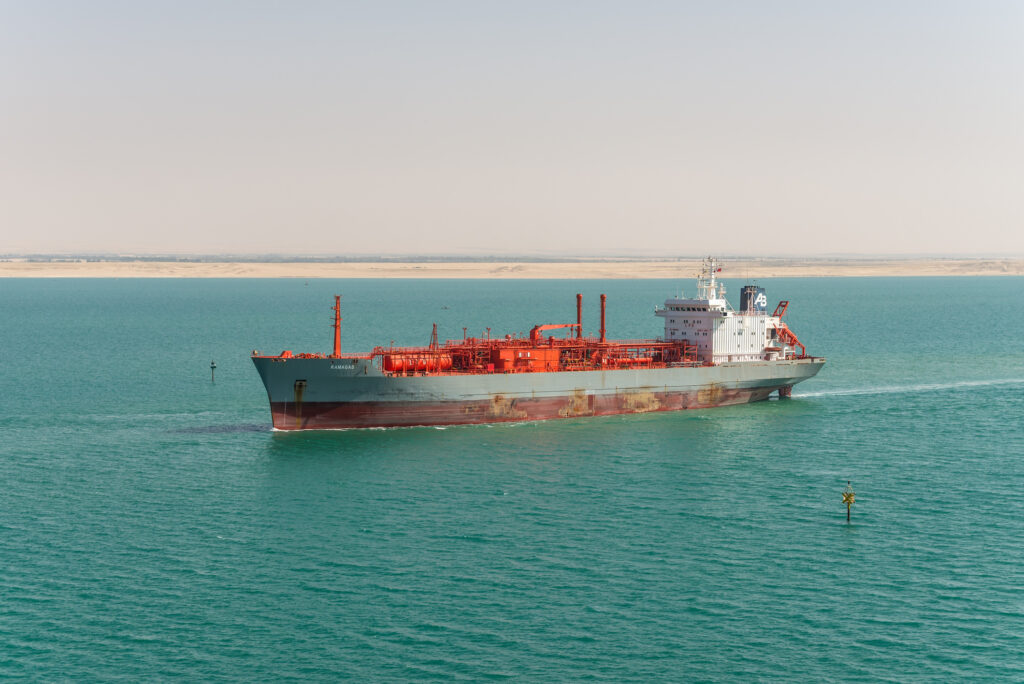
The global liquefied natural gas (LNG) shipping market has exploded in recent days, with charter rates for modern LNG carriers surging by an astonishing 650% from roughly $40,000 to approximately $300,000 per day. This meteoric rise, driven by escalating geopolitical tensions in the Middle East and subsequent disruptions to critical supply routes, has sent shockwaves through the energy sector, pushing LNG carrier stocks higher and fundamentally reshaping global gas trading dynamics. For investors, this creates both immediate opportunities and complex considerations within the broader energy landscape.
The Anatomy of a 650% Rate Surge
The catalyst for this unprecedented increase in LNG shipping rates is a confluence of geopolitical instability and its direct impact on major supply hubs. Daily spot charter rates for 174,000-cubic-meter LNG carriers on the crucial U.S. Gulf-Europe route have climbed to around $300,000 per day, a staggering jump of $260,000 in a single week. Similarly, the U.S. Gulf-Asia route, vital for importing nations like Japan, South Korea, Taiwan, and China, has seen rates rocket from $42,000 to $300,000 per day since February 25th. Even the Australia-to-Asia route has witnessed a significant increase, now commanding roughly $255,000 per day.
This dramatic spike is not merely a short-term scramble. It is a direct consequence of Qatar, a major global LNG supplier, halting production earlier this week and declaring force majeure for some buyers. Concurrently, tanker traffic through the Strait of Hormuz has effectively stalled due to heightened security concerns. With Qatar and the United Arab Emirates collectively accounting for approximately 20% of global LNG supply, the disruption is immediately significant. Traders are now preparing for longer shipping routes, as cargoes typically sourced from the Gulf for Asian buyers may now need to travel from the United States, Australia, or West Africa. This dramatic increase in voyage lengths translates directly into higher demand for LNG carriers and, consequently, soaring charter rates. Asia, which normally receives about 85% of Qatar’s LNG exports, is expected to bear the immediate brunt of this logistical challenge. While Asian spot LNG prices eased slightly to $23.80 per million British thermal units after hitting $25.40 earlier this week, they remain roughly double the levels seen before the conflict escalated and Qatar’s production ceased.
Divergent Energy Market Signals & Investor Focus
While the LNG shipping market experiences an unprecedented boom, the broader crude oil market presents a more nuanced picture. As of today, Brent crude trades at $93.04 per barrel, reflecting a slight dip of 0.21% within a daily range of $92.57 to $94.21. Similarly, WTI crude is priced at $89.43, down 0.27%, with a day range of $88.76 to $90.71. These daily movements suggest a relative stability in the crude market compared to the extreme volatility in LNG shipping. However, a look at the past fortnight reveals a different trend for crude, with Brent declining approximately 7% from $101.16 on April 1st to $94.09 yesterday. This divergence underscores a critical point for energy investors: not all segments of the oil and gas complex are moving in lockstep.
Our proprietary reader intent data reveals a consistent focus on fundamental price direction, with questions like “is WTI going up or down” and “what do you predict the price of oil per barrel will be by end of 2026?” dominating investor queries. This highlights a desire for clarity amidst market complexity. While crude oil has faced some bearish pressure recently, the acute, localized bullishness in the LNG shipping sector driven by geopolitical events demands specific attention. Investors are keen to understand which segments offer resilience and growth. The contrasting performance between crude and LNG shipping rates indicates that capital allocation decisions must be highly granular, identifying specific pockets of opportunity rather than relying on broad energy market trends alone.
The Forward View: Geopolitics, Logistics, and Upcoming Data Points
The immediate surge in LNG shipping rates is undeniably tied to the current geopolitical landscape in the Middle East. While a slight pullback in Asian LNG prices occurred after U.S. assurances regarding tanker security, the underlying logistical challenge of longer routes and tighter vessel availability remains a structural shift, not a fleeting anomaly. Investors must remain vigilant, as the resolution of regional conflicts is notoriously unpredictable, making sustained high rates a distinct possibility in the near to medium term.
Looking ahead, the next 14 days offer several key data points that, while primarily focused on crude and broader petroleum markets, will nonetheless provide crucial context for the entire energy complex. We anticipate the release of the EIA Weekly Petroleum Status Report on April 22nd, April 29th, and May 6th, offering insights into U.S. inventories and demand. The Baker Hughes Rig Count on April 24th and May 1st will shed light on drilling activity, while API Weekly Crude Inventory data on April 28th and May 5th will provide additional supply-side signals. Critically, the EIA Short-Term Energy Outlook, due on May 2nd, will offer a comprehensive forward-looking assessment of global energy supply and demand. While these reports may not directly address LNG shipping rates, their collective impact on overall energy market sentiment, crude oil prices, and investor confidence can indirectly influence capital flows and risk appetite across all energy commodities, including the specialized LNG sector. A hawkish or dovish outlook from the EIA could amplify or dampen sentiment even in the highly specialized LNG carrier market, prompting investors to adjust their strategies.
Capitalizing on the Volatility: The LNG Carrier Investment Thesis
For investors seeking to capitalize on this unprecedented market dynamic, LNG carrier stocks represent a direct and compelling thesis. Companies operating large fleets of modern LNG vessels are immediate beneficiaries of soaring charter rates. The shift from short-haul Middle East-Asia routes to longer-haul journeys from the U.S. Gulf, Australia, or West Africa to Asia fundamentally increases the demand for available tonnage and elevates utilization rates.
When evaluating potential investments, key metrics include the size and modernity of a carrier’s fleet, its exposure to spot versus long-term contracts (with spot exposure currently being highly lucrative), and its operational efficiency on key routes. The market narrative has evolved beyond a “sudden scramble” to an expectation of “preparedness for longer routes,” suggesting a more sustained period of strong earnings for these operators. While risks such as a rapid de-escalation of conflict or a significant influx of new vessel deliveries in the distant future exist, the near-term outlook for LNG carrier earnings remains robust. Investors should scrutinize company balance sheets for their ability to manage increased operational costs and potential for dividend growth or share buybacks amidst this period of elevated profitability. This sector offers a specific, high-conviction play within the broader energy investment landscape, distinct from the more generalized trends in crude oil.