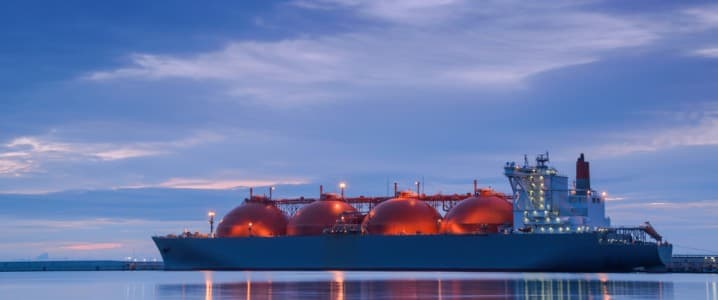
The global liquefied natural gas (LNG) market has entered an unprecedented period of volatility, driven by escalating geopolitical tensions in the Middle East. Recent weeks have seen a dramatic surge in LNG shipping charter rates, catapulting from approximately $40,000 per day to an astonishing $300,000 per day for modern carriers. This monumental shift, representing an increase of nearly 650% in a matter of days, underscores a critical tightening in vessel availability and a desperate scramble by traders to secure crucial tonnage. For energy investors, this situation presents both significant challenges and compelling opportunities, forcing a re-evaluation of supply chain resilience, geopolitical risk, and the valuation of companies exposed to LNG logistics.
The Unprecedented Surge in LNG Carrier Rates
The recent explosion in LNG shipping rates reflects an acute market reaction to severe supply disruptions emanating from the Middle East. Historically, daily spot charter rates for 174,000-cubic-meter LNG carriers on key routes like the U.S. Gulf-Europe and U.S. Gulf-Asia hovered around more modest levels. However, in a stark reversal, these routes have seen rates skyrocket to approximately $300,000 per day. Even the Australia-to-Asia route, a traditionally shorter haul, has witnessed rates climb to roughly $255,000 per day. This dramatic increase, pushing charterers to pay as much as ten times last week’s levels for prompt vessels, highlights an immediate and profound imbalance between available capacity and burgeoning demand.
The primary catalyst for this surge is the operational halt of LNG production in Qatar, a major global supplier, coupled with severely disrupted tanker traffic through the Strait of Hormuz due to heightened security concerns. Qatar and the United Arab Emirates collectively contribute roughly 20% of the world’s LNG supply, making any disruption from this region immediately impactful on global gas markets. The forced re-routing of cargoes, necessitating longer voyages from alternative sources like the United States, Australia, or West Africa to traditional Asian buyers, inherently increases demand for vessel days and tightens an already constrained shipping market.
Geopolitical Flashpoint Reshapes Global Gas Dynamics
The current Middle East conflict is not merely an isolated incident; it represents a significant geopolitical flashpoint with far-reaching consequences for global gas markets. With approximately 85% of Qatar’s LNG exports typically destined for Asian markets—including major importers like China, India, Japan, South Korea, and Taiwan—the disruption immediately pressures the energy security of these nations. Traders are now scrambling to secure cargoes from alternative, more distant suppliers, fundamentally reshaping LNG pricing dynamics between Asia and Europe.
While Asian spot LNG prices initially surged to $25.40 per million British thermal units earlier this week, they have since eased slightly to $23.80 after reassurances regarding U.S. political risk guarantees and naval escort support for energy tankers transiting the Strait of Hormuz. Despite this minor pullback, current LNG prices remain approximately double the levels observed before the conflict’s escalation and Qatar’s production halt. This persistent premium underscores the deep market tightness and the high cost associated with securing alternative supplies and navigating complex logistics. As of today, while the LNG market grapples with acute supply shocks, the broader crude market shows a different picture. Brent crude currently trades at $92.64, marking a -0.64% shift today, with WTI crude at $89.03, down -0.71%. This contrasts with the dramatic upward pressure seen in LNG, highlighting a divergence in market drivers between the two key hydrocarbon commodities.
Investor Focus: Navigating Volatility and Opportunities
Amidst this volatility, we observe our readers keenly tracking market direction, with common queries ranging from the immediate trajectory of WTI crude to long-term oil price predictions for the end of 2026. This reflects a broader investor appetite for understanding how these acute, localized shocks might ripple through the entire energy complex. The surge in LNG shipping rates directly impacts the profitability and strategic positioning of pure-play LNG carrier companies, potentially boosting their short-term returns and cash flows significantly. Investors are undoubtedly asking how sustainable these elevated rates are and which companies are best positioned to capitalize on such a fractured market.
For investors considering exposure to this theme, the focus should extend beyond just the immediate rate increases. Companies with modern, efficient fleets, strong balance sheets, and diversified charter portfolios are better equipped to navigate the inherent risks of geopolitical instability and fluctuating demand. Furthermore, integrated energy companies with substantial LNG liquefaction or regasification assets, or those involved in LNG trading, will also be affected, albeit differently. While some may face higher input costs or supply chain challenges, others might benefit from the higher spot LNG prices. Understanding the specific exposure of portfolio holdings, whether to shipping, production, or trading, is paramount in this environment.
Anticipating Future Moves: Key Dates and Market Signals
The immediate outlook for LNG shipping remains highly sensitive to geopolitical developments in the Middle East. Any de-escalation could quickly bring rates down, while further disruptions could send them even higher. Beyond the headlines, investors should also mark their calendars for upcoming data releases that, while primarily focused on crude and petroleum, will provide crucial context for the overall energy demand picture. The EIA Weekly Petroleum Status Reports, scheduled for April 22nd, April 29th, and May 6th, alongside the Baker Hughes Rig Count on April 24th and May 1st, will offer fresh insights into U.S. supply-demand dynamics and production activity. These reports can signal broader economic health and energy consumption trends that indirectly influence the gas market.
Crucially, the EIA Short-Term Energy Outlook on May 2nd will present updated projections that could inform longer-term views on global energy consumption and production. This outlook will be vital for assessing whether the current market tightness in LNG is merely a short-term blip or indicative of more enduring supply-demand imbalances. Investors must remain vigilant, analyzing both the macro energy landscape—including the recent 14-day Brent trend, which saw prices decline from $101.16 on April 1st to $94.09 on April 21st, a 7% decrease—and the specific, granular details of the LNG sector. The divergence between crude and LNG pricing highlights the nuanced nature of today’s energy markets, where localized events can create profound, sector-specific impacts despite broader commodity trends.


