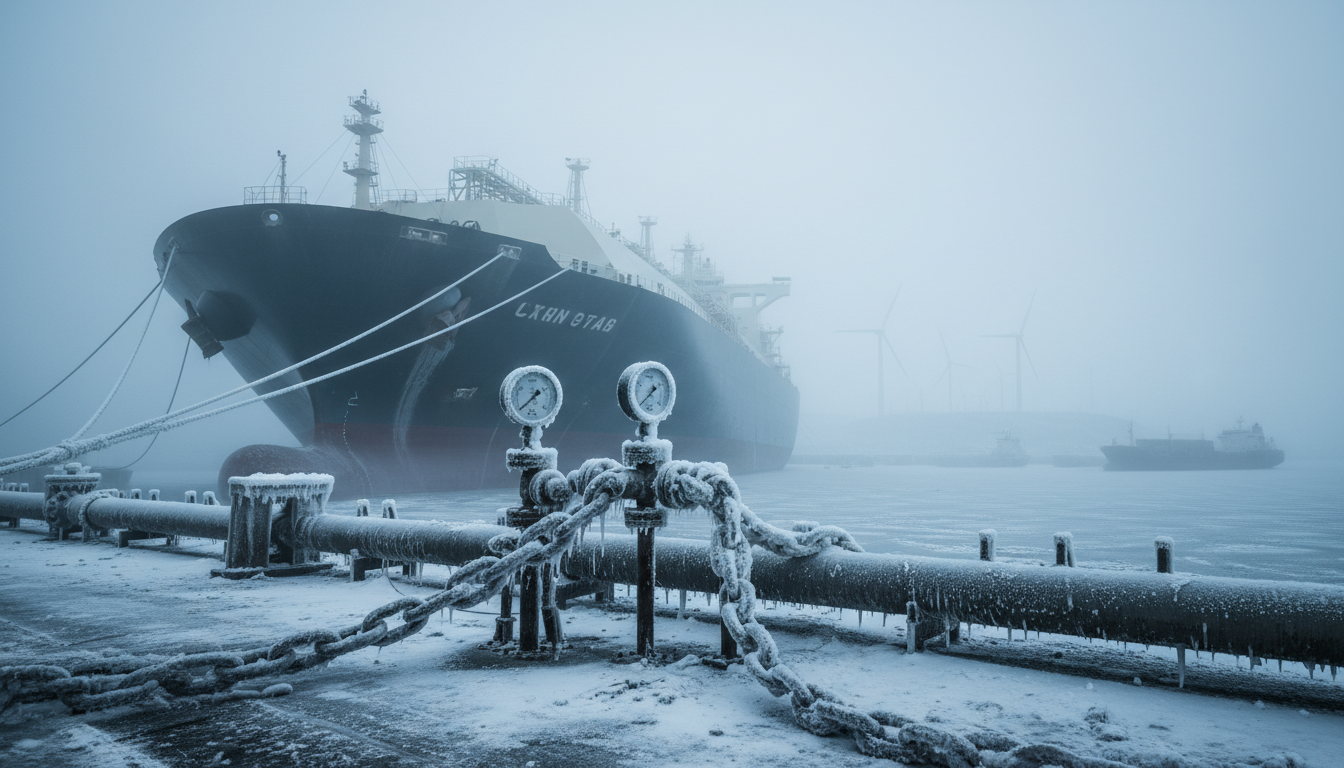
Geopolitical Flashpoints and Green Waves: Shipping’s Pivotal Role in the Energy Transition
The recent closure of the Strait of Hormuz, stemming from a US-Israeli military strike on Iran, sent immediate tremors through global energy markets, propelling oil prices upward and leaving an estimated 20,000 seafarers on 2,000 vessels in limbo. This critical maritime chokepoint, through which approximately one-fifth of the world’s crude oil and liquefied natural gas (LNG) traverses, serves as a stark reminder of the inherent vulnerabilities within the global energy supply chain and the indispensable, yet often overlooked, role of the shipping industry. For investors eyeing the oil and gas landscape, understanding the intricate relationship between global trade routes, maritime logistics, and the accelerating push for decarbonization is paramount. The current confluence of geopolitical instability and environmental mandates presents both significant risks and evolving opportunities within energy and shipping portfolios.
Maritime’s Carbon Footprint: The Hidden Costs of Global Trade
Beyond its strategic importance, the shipping sector itself carries a heavy environmental burden. Historically reliant on the most carbon-intensive “bunker fuel”—often described as the byproducts of oil refining too impure for other uses—maritime transport accounts for roughly 3% of global greenhouse gas emissions. This proportion is projected to climb as international trade expands, amplifying pressure for the industry to adopt more sustainable practices. However, the connection between shipping and fossil fuels extends beyond propulsion. A staggering 40% of the worldwide fleet is exclusively dedicated to transporting crude oil, refined products, and natural gas, as highlighted by Marie Fricaudet of the Energy Institute, University College London. This deep commercial intertwining means that any meaningful shift away from fossil fuels inevitably necessitates a radical transformation of the shipping industry’s fundamental business model, a transition fraught with financial implications for stakeholders.
Decarbonization at Sea: IMO Battles Political Currents
The urgency of this transformation is currently playing out in London, where the International Maritime Organization (IMO) is hosting critical two-week talks focused on developing strategies to decarbonize global shipping. Industry insiders report intense lobbying efforts from pro-oil factions, aiming to dilute or derail proposed environmental regulations. This political maneuvering appears to have influenced key maritime nations, with Liberia, Panama, and Greece notably shifting their positions from initial support for stringent emission controls to now advocating against new regulatory frameworks. The financial interests at stake are immense; many shipping companies and nations with substantial fleets possess a vested commercial interest in maintaining the status quo, making the path to a greener fleet a challenging voyage.
LNG’s Rocky Road: From Bridge Fuel to Investment Risk?
Liquefied natural gas, a commodity severely impacted by the Hormuz closure, presents a unique case study in the energy transition. Its transport demands specialized, high-cost vessels with cooled containers, representing significant capital investment. The surge in LNG infrastructure and tanker orders partly stemmed from the 2022 energy crisis, sparked by Russia’s invasion of Ukraine, which propelled European nations to diversify their gas supplies. Prior to this, LNG had enjoyed a period of growth as a cleaner alternative to coal. Yet, a series of global energy crises has prompted many countries to reconsider renewables as a more secure, long-term energy solution. While “plenty of economies” remain highly dependent on gas in the near term, one participant in the IMO discussions suggested LNG’s prospects look “particularly dodgy” by the mid-2030s. Marie Fricaudet concurs, pointing to LNG tankers as particularly exposed to this transition given their newness, capital intensity, long operational lifespans, and projected oversupply under most 1.5C and 2C climate scenarios.
Professor Tristan Smith of UCL further emphasizes the powerful influence of LNG interests within the IMO negotiations. Nations with strong national LNG agendas, including the US, Saudi Arabia, and Qatar, actively disrupted last year’s talks. They found allies in Liberia and the Marshall Islands, whose national flag registries – a lucrative system for registering ships – show a strong correlation with LNG exposure. This united front of industry actors stands in contrast to other segments of the shipping industry taking a more progressive stance, raising considerable risks for an equitable and effective resolution to the current impasse.
Despite these mounting uncertainties, the LNG industry shows no signs of decelerating its fleet expansion. The International Gas Union (IGU) reports over 750 LNG vessels currently in operation globally, with an additional 337 new vessels now on order – nearly half the existing fleet. Ella Minty, the IGU’s director of communications, maintains that “LNG will remain a critical fuel to meet global energy demand growth, particularly in the developing world,” asserting that the growth in vessels aligns with existing expansion plans that have reached final investment decision or are already under construction.
The Carbon Levy Showdown: Geopolitics vs. Green Shipping
A significant breakthrough occurred last April when IMO member states agreed to a “net zero framework” for maritime trade decarbonization and proposed a new carbon levy on shipping. This levy, which would impose a small price per tonne of greenhouse gas emitted, aimed to fund greener fleets utilizing cleaner fuels, renewable energy, or hydrogen, and to support developing nations disproportionately affected by extreme weather. However, the momentum was short-lived. By October, US influence, particularly under the Donald Trump administration’s stance against climate action, had seemingly succeeded in intimidating countries, leading to the proposed levy being put on ice for a year. Since then, other nations have introduced proposals that would effectively nullify the IMO’s decarbonization targets, leaving the future of the levy uncertain until a potential decision in October.
Navigating the Future: Investment Horizons in a Shifting Maritime Landscape
While the path to decarbonization remains contentious, the International Chamber of Shipping asserts the industry’s commitment to the IMO’s emissions reduction plans, citing “significant investment in alternative fuels, new technologies, and more efficient vessel designs.” They emphasize that successful global transition ultimately hinges on consistent international regulatory frameworks provided by governments. Civil society observers, such as Delaine McCullough of the Clean Shipping Coalition, suggest a working majority of member states are holding firm against efforts to disrupt and delay, despite the political pressures.
Experts argue that the transition away from fossil fuels does not necessarily equate to commercial disaster for the maritime sector. Christiaan De Beukelaer, a senior lecturer at the University of Melbourne, points to the availability of alternative cargoes. Coal transport can be replaced by dry goods like grain, and liquid cargoes by other alternatives. Moreover, even in a fully decarbonized economy, there will still be a substantial need to transport energy across oceans, particularly liquid fuels derived from renewable electricity, creating new demands for shipping. The coming decades will see immense global demand for solar panels, wind turbines, heat pumps, batteries, and electric vehicles – a vast proportion of which will travel by sea. Investors in the energy and maritime sectors must strategically position themselves to capitalize on these evolving trade patterns, understanding that the future of shipping, much like energy itself, is increasingly defined by sustainable innovation and resilient supply chains.


