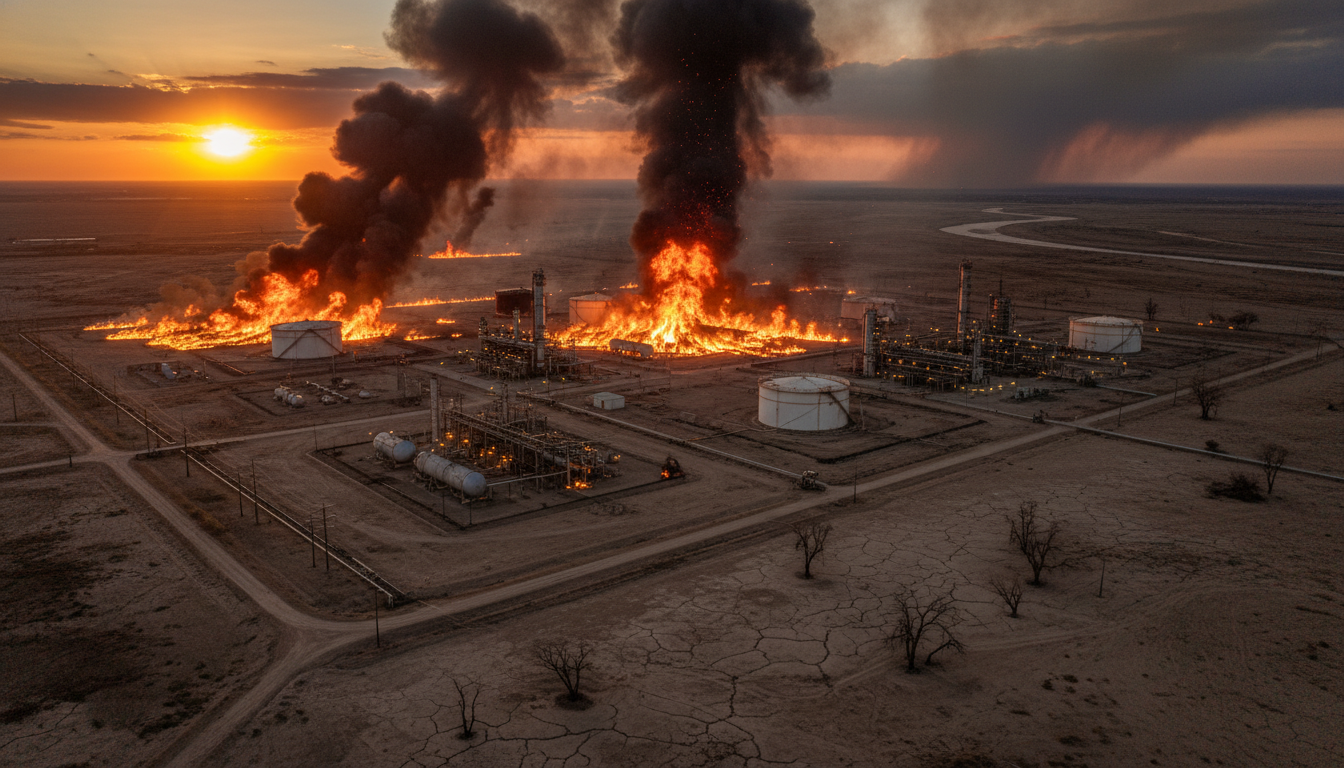
The southeastern United States is currently grappling with an unprecedented wildfire season, with Georgia bearing the brunt of the devastation. While localized natural disasters often seem peripheral to global energy markets, the scale and persistence of these blazes, fueled by extreme drought and gusty winds, warrant closer attention from oil and gas investors. Beyond the immediate ecological and humanitarian impact, these events highlight growing systemic risks related to climate change, infrastructure resilience, and localized energy demand shifts that can subtly, yet significantly, influence regional energy dynamics and investor sentiment. Understanding these nuances is crucial for navigating an increasingly complex investment landscape where environmental factors are becoming undeniable market drivers.
Market Resilience Amidst Regional Strain
As of today, Brent crude trades at $110.72 per barrel, showing a modest uptick of 0.29% within a daily range of $110.49-$112.43. WTI crude, meanwhile, sits at $104.59, slightly down by 0.46% for the day, fluctuating between $104.38 and $106.65. Gasoline prices are also elevated at $3.63, up 0.55% today. This current stability in global crude benchmarks, despite regional disruptions, underscores the market’s focus on broader supply-demand fundamentals. However, the persistent upward trajectory of Brent, which has climbed from $99.36 on April 13th to $111.70 by April 30th – a notable increase of over 12% in just two weeks – suggests underlying bullish sentiment driven by factors beyond localized events. The Georgia wildfires, specifically the Pineland Road fire scorching over 50 square miles and the Highway 82 fire destroying at least 87 homes across 35 square miles, primarily impact local energy infrastructure and demand, rather than global crude flows. The immediate concern for investors should be potential localized power outages and strain on regional distribution networks, which could temporarily boost demand for backup generators and associated fuels, though this is unlikely to move national or international price benchmarks significantly.
Climate Nexus: Drought, Hurricanes, and Energy Infrastructure
The severe wildfire situation in Georgia is not an isolated incident but a clear manifestation of compounding environmental factors that demand investor consideration. The region has been gripped by extreme drought, a critical precursor for such large-scale blazes. Adding to the combustibility, vast swathes of dead trees and vegetation remain from Hurricane Helene, which carved a destructive path northward in September 2024. This nexus of drought, hurricane aftermath, and gusty winds has created a tinderbox, amplifying the threat of fire. Scientists increasingly link these extreme weather patterns to broader climate change, a narrative that has profound implications for the energy sector. For oil and gas investors, this scenario highlights the growing physical risks to infrastructure located in vulnerable regions. While no major energy production assets are directly threatened by these specific Georgia fires, the broader trend suggests increased operational costs, potential for insurance premium hikes, and a heightened focus on infrastructure resilience across the industry, particularly in the Gulf Coast and southeastern U.S. This escalating climate risk could accelerate investment shifts towards renewable energy sources and grid modernization, or at least necessitate significant capital expenditure in hardening existing fossil fuel infrastructure against similar events.
Navigating Future Trends: Investor Questions and Upcoming Data
Our proprietary reader intent data reveals a strong investor focus on the trajectory of crude oil prices, supply-side dynamics from OPEC+, and forward-looking forecasts. Investors are actively asking about the 2026 weekly trend for crude oil and seeking a base-case Brent price forecast for the next quarter. While the Georgia wildfires are a regional concern, they play into the larger narrative of market volatility and the increasing impact of non-traditional factors on energy supply chains. For example, the Highway 82 blaze, suspected to have been sparked by a foil balloon hitting live power lines, underscores the fragility of existing infrastructure. As we look ahead, investors should closely monitor several key events that will provide more comprehensive insights into the broader energy market. The Baker Hughes Rig Count on May 1st and May 8th will offer a pulse on upstream activity. The EIA Short-Term Energy Outlook on May 2nd and the IEA Oil Market Report on May 12th will be critical for understanding global supply-demand balances and revised price forecasts, which will likely overshadow the localized impact of the Georgia fires. Furthermore, the API Weekly Crude Inventory on May 5th and May 12th, along with the EIA Weekly Petroleum Status Report on May 6th and May 13th, will provide crucial insights into U.S. inventory levels, a major driver for WTI and gasoline prices. These upcoming data releases will be instrumental in forming a robust base-case forecast, helping investors contextualize regional disruptions within the larger energy market framework.
Operational Resilience and Investment Strategy
The ongoing situation in Georgia, where firefighters are battling over 150 wildfires across the state and Florida, serves as a stark reminder of escalating operational risks for any business with physical assets in fire-prone regions, including components of the energy supply chain. While direct oil and gas extraction in the immediate vicinity is minimal, the broader implications for power transmission, refined product distribution, and even personnel safety are considerable. The tragic death of volunteer firefighter James “Kevin” Crews in northern Florida, who suffered a medical emergency while suppressing a brush fire, highlights the human cost and the strain on emergency services. For energy companies, this necessitates reviewing and bolstering emergency response plans, ensuring robust infrastructure hardening, and potentially re-evaluating insurance coverage. Investors should consider the resilience of their portfolio companies’ assets and supply chains to such climate-related events. Companies demonstrating proactive strategies in climate risk mitigation and operational resilience may present a more attractive long-term investment profile. Furthermore, the incident-specific causes—a welding operation for the Pineland Road fire and a foil balloon hitting power lines for the Highway 82 fire—underscore the importance of operational safety and public awareness campaigns in preventing human-ignited blazes, a critical factor for protecting energy infrastructure and reducing overall risk in an increasingly combustible environment.


