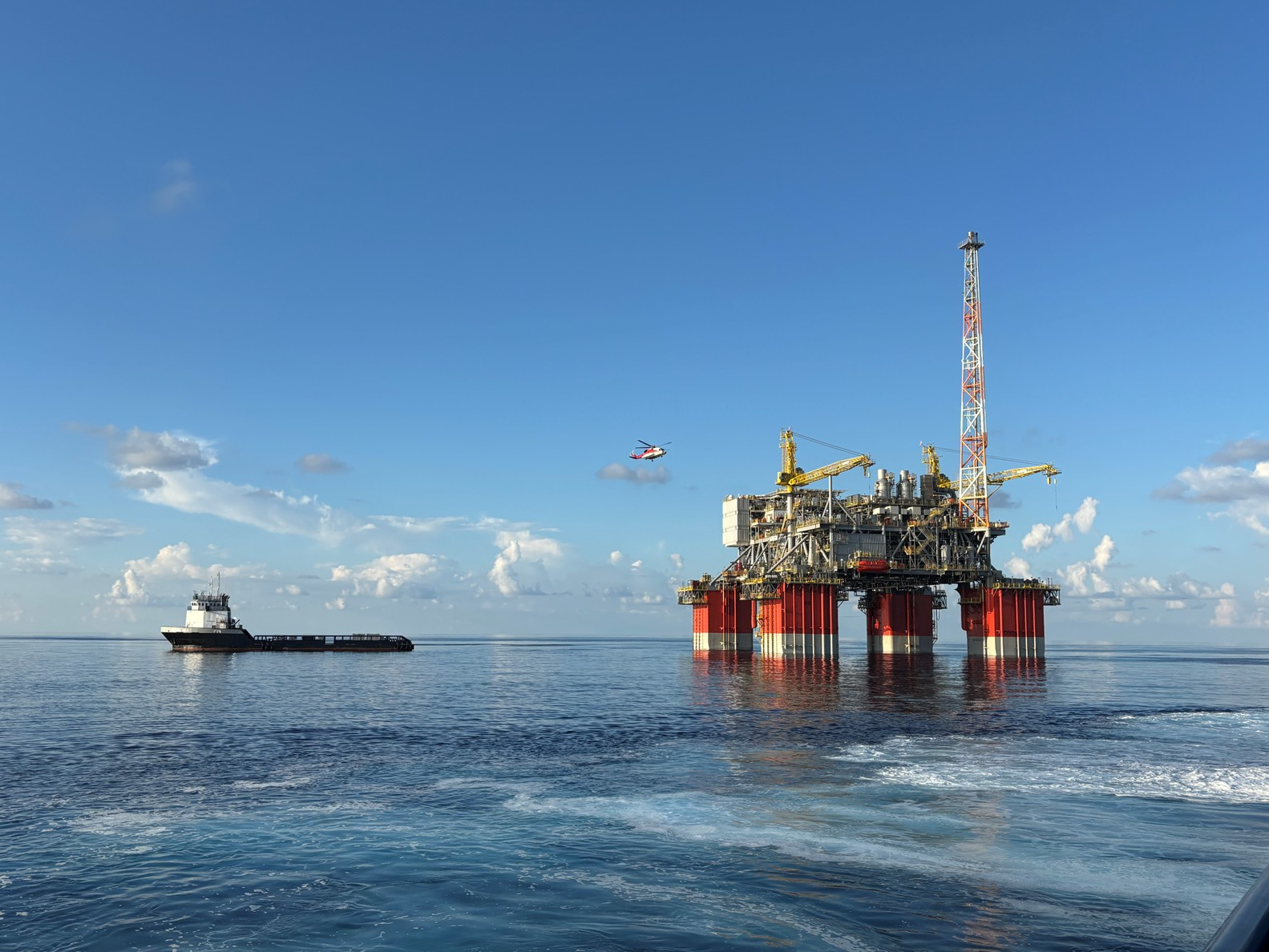
The Strategic Significance of Salamanca’s First Oil in a Volatile Market
The recent commissioning of LLOG Exploration Offshore’s Salamanca Floating Production Unit (FPU) in the deepwater U.S. Gulf of Mexico marks a pivotal moment for the region’s energy landscape and for investors eyeing resilient, long-term production assets. Achieving first oil from the Leon field in Keathley Canyon Block 689, this project stands out not just for its deepwater capabilities, operating in 6,400 feet of water, but for its innovative approach to infrastructure. The Salamanca FPU represents the first successful reuse of a former Gulf production unit, a strategic move that carries significant implications for project economics, time-to-market, and environmental footprint.
This initiative immediately signals LLOG’s commitment to maximizing value through efficiency and sustainability. By modifying an existing production facility rather than embarking on a costly and time-consuming newbuild, the company has significantly cut its time to market. Furthermore, this refurbishment strategy has delivered an impressive reduction in emissions intensity by nearly 90% compared with constructing a new unit. For investors increasingly focused on ESG metrics and operational efficiency, Salamanca’s operational start-up from a previously drilled Leon well, with its stated capacity of 60,000 barrels of oil per day (bopd) and 40 million standard cubic feet per day (MMcfd), offers a compelling case for smart capital deployment in deepwater exploration and production.
Navigating Market Swings with Deepwater Resilience
The deepwater Gulf of Mexico continues to prove its value as a basin capable of delivering significant, long-term oil and gas resources, even against a backdrop of fluctuating global energy prices. As of today, Brent crude trades at $90.38, reflecting a significant daily decrease of 9.07% and ranging between $86.08 and $98.97. Similarly, WTI crude has seen a sharp decline, now at $82.59, down 9.41% within a daily range of $78.97-$90.34. This immediate downturn, following a broader trend where Brent has dropped from $112.78 on March 30th to its current level, a nearly 20% correction, underscores the inherent volatility in global oil markets.
However, for seasoned investors, projects like Salamanca transcend short-term price movements. The multi-year ramp-up plan, with additional production expected from a second Leon well and the first Castile field well in late 2025, followed by a third Leon well and another Castile well planned for 2026, demonstrates a strategic long-term vision. This phased approach provides a steady stream of future catalysts that are less susceptible to daily market noise. While investors are naturally asking about the trajectory of oil prices by the end of 2026, the Salamanca project’s longevity and substantial recoverable resources — expected to deliver hundreds of millions of barrels — position it as a key contributor to sustained Gulf of Mexico output regardless of near-term price volatility. The commitment to such significant deepwater developments signals a strong belief in long-term global energy demand.
Partnerships and Investor Confidence in Future Production
The Salamanca project is a testament to the power of strategic partnerships in unlocking significant deepwater value. LLOG, as the operator, has successfully brought this complex project online after becoming the operator of the Leon and Castile fields in 2019. Repsol holds a significant 50% non-operating interest in Leon and 35.62% in Castile, alongside a 2.5% stake in the Salamanca FPU. The recent addition of O.G. Oil & Gas to the partnership in 2024 further solidifies the project’s financial and operational backing. These collaborations are crucial for mitigating the substantial capital expenditure and technical risks inherent in deepwater developments.
Our proprietary reader intent data reveals that investors are closely monitoring the performance of key players in these partnerships, with specific questions surfacing around the expected performance of entities like Repsol. The successful execution and phased ramp-up of Salamanca directly contribute to the perceived stability and growth prospects of these partners. The “significantly positive environmental impact” cited by LLOG’s CEO, Philip Lejeune, by reusing an existing unit and achieving substantial emissions reductions, also addresses a growing concern among environmentally conscious investors, adding another layer of appeal to this deepwater investment thesis. The combined developments are poised to add long-term output to the Gulf of Mexico portfolio, making these partnerships attractive for sustained returns.
Upcoming Market Catalysts and Salamanca’s Long-Term Value Proposition
The global energy calendar is packed with events that can influence short-term market dynamics, yet the Salamanca FPU’s long-term production profile offers a stable counterpoint. This coming Sunday, April 19th, marks a critical OPEC+ Ministerial Meeting. Decisions from this gathering regarding production quotas will undoubtedly reverberate through the market, influencing sentiment and potentially crude prices. Following this, the API Weekly Crude Inventory report on April 21st and the EIA Weekly Petroleum Status Report on April 22nd will provide fresh insights into U.S. supply and demand balances, with the Baker Hughes Rig Count on April 24th offering a look at drilling activity. These events, recurring into late April and early May, are typical drivers of weekly volatility and are closely watched by traders and short-term investors.
While these immediate catalysts dictate much of the daily price action, the Salamanca project’s trajectory is set by its internal milestones. The anticipated additional wells in late 2025 and 2026 represent tangible, forward-looking catalysts that will incrementally boost production capacity towards its 60,000 bopd and 40 MMcfd potential. For investors seeking exposure to fundamental growth rather than speculative swings, Salamanca offers a compelling long-duration asset. Its successful commissioning and planned ramp-up demonstrate that strategic deepwater investments can provide consistent returns, even as the broader market reacts to the ebb and flow of global supply management and inventory reports. The project underscores the continued relevance of deepwater Gulf of Mexico as a reliable source of energy for decades to come, providing a steady foundation amidst market uncertainties.