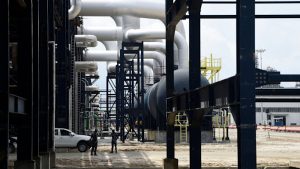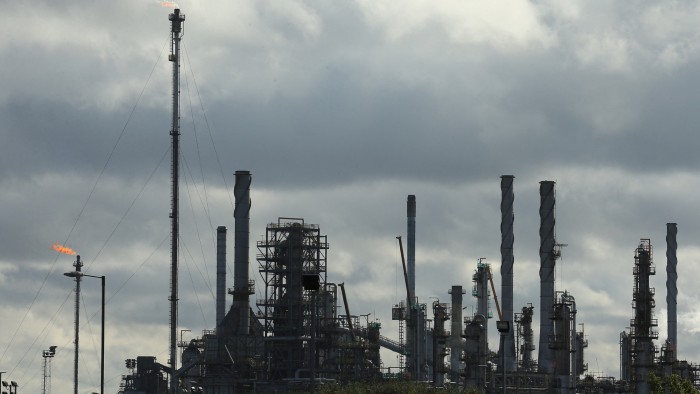
The recent insolvency of the Lindsey oil refinery in north-east England, followed swiftly by a UK government probe into its owners, Prax Group, sends a potent signal through the global energy market. While localized to the UK, this development underscores the inherent volatility and strategic importance of the refining sector, presenting both immediate concerns and long-term implications for oil and gas investors. The shuttering of a facility processing approximately 96,600 barrels of oil per day, coupled with the broader financial distress of its parent company, demands a keen eye on refining margins, regional product balances, and the evolving landscape of European energy security. For investors, understanding the ripple effects beyond the immediate news cycle is paramount to navigating an increasingly complex market.
The Shrinking UK Refining Landscape and Energy Security
The insolvency of Lindsey marks another significant blow to the UK’s refining capacity, coming on the heels of Ineos’s decision to halt crude processing at Grangemouth. This leaves Britain with a mere four operational refineries, raising critical questions about domestic fuel supply and energy independence. Lindsey, acquired by Prax Group from TotalEnergies in 2021, represents a substantial chunk of the remaining capacity, and its current status highlights the vulnerability of the UK’s downstream sector. The loss of a facility capable of processing nearly 100,000 barrels per day means an increased reliance on imported refined products, potentially impacting supply chain stability and pricing, especially during periods of global market tightness. This trend towards fewer domestic refineries amplifies the UK’s exposure to international product markets, making regional supply shocks or geopolitical disruptions elsewhere in Europe even more impactful on local fuel costs and availability.
Prax Group’s Financial Turmoil and Investor Scrutiny
The UK government’s investigation into Prax Group’s directors follows revelations that Lindsey had accumulated losses of approximately £75 million since its acquisition in 2021, with the government citing an inability to obtain satisfactory financial answers from the company. This probe extends beyond Lindsey, as Prax Group’s parent entity, State Oil Limited, and several key subsidiaries including Prax Petroleum, Harvest Energy, and Harvest Energy Aviation, have also entered administration. This paints a picture of broader financial distress within a conglomerate that grew from a single petrol station into a sprawling international entity. The use of “cross-group guarantees” for financing operations, as reported, meant that Lindsey’s struggles exposed other, seemingly unrelated, parts of the business to insolvency. Investors are rightly scrutinizing how such localized events could ripple through regional product balances, impacting their base-case Brent price forecasts for the coming quarters. Our own reader intent data shows a strong focus on understanding the consensus 2026 Brent forecast and building robust models for next quarter’s prices, underscoring the market’s demand for clarity on all factors, even regional ones, that could influence global crude and product equilibrium. The potential sale of Prax’s non-administered assets, such as its extensive network of UK and European petrol stations, will be closely watched for insights into the value and operational health of the remaining parts of the group.
Current Market Dynamics and the Limited Immediate Crude Impact
Despite the severity of the Lindsey situation for the UK, the broader crude market has absorbed the news without a dramatic immediate reaction. As of today, Brent crude trades at $95.21 per barrel, marking a modest +0.44% increase within a day range of $91-$96.89. WTI crude also saw an uptick, reaching $91.76, up 0.53% within its range of $86.96-$93.3. This muted response in crude prices suggests that the market views the Lindsey insolvency as a regional product market issue rather than a significant global crude demand disruptor. Indeed, the 14-day Brent trend shows a more significant decline, moving from $102.22 on March 25 to $93.22 on April 14, indicating that broader macroeconomic concerns and supply-side dynamics have been the primary drivers of recent price action. However, refined product markets tell a slightly different story; gasoline prices are up today, trading at $3 per gallon, a +1.01% increase within a range of $2.93-$3.03. This upward movement in product prices, even if not solely attributable to Lindsey, highlights the underlying tightness in refined product supply, a tightness that will only be exacerbated by the reduction in UK refining capacity. Investors are keenly asking about the operational status of global refining capacity, including questions like “How are Chinese tea-pot refineries running this quarter?” This indicates a broader awareness that regional refining issues can contribute to global product imbalances, even if crude markets remain focused on macro trends and OPEC+ policy.
Forward Outlook: Upcoming Catalysts and the Path Ahead
Looking ahead, the next two weeks are packed with events that will significantly shape investor sentiment and crude price trajectories, potentially overshadowing the immediate fallout from the Lindsey situation. The upcoming OPEC+ Joint Ministerial Monitoring Committee (JMMC) meeting on April 18, followed by the Full Ministerial Meeting on April 20, will be critical. Any decisions regarding production quotas will directly influence global supply dynamics and, consequently, crude price forecasts. Against a backdrop of localized refining challenges like Lindsey, OPEC+ deliberations will likely consider the overall health of global demand, including regional product market tightness. Furthermore, the API Weekly Crude Inventory reports on April 21 and April 28, along with the EIA Weekly Petroleum Status Reports on April 22 and April 29, will provide essential real-time insights into US crude and product balances. These reports are key indicators for assessing the health of the world’s largest oil consumer. Regular Baker Hughes Rig Count updates on April 17 and April 24 will also offer a pulse check on future supply capacity. The UK government’s probe into Prax Group will continue in the background, with potential implications for corporate governance standards in the energy sector and, by extension, investment risk assessment in private energy enterprises across Europe. For investors, these intertwined developments necessitate a nuanced approach, balancing micro-level operational risks with macro-level supply and demand fundamentals.