Libya’s oil sector continues its remarkable, albeit often challenging, journey back to pre-conflict production levels, with the recent restart of gasoline production at the Sarir refinery after a three-year hiatus marking a significant milestone. This development, coupled with an incremental increase in crude output from the Mabruk field, signals a renewed push for operational stability and self-sufficiency within the North African nation. For investors, these isolated events must be contextualized within a broader global energy market that remains sensitive to supply shifts, demand fluctuations, and geopolitical undercurrents. While the individual volumes may seem modest on a global scale, they collectively underscore Libya’s potential to influence regional refined product markets and contribute to the overall crude supply picture, an aspect crucial for any astute energy portfolio manager.
Libya’s Incremental Supply Boost: Sarir and Mabruk Come Online
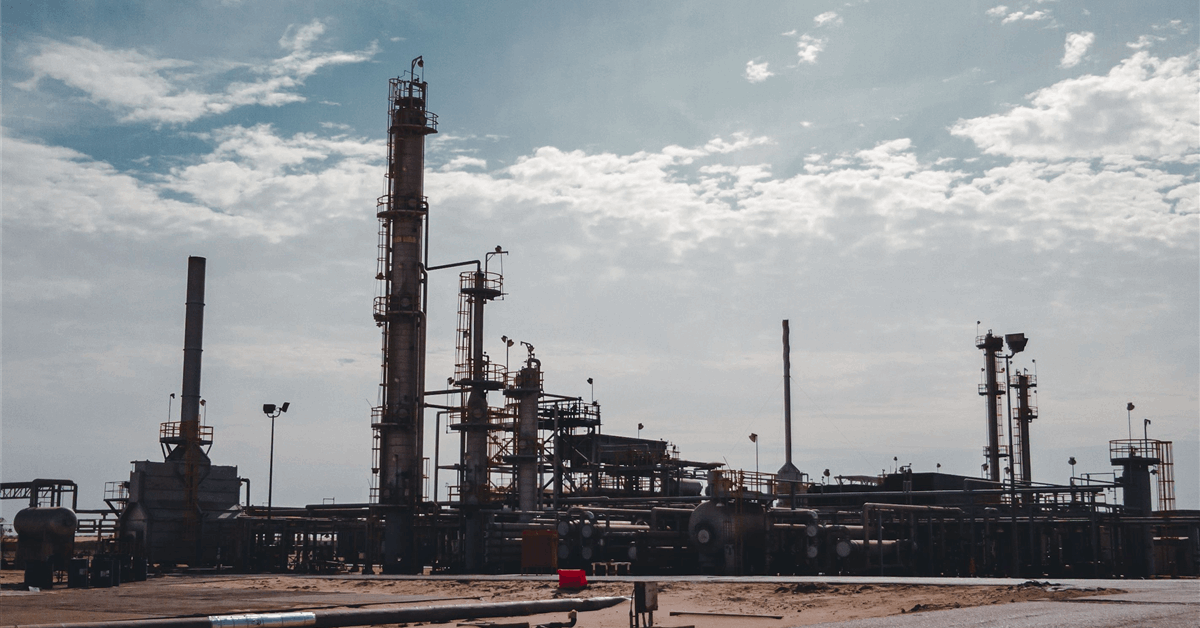
The National Oil Corp (NOC) announced the Sarir refinery’s return to gasoline production, a welcome development for Libya’s domestic fuel security. This facility, which first went online in 1989 and boasts a declared capacity of 10,000 barrels per day (bpd) for gasoline, diesel, and kerosene, had been offline for three years. The restart follows a major overhaul of its crude distillation unit, completed on January 21, with crude pumping resuming on February 4 after rigorous technical tests. This operational resilience, demonstrated by the Libyan staff’s ability to tackle technical challenges and even harsh weather conditions, is a testament to their commitment to ensuring sustainable production. Beyond refined products, the Sarir field itself is seeing activity; the L-028HR well, drilled in 1982 and previously used for reservoir monitoring, has been brought into production, adding 2,200 barrels of crude oil and 350,000 cubic feet of gas daily. This comes as the Arabian Gulf Oil Co (AGOCO), which operates Sarir, notes the field’s capacity to produce up to 225,000 bpd, with potential to increase to 300,000 bpd.
In parallel, the Mabruk field, a joint venture between NOC and France’s TotalEnergies SE, has also restarted flows as of February 28 after firing up a new “early production unit.” This field, which suffered a shutdown in 2015 due to a “terrorist” attack, is initially producing approximately 25,000-30,000 bpd. Mabruk Oil Operations Co aims to increase total production from Mabruk and Jurf to around 40,000 bpd by the end of March. These combined restarts, from both refinery output to crude field expansions, highlight a concerted effort within Libya to stabilize and grow its energy output, a factor that will be closely watched by global markets.
Market Dynamics and Price Response Amidst New Supply
This incremental supply from Libya enters a global energy market characterized by nuanced price movements and persistent volatility. As of today, Brent crude trades at $93.31, registering a slight uptick of 0.08% within a day’s range of $92.57-$94.21. WTI crude follows a similar pattern, currently at $89.7, up 0.03%, oscillating between $88.76-$90.71. For refined products, gasoline prices stand at $3.12, reflecting a marginal dip of 0.32% today, trading between $3.10 and $3.13. These movements occur against a backdrop where Brent crude has retreated by a notable 7% over the last 14 days, falling from $101.16 on April 1st to $94.09 on April 21st.
While the 10,000 bpd of gasoline from Sarir and the initial 25,000-30,000 bpd (targeting 40,000 bpd) of crude from Mabruk are not seismic shifts in global supply terms, they do contribute to the broader availability of hydrocarbons. For Libya, the Sarir refinery’s gasoline output is particularly impactful, strengthening local supplies and reducing reliance on imports, thereby enhancing domestic fuel stability. Globally, these barrels add to the cumulative supply side, potentially easing some upward price pressures, especially if overall demand growth remains subdued. However, the modest volumes mean that larger macro trends, geopolitical events, and demand signals from major economies will continue to be the dominant forces driving crude and refined product prices.
Forward Outlook: What Investors Should Watch Next
Many investors are actively seeking clarity on the future direction of oil prices, with common questions surfacing such as ‘is WTI going up or down?’ and requests for ‘what do you predict the price of oil per barrel will be by end of 2026?’. While Libya’s recent supply additions are a positive indicator for stability in a critical producing region, the overall market trajectory will be shaped by a confluence of factors, many of which will be illuminated by upcoming calendar events.
In the immediate term, market participants should pay close attention to the EIA Weekly Petroleum Status Reports scheduled for April 22nd, April 29th, and May 6th. These reports provide vital statistics on U.S. crude oil and product inventories, refinery utilization rates, and demand indicators, offering a crucial snapshot of the world’s largest consumer. Complementing these are the API Weekly Crude Inventory reports on April 28th and May 5th, which often serve as a precursor to the official EIA data. On the supply side, the Baker Hughes Rig Count on April 24th and May 1st will offer insights into North American drilling activity and potential future production trends.
For those looking to answer the ‘end of 2026’ price prediction questions, the EIA Short-Term Energy Outlook (STEO) on May 2nd is a must-watch event. The STEO provides updated forecasts for global supply, demand, and prices, incorporating all the latest data and geopolitical considerations. While Libya’s increased output adds to the supply picture, the STEO will offer a comprehensive, data-driven perspective on how these, alongside other global factors, are expected to influence the market balance over the coming months and into the next year. Investors should integrate these reports into their analysis to refine their outlooks and strategic positioning.
Investment Implications and Strategic Positioning
The operational restarts in Libya, particularly the Sarir refinery’s gasoline production and the Mabruk field’s crude increase, offer a nuanced set of investment implications. Firstly, the successful execution of these projects by Libya’s National Oil Corp and its subsidiaries, often under challenging conditions, signals a degree of improved operational stability and expertise within the country’s oil sector. This could, over time, translate into more predictable supply flows from a region historically prone to disruptions, potentially reducing the geopolitical risk premium associated with Libyan crude.
For companies with existing exposure to Libya, such as TotalEnergies SE through its Mabruk Oil Operations joint venture, these developments reinforce the viability of their assets and the potential for incremental growth. Furthermore, the stated ambition of AGOCO to potentially increase Sarir field production to 300,000 bpd indicates significant long-term upside if political stability holds. Investors might consider firms with strong regional expertise or those involved in infrastructure development that could facilitate further expansion. For the broader refined products market, Sarir’s gasoline restart, while modest in global volume, locally reduces import dependency, potentially shifting regional trade dynamics for gasoline suppliers. Ultimately, while individual Libyan increments won’t single-handedly dictate global oil prices, they contribute to the overall supply mosaic, reinforcing the need for investors to maintain a diversified and adaptable strategy sensitive to both micro-level operational successes and macro-level market forces.


