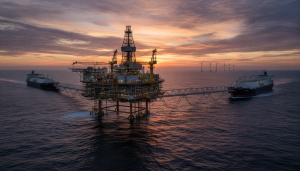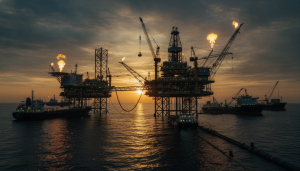
Libya’s energy sector is once again a focal point for global investors, with the proposed revival of a multibillion-dollar natural gas megaproject poised to reshape the nation’s energy future. This ambitious undertaking, centered on developing discovered gas deposits within the NC-7 block, holds the promise of alleviating Libya’s acute electricity shortages while also addressing long-standing grievances over energy revenue distribution between the country’s rival administrations. For investors tracking the volatile dynamics of global energy markets, this development presents a complex but potentially lucrative opportunity, signaling a crucial step toward stabilizing Libya’s role as a significant energy producer amidst ongoing geopolitical complexities.
The NC-7 Megaproject: A Strategic Imperative for Libya’s Energy Future
The National Oil Corp. (NOC) has put forward a compelling proposal to develop the NC-7 block in western Libya, targeting an estimated 53 trillion cubic feet of natural gas resources. This project is not merely about increasing output; it’s a strategic imperative for Libya to meet both its burgeoning domestic demand for electricity and its international export commitments. The plan involves NOC’s unit, Arabian Gulf Oil Co., potentially collaborating with a consortium of international energy giants, including Eni SpA, TotalEnergies SE, Abu Dhabi National Oil Co. (ADNOC), and Turkish Petroleum Corp. Such partnerships underscore the project’s scale and its significance for major global players seeking to diversify their energy portfolios.
A critical component of this revival plan is the proposed establishment of a new operating company, named Jelyana, headquartered in Benghazi. This structural concession is designed to appease the eastern administration, which has historically complained about an inequitable share of the nation’s energy revenues. Previous attempts to develop these discoveries stalled in 2023 due to objections over profit-sharing with overseas companies. By offering a strategic stake and operational control in the east, the NOC aims to foster greater national cohesion and stability, crucial for unlocking these vast energy reserves and ensuring uninterrupted production.
Navigating Market Volatility: A Gas Project in a Crude-Dominated Landscape
Investors are currently navigating a highly volatile energy market, making the timing and potential impact of projects like NC-7 particularly relevant. As of today, Brent Crude trades at $90.38 per barrel, a significant decline of 9.07% within the day, with its range spanning from $86.08 to $98.97. Similarly, WTI Crude stands at $82.59, down 9.41% for the day. This sharp downward movement follows a broader trend, with Brent having fallen by $20.91, or 18.5%, from $112.78 on March 30th to $91.87 just yesterday. Gasoline prices have also seen a dip, currently at $2.93, down 5.18%.
Amidst this backdrop, investors are keenly focused on understanding the future trajectory of energy prices, with a common question posed by our readers being, “What do you predict the price of oil per barrel will be by end of 2026?” While NC-7 is a gas project, its success directly impacts Libya’s internal energy security, potentially freeing up valuable crude oil for export by reducing reliance on costly fuel imports to power its electricity grid. This project adds a layer of stability to Libya’s energy output, an important consideration given that internal conflicts have frequently disrupted the country’s more than 1 million barrels-a-day of oil production. Furthermore, the commitment to such a large-scale gas development can signal a broader intent for more consistent energy supply from Libya, influencing global supply dynamics indirectly.
Geopolitical Stability and Upcoming Catalysts
The success of the NC-7 project hinges significantly on navigating Libya’s complex political landscape, characterized by the internationally recognized government in Tripoli and a rival administration in Benghazi. The NOC’s proposal to base the new company, Jelyana, in Benghazi is a strategic move to address the eastern region’s long-standing complaints of neglect and lack of influence over key institutions. Military commander Khalifa Haftar, who holds sway in the east, has frequently demanded the NOC move its main offices from Tripoli. This concession, if approved by Prime Minister Abdul Hamid Dbeibah, could be a critical step towards mitigating future energy disruptions caused by political feuds.
Investors are closely watching upcoming energy events for further signals. The OPEC+ Joint Ministerial Monitoring Committee (JMMC) meeting on April 18th, followed by the Full Ministerial meeting on April 19th, will set the tone for global crude supply. While Libya’s production is often exempt from or inconsistently adhering to quotas due to internal instability, any progress towards greater domestic stability via projects like NC-7 could enable a more consistent contribution to global supply. Beyond OPEC+, regular data releases such as the API Weekly Crude Inventory (April 21st, 28th) and EIA Weekly Petroleum Status Report (April 22nd, 29th) provide continuous insights into market fundamentals. The Baker Hughes Rig Count (April 24th, May 1st) will also offer a pulse on drilling activity. These events, though not directly linked to the Libyan project’s approval, create the broader market context within which this significant investment decision will be evaluated. The NOC Chairman Masoud Suleman’s stated goal of tapping new sources by the end of 2026 underscores the urgency and potential impact of this project on Libya’s energy independence and export capabilities.
Investment Outlook: Risks and Rewards of Libyan Gas
For international investors and the consortium partners, the revival of the NC-7 project presents a compelling, albeit high-risk, investment proposition. The rewards are substantial: access to vast, untapped natural gas reserves and a strategic foothold in a country with immense energy potential. Should the political compromise hold and Prime Minister Dbeibah approve the proposal, the project could significantly boost Libya’s gas output, reduce its reliance on costly fuel imports, and potentially position it as a more reliable gas exporter to Europe, diversifying regional supplies.
However, the risks remain pronounced. The historical pattern of political instability and conflict, which has frequently led to shutdowns of Libya’s vital oil infrastructure, casts a long shadow. The success of Jelyana will depend not only on the initial political agreement but also on its sustained ability to operate effectively amidst ongoing power struggles. Despite these challenges, the NOC’s proactive approach to address regional grievances through a strategic operational setup demonstrates a concerted effort to de-risk future energy investments. For those willing to navigate the complexities, the NC-7 megaproject offers a unique opportunity to participate in the long-term transformation of Libya’s energy landscape and contribute to global energy security.