

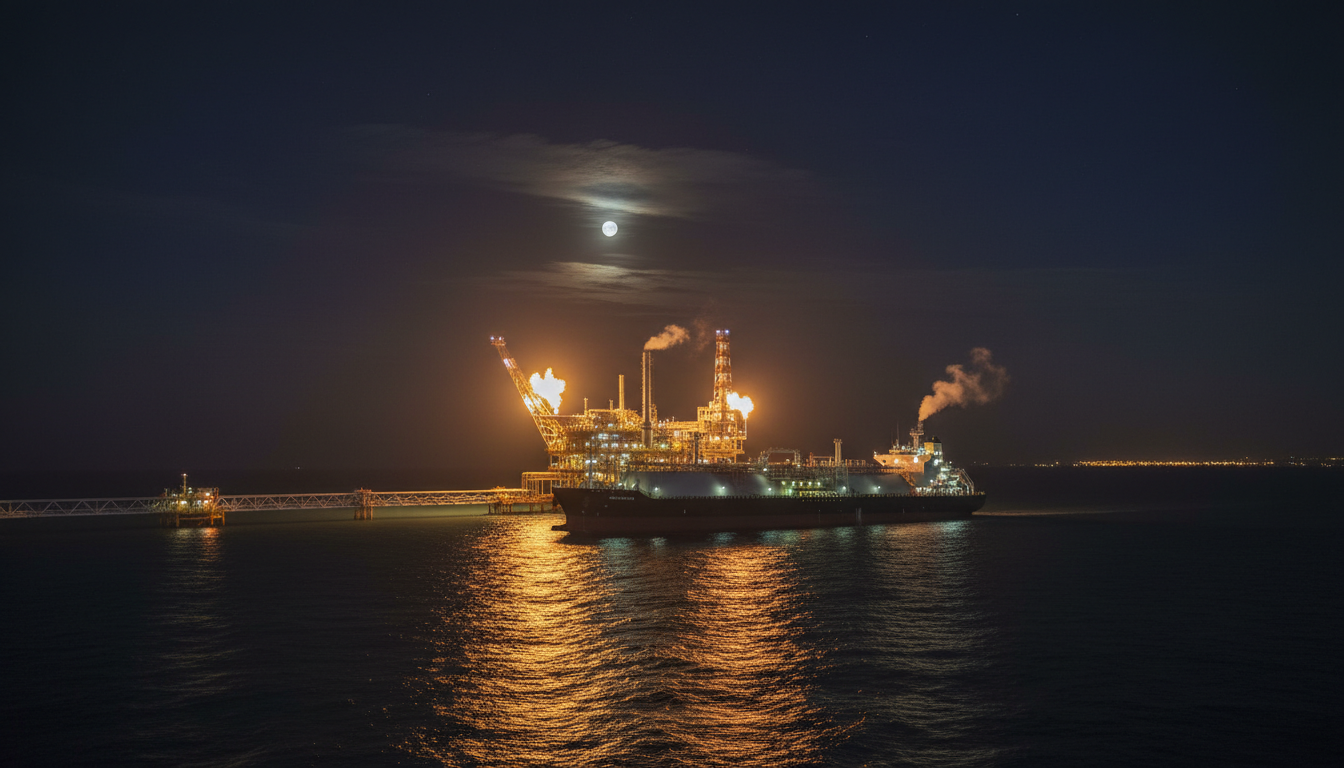
Leviathan Field Restarts: A Critical Boost for Eastern Mediterranean Gas Supply and Regional Stability
The strategic Leviathan natural gas field, a cornerstone of energy supply in the Eastern Mediterranean, has officially resumed operations, marking a significant development for regional energy security and investor confidence. The Israeli energy ministry announced on Thursday that production activities at the massive offshore facility, managed by energy giant Chevron, have recommenced after a month-long suspension. This restart alleviates immediate concerns about gas supply disruptions and reinforces the long-term viability of crucial regional energy infrastructure.
The operational pause at Leviathan commenced on February 28, a precautionary measure implemented following reports of attacks launched by U.S. and Israeli forces on Iran. This specific geopolitical event prompted an immediate reassessment of security protocols and operational risks in the Eastern Mediterranean, leading to the temporary shutdown. The decision to resume operations underscores a considered evaluation of the prevailing situation, with the energy ministry confirming that “Following situation assessments and a review of all relevant considerations, it has been decided at this stage to return the Leviathan platform to operation.” This statement provides crucial clarity for investors monitoring regional stability and the uninterrupted flow of natural gas.
Leviathan’s importance cannot be overstated. It stands as one of the Eastern Mediterranean’s largest gas fields, boasting an estimated 635 billion cubic meters (bcm) in recoverable gas resources. Its consistent production is vital not only for Israel’s domestic energy needs but also for key regional export markets, notably Egypt. The restart ensures that natural gas supply to the local market continues and will now be augmented with the full capacity of the Leviathan platform, providing enhanced reliability and volume to meet demand.
For investors, the long-term growth trajectory of Leviathan remains compelling. Just this past January, Chevron and its partners gave the green light to an ambitious expansion project designed to significantly boost the field’s output. This multi-billion dollar undertaking, with an estimated value exceeding $35 billion in natural gas supply to Egypt and other markets, is poised to transform the field’s production profile. The expansion aims to elevate Leviathan’s gas deliveries by an additional 9 billion cubic meters annually, bringing its total output capacity to approximately 21 bcm per year.
This substantial increase in production capacity is strategically aimed at meeting growing regional demand while also positioning Leviathan as a critical source for European liquefied natural gas (LNG) imports. As Europe continues its drive to diversify energy sources away from traditional suppliers, the Eastern Mediterranean has emerged as a crucial energy corridor. Increased gas flows from Leviathan, facilitated by the new expansion, are expected to contribute significantly to the region’s broader energy landscape, underpinning long-term supply agreements and fostering greater energy independence for participating nations.
Chevron’s leading role in the Leviathan project underscores the confidence major international energy companies place in the region’s resource potential, despite inherent geopolitical complexities. The capital commitment of over $35 billion highlights the scale of this expansion and the anticipated returns for stakeholders. This investment is not merely about increasing output; it’s about solidifying Leviathan’s position as a reliable, scalable, and strategically important natural gas asset for decades to come, providing a stable revenue stream for partners and a secure supply for consumers.
The operational resumption of Leviathan sends a strong signal of resilience and adaptability within the energy sector. It demonstrates that critical infrastructure can navigate periods of heightened regional tension and swiftly return to full capacity, minimizing market disruptions. For investors, this translates into greater predictability for gas supply and sustained returns from well-managed, high-capacity fields. The ability of the Israeli energy ministry and Chevron to conduct rapid situation assessments and implement decisive operational decisions is a testament to the robust planning and contingencies in place for such vital national assets.
Looking ahead, the successful restart and the ongoing expansion project solidify Leviathan’s role as a linchpin of the Eastern Mediterranean’s energy future. The increased gas volumes will not only support Israel’s energy independence and economic growth but will also enhance regional cooperation and energy security across wider geographies. As global demand for natural gas remains robust, driven by its role as a key transition fuel, Leviathan’s expanded capacity will play an increasingly important role in meeting these needs, offering attractive long-term prospects for investors in the natural gas sector.
