

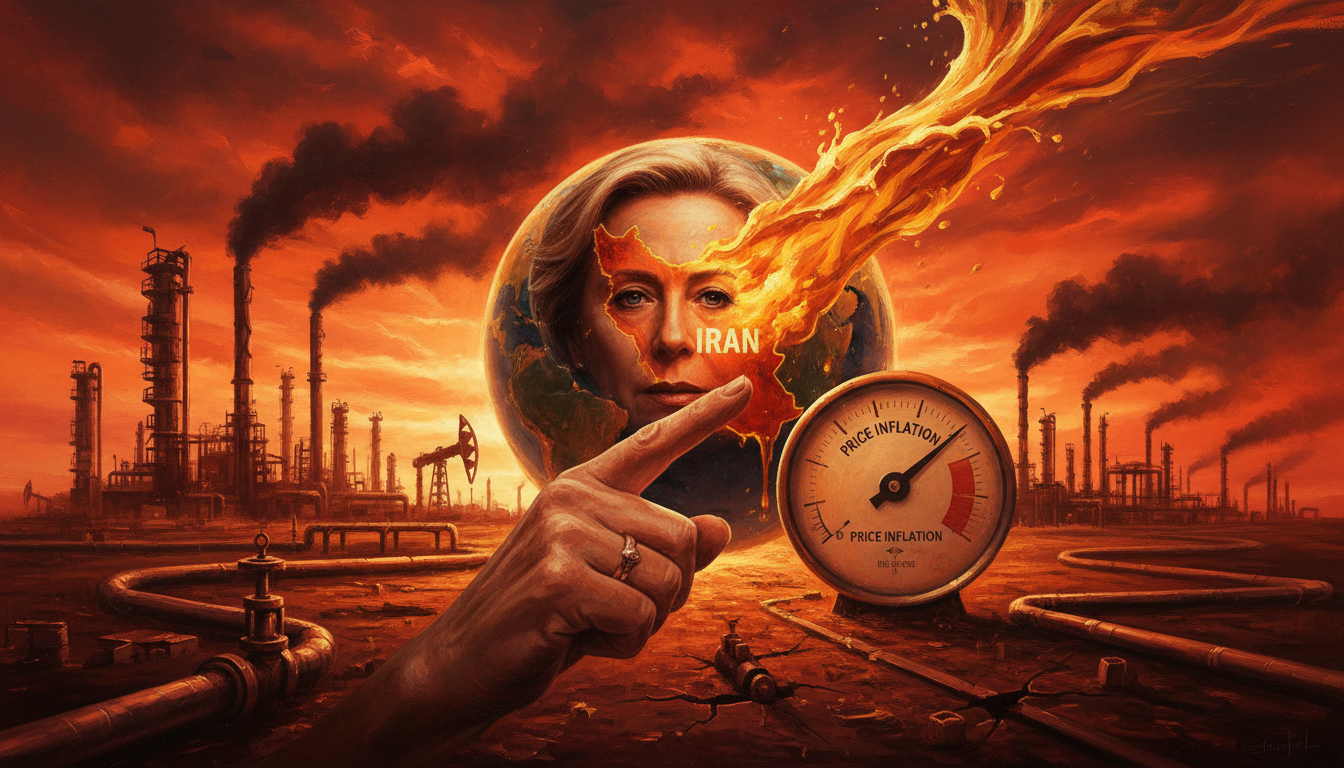
Geopolitical Tensions Drive ECB Concerns: A Faster Inflationary Response Looms
The specter of geopolitical conflict, specifically potential escalations in the Middle East, is casting a long shadow over global energy markets and, consequently, European inflation. Christine Lagarde, President of the European Central Bank (ECB), recently articulated a significant concern: businesses and workers across the eurozone may react with unprecedented speed to any oil shock stemming from the Iran conflict. This accelerated response, she warned during a conference in Frankfurt, Germany, is directly attributable to the indelible memory of the inflation surge that followed Russia’s invasion of Ukraine in 2022, suggesting a potentially swifter pass-through of costs and demands for compensation.
The Lingering Shadow of 2022: A Generation’s First Inflationary Scare
The economic landscape of 2022 left a profound mark on the European collective consciousness. Following Russia’s full-scale invasion of Ukraine, the continent experienced severe energy supply disruptions, particularly the cutoff of significant volumes of Russian natural gas. This, coupled with soaring oil prices, propelled inflation within the euro currency bloc to an alarming peak of 10.6% in October 2022. The ECB responded decisively, implementing a series of interest rate hikes to rein in runaway prices, a policy that ultimately succeeded in bringing inflation down. However, as Lagarde noted, this episode served as the first experience with high inflation for an entire generation. This “recent memory” has fundamentally altered expectations, potentially predisposing firms and workers to respond more quickly to future cost pressures than they might have in previous cycles. For investors, this psychological shift represents a critical factor in assessing future market dynamics and the ECB’s potential policy trajectory.
Lagarde’s Critical Warning: The Speed of Price Transmission
President Lagarde’s assessment highlights a critical shift in economic behavior. Should oil and gas prices continue an upward trajectory due to renewed geopolitical instability, the speed at which businesses translate higher input costs into consumer prices, and the swiftness with which workers seek increased wages, could be significantly amplified. This rapid transmission mechanism is precisely what central banks vigilantly monitor, as it can transform a temporary energy price spike into a more entrenched, broad-based inflationary spiral. While current eurozone inflation sits at a more manageable 1.9% as of February, according to EU statistics agency Eurostat, the psychological legacy of 2022 introduces an unpredictable variable into the ECB’s forward guidance and strategy, complicating the outlook for energy-intensive sectors and consumer discretionary spending.
Monetary Policy’s Dilemma: Navigating Transitory Shocks
Central banks face inherent limitations when confronted with external supply shocks, particularly those impacting commodity prices. Monetary policy, by its nature, cannot directly influence the global price of oil or natural gas. Typically, central banks prefer to “look through” transient energy price surges, refraining from immediate interest rate adjustments, especially if the shock is perceived as limited in scope and duration. The rationale is clear: the significant time lag between an interest rate hike and its full economic impact means that by the time policy measures take effect, a short-lived energy price spike would likely have already dissipated. Raising borrowing costs in such a scenario could unnecessarily stifle economic growth. However, this classical prescription becomes problematic if higher energy costs begin to permeate the broader economy, embedding themselves into the pricing of other goods and services, and triggering demands for higher wages, thereby initiating a dangerous price-wage spiral. This delicate balancing act demands keen observation of real-time economic data and market sentiment.
Current Realities vs. Escalating Risks for Investors
While the present environment shows some reassuring signs, the potential for escalation remains a dominant concern. Lagarde observed that the current upward movement in oil prices, while notable, appears to be “smaller” in magnitude than the dramatic energy price explosion experienced across Europe in 2021-2022. This relative moderation, so far, offers a degree of respite. However, the ECB remains firmly committed to its mandate of price stability, targeting an inflation rate of 2%. Should inflation demonstrate persistent movement above this target, the central bank’s response “must be appropriately forceful or persistent.” The ECB, which maintained its key interest rate at 2% following its last policy meeting on March 19, is currently in a watchful mode, monitoring developments closely before committing to any definitive policy shift. For investors in oil and gas, this situation underscores continued volatility driven by geopolitical news flow, while broader equity markets will closely track any signs of cost-push inflation impacting corporate earnings and consumer demand.
Strategic Considerations for Oil & Gas Investors
The current environment demands heightened vigilance from investors in the oil and gas sector. Geopolitical events in regions like the Middle East can trigger rapid and substantial shifts in crude prices, creating both opportunities and risks. The ECB’s concerns highlight that even if a supply shock is initially contained, the psychological preparedness for inflation could accelerate its transmission through the economy. This could lead to a faster reaction from central banks than historically seen, potentially impacting growth prospects and demand for energy. Investors should closely monitor not only geopolitical developments but also the tone and guidance from key central banks like the ECB. The potential for a faster inflationary pass-through means that the window for a “wait-and-see” approach from policymakers might be shorter, implying more agile responses to protect portfolio value in an increasingly sensitive global economy. Understanding the interplay between energy markets, inflation psychology, and central bank reactions will be paramount for navigating the coming months.
