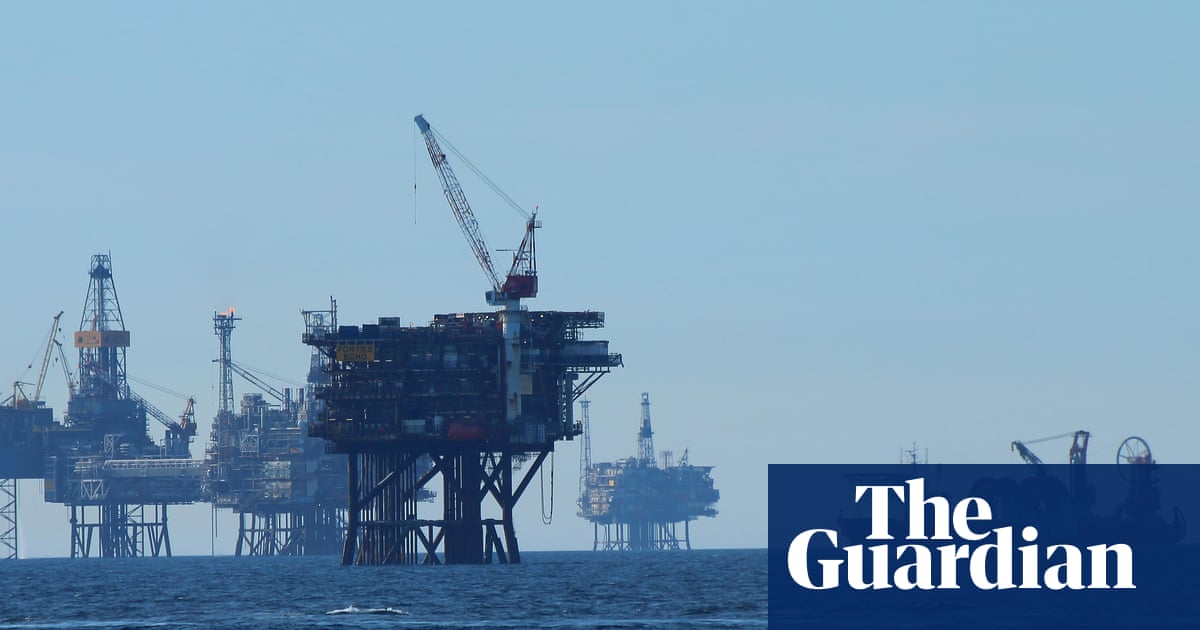
Recent disclosures revealing over 500 meetings between Labour government ministers and fossil fuel industry representatives during their inaugural year in power have sent ripples through the energy investment community. These frequent engagements, significantly outpacing interactions seen under the previous administration, raise critical questions about the future trajectory of UK energy policy, especially concerning the North Sea, the energy transition, and fiscal measures like the Energy Profits Levy. As senior analysts at OilMarketCap.com, we understand that investors demand clarity amidst policy uncertainty. This analysis leverages our proprietary data pipelines – from real-time market prices to upcoming event calendars and direct insights into investor concerns – to dissect what this level of industry access truly signifies for your portfolio in a rapidly evolving global energy landscape.
Unpacking the Extent of Industry Influence
The sheer volume of interactions between the Labour government and fossil fuel lobbyists is undeniable. Our analysis of government records confirms over 500 such meetings in the first year alone, representing a striking 48% increase compared to the previous Conservative government’s engagements in 2023. This isn’t merely a matter of quantity; the depth of this access is particularly noteworthy. Ministers at the Department for Energy Security and Net Zero (DESNZ) held 274 meetings with industry figures, comprising nearly a quarter of all their engagements. For the Secretary for Energy and Climate Change, Ed Miliband, fossil fuel lobbyists were present at 250 of his meetings – a full third of his total. Moreover, major players like BP, Shell, and Equinor collectively accounted for 100 of these ministerial consultations. To put this in perspective, DESNZ ministers met trade union representatives only 61 times during the same period. While the government maintains these discussions are part of a broader strategy to achieve a “clean energy superpower” status, investors must scrutinize whether such extensive access translates into policy decisions that genuinely accelerate the energy transition or, conversely, create headwinds for renewable growth while potentially extending the lifespan of fossil fuel projects.
Policy Stability in a Volatile Market Environment
The timing of these revelations is particularly pertinent given the current volatility gripping global oil markets. As of today, Brent Crude trades at $90.38, marking a significant daily decline of 9.07%, with prices ranging from $86.08 to $98.97. Similarly, WTI Crude has fallen to $82.59, down 9.41% on the day. This sharp downward correction is part of a broader trend, with Brent having plummeted nearly 20% in just two weeks, from $112.78 on March 30th to its current level. Gasoline prices too reflect this downturn, now at $2.93, a 5.18% drop. In such a fluctuating environment, policy certainty becomes paramount for investors. The extensive lobbying efforts, particularly concerning the Energy Profits Levy – a temporary windfall tax on North Sea operators – raise questions about its future. Industry representatives were reportedly present at almost every government meeting discussing this levy. A softening stance on such fiscal measures, or changes to investment allowances, directly impacts the profitability and capital allocation strategies of companies operating in the UK. Investors are keenly watching for any signals that industry influence might translate into more favorable tax regimes, potentially offering a lifeline to North Sea producers grappling with lower prices, even as others question the long-term commitment to a sustainable energy transition.
Upcoming Events and Forward Policy Signals
The interplay between political engagement and market dynamics is set to intensify with several key events on our calendar. This weekend, the OPEC+ Joint Ministerial Monitoring Committee (JMMC) meets on April 19th, followed by the full OPEC+ Ministerial Meeting on April 20th. Given the recent steep decline in oil prices, these meetings could yield decisions on production quotas that significantly impact global supply and price stability. Investors are actively asking about OPEC+’s current production quotas and what our long-term oil price predictions are for the end of 2026. Any shifts in OPEC+ strategy will inevitably feed into the UK’s domestic energy policy discussions, especially regarding the Energy Profits Levy, which becomes more burdensome for producers when crude prices fall. Domestically, weekly API and EIA inventory reports, alongside the Baker Hughes Rig Count, will provide ongoing snapshots of supply-demand dynamics. The government’s consistent dialogue with the fossil fuel industry suggests a pragmatic, perhaps even cautious, approach to policy. Investors should closely monitor any official statements or leaked reports post-OPEC+ meetings and leading into the next parliamentary sessions for indications of how the Labour government plans to balance its “clean energy superpower” ambitions with the practicalities of maintaining domestic energy security and supporting North Sea operations, especially if global prices remain subdued.
Addressing Investor Concerns: Transition vs. Stability
Our first-party intent data from OilMarketCap.com’s AI assistant reveals a clear focus from investors on forward-looking performance and the broader market trajectory. Queries like “How well do you think Repsol will end in April 2026?” underscore a desire for company-specific insights, while “what do you predict the price of oil per barrel will be by end of 2026?” highlights the overarching need for long-term market outlooks. The significant access afforded to fossil fuel lobbyists presents a complex picture for these investor considerations. On one hand, it could be interpreted as a commitment to ensuring energy security and supporting existing industry infrastructure, offering a degree of stability for companies operating in the UK. On the other, it contrasts sharply with the International Energy Agency’s 2023 finding that fossil fuel companies contribute a “minimal” 1% to global clean energy investment. This disconnect raises questions about the UK’s genuine pace of energy transition. For investors focused on ESG criteria or the long-term viability of companies in a decarbonizing world, the government’s continued deep engagement with traditional energy players, even as it champions green initiatives, presents a nuanced risk-reward profile. The challenge for the Labour government, and by extension for investors, will be to demonstrate how these extensive industry dialogues genuinely accelerate, rather than impede, the shift towards a more sustainable energy system while maintaining a stable investment environment for both conventional and renewable energy assets.


