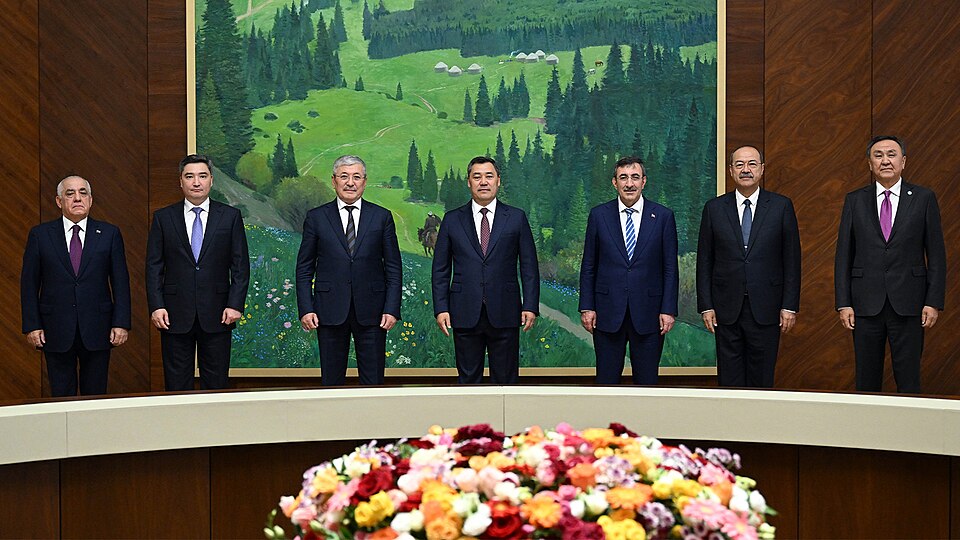
The geopolitical chessboard of Eurasia has undergone a profound reordering since 2022, prompting smaller nations in Central Asia to accelerate critical economic reforms. This strategic pivot aims to diversify economic partnerships, reduce dependencies, and mitigate emerging risks in a landscape shaped by China’s evolving economic trajectory, the re-emergence of the Organization of Turkic States, and the strategic prominence of the Middle Corridor transit route. While Western capital has traditionally focused on critical minerals, the broader implications for energy security and oil and gas investment in this region, particularly in countries like Kyrgyzstan, are rapidly coming into focus for discerning investors.
The landlocked and resource-rich Central Asian region has now become a focal point for global actors. Nations such as Kazakhstan and Uzbekistan have already initiated significant economic reforms over the past five years to attract investment from Europe and the United States. Under the current Trump administration, these relationships have elevated to strategic partnerships, underscored by trade deals collectively worth $12.4 billion signed in the initial months of the second term. This shift highlights Washington’s recognition of Central Asia’s critical importance as a source of natural resources and raw materials, and its growing geopolitical relevance. A key event signaling this heightened interest was President Donald Trump hosting the leaders of the five Central Asian states at the White House on November 6th, reinforcing the US commitment to the region’s sovereignty and independence, alongside securing access to vital resources. Within this framework, Kyrgyzstan holds particular significance for its energy and raw material potential, making it a compelling, albeit under-examined, target for future investment.
Market Volatility and the Strategic Imperative for New Energy Frontiers
Current market conditions underscore the strategic imperative behind diversifying energy sources. As of today, Brent crude trades at $90.19, reflecting a significant 9.26% decline from its opening, with WTI crude following suit at $82.24, down 9.79%. This sharp daily downturn follows a broader trend; Brent has shed $14, or 12.4%, from $112.57 on March 27th to $98.57 just yesterday. Such pronounced volatility in established benchmarks highlights the fragility of global supply chains and the pressing need for secure, diversified access to energy resources. In this environment, the strategic engagement with Central Asian nations, including Kyrgyzstan, moves beyond mere resource acquisition to become a critical component of national and economic security. Investors looking for stability amidst global energy flux should view the region’s developing energy infrastructure and potential reserves as a long-term hedge against the whims of the market and traditional supply bottlenecks.
Navigating Future Supply Dynamics: Investor Focus on Upcoming Catalysts
The recent market swings naturally lead many of our readers to ask about the future trajectory of crude prices, with a common query being: “What do you predict the price of oil per barrel will be by end of 2026?” Answering this requires a keen eye on upcoming events that directly influence global supply. The immediate focus for market watchers will be the OPEC+ Joint Ministerial Monitoring Committee (JMMC) meeting tomorrow, April 17th, followed by the full Ministerial meeting on April 18th. These meetings are pivotal as they will dictate production quotas, directly impacting global supply and, consequently, price stability. Any decision to adjust output, whether to cut further or increase, will send ripples across the market, affecting everything from gasoline prices, which currently stand at $2.92, down 5.5% today, to long-term investment strategies.
Beyond OPEC+, investors will be closely monitoring weekly data points such as the API Weekly Crude Inventory (April 21st, April 28th) and the EIA Weekly Petroleum Status Report (April 22nd, April 29th) for insights into US supply and demand dynamics. The Baker Hughes Rig Count on April 24th and May 1st will further inform on drilling activity and future production capacity. For investors eyeing Central Asia, these global events provide the backdrop against which the region’s strategic importance grows. In a world where traditional energy producers’ decisions can rapidly shift market sentiment, developing new, strategically aligned resource bases in regions like Kyrgyzstan offers a compelling avenue for long-term investors seeking resilience against cartel policies and geopolitical disruptions. The ongoing dialogues under the C5+1 format, particularly its energy pillar, are designed to foster an environment conducive to such long-term investments, providing a counter-narrative to short-term market volatility.
Kyrgyzstan’s Oil and Gas Potential: A Strategic Energy Play
While the broader discussion around Central Asia often highlights critical minerals, Kyrgyzstan’s specific importance for US energy and raw materials cannot be overstated. The C5+1 engagement framework explicitly supports energy as one of its three main pillars, signaling a clear intent to foster development in this sector. For investors, this translates into potential opportunities in exploration, production, and infrastructure development within Kyrgyzstan’s oil and gas sector. The shift in US policy towards private-sector engagement and the promotion of a favorable business environment aims to unlock these nascent opportunities.
Although exact production figures for Kyrgyzstan’s oil and gas are often overlooked in global energy reports, the strategic interest from major global powers, coupled with the region’s geological potential, points towards a growth trajectory. Investors considering specific company performance, a common query among our readers, should pay close attention to firms with established regional expertise or those positioning themselves for entry into these newly accessible markets. The security and stability offered by deepening bilateral ties, such as the $4.2 billion trade agreement Kazakhstan signed with the US in October 2025, create a more predictable operating environment. This framework is equally applicable to Kyrgyzstan, where new trade deals and enhanced partnerships are expected to catalyze investment in its energy sector, providing a robust, long-term alternative to more volatile or politically constrained energy sources globally.
Conclusion: Central Asia as a Cornerstone of Future Energy Security
The strategic reorientation towards Central Asia, driven by geopolitical necessity and a global quest for resource diversification, positions countries like Kyrgyzstan at the forefront of future energy security discussions. Despite significant daily and monthly price fluctuations in global crude benchmarks, the foundational need for stable and reliable energy supplies remains paramount. The concerted efforts by the US administration to deepen strategic partnerships and foster private-sector engagement are paving the way for substantial investment in the region’s energy and raw material sectors. For sophisticated oil and gas investors, Kyrgyzstan represents a compelling, albeit still developing, opportunity. By focusing on the long-term strategic value, understanding the evolving geopolitical landscape, and monitoring key market catalysts, investors can position themselves to capitalize on the strategic growth potential emerging from this critical Central Asian nation.