

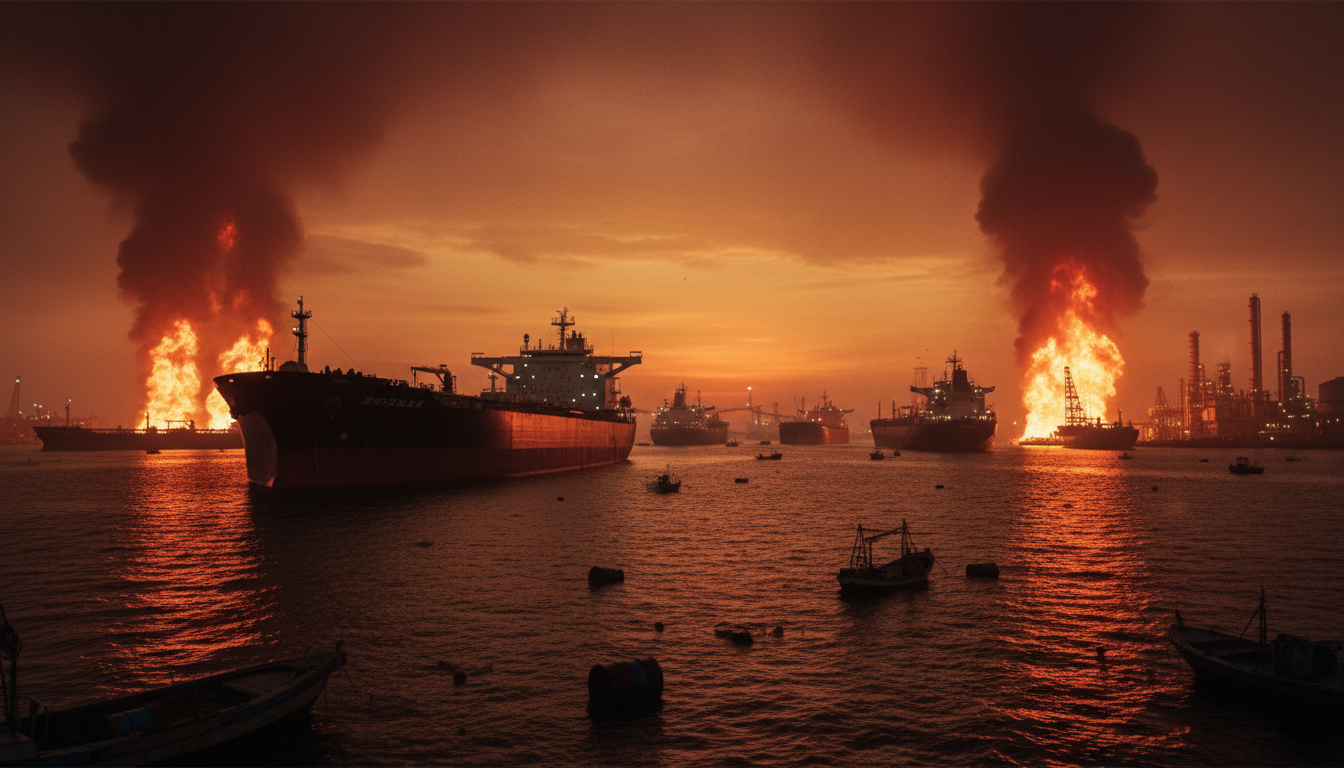
Strait of Hormuz Shutdown: Kuwait Declares Force Majeure, Warns of Global Economic Cataclysm
HOUSTON – Investors are grappling with an unprecedented energy crisis as Kuwait Petroleum Corporation (KPC) announced a force majeure on its oil export contracts, effectively ceasing crude shipments to the global market. Speaking via video conference from Kuwait during S&P Global’s CERAWeek energy conference in Houston on March 11, 2025, Sheikh Nawaf Al-Sabah, KPC’s chief executive officer, issued a stark warning: Iran’s closure of the strategic Strait of Hormuz constitutes a crippling disruption to Gulf Arab oil producers, unleashing a cascade of catastrophic consequences across the world economy.
The severity of the situation cannot be overstated, according to Al-Sabah. Kuwait has curtailed its oil production to solely meet domestic consumption needs, unable to access international shipping lanes. The KPC CEO expressed profound dismay at the situation, stating, “This is not merely an assault on the Gulf nations; it is an action that imperils global economic stability.” His remarks underscored the widespread concern among energy leaders regarding the escalating conflict’s impact on vital energy infrastructure and international commerce.
The Dire Reality: Production Halted, Supply Lines Severed
The immediate consequence for Kuwait, a significant OPEC producer, is a complete shutdown of its export capabilities. Prior to the ongoing conflict, Kuwait commanded approximately 2.6 million barrels per day (bpd) of crude output, ranking as the fifth-largest producer within OPEC. This substantial volume is now largely marooned, creating an immediate and significant void in global supply. The declaration of force majeure signals Kuwait’s inability to fulfill contractual obligations due to circumstances beyond its control, a rare and severe measure reflecting the gravity of the situation.
Al-Sabah highlighted that Saudi Aramco CEO Amin Nasser’s earlier warnings about “catastrophic consequences” from the Iran conflict had, in fact, gravely underestimated the full severity of the Strait’s effective closure. He emphasized that the financial and logistical repercussions extend far beyond the immediate geographical boundaries of the conflict zone, creating a widespread supply chain disruption that will ripple across international markets.
Beyond Crude: A Cascading Impact on Global Supply Chains
The implications of the Strait’s closure transcend crude oil. The KPC chief elaborated on the extensive reach of this crisis, detailing how crucial petrochemical feedstocks, essential for producing plastics used in food packaging, will face severe shortfalls. This impending scarcity will significantly complicate global food transportation and preservation efforts, impacting consumers worldwide.
Furthermore, the timely delivery of vital agricultural fertilizers from the Gulf region is now critically jeopardized. With planting seasons imminent in numerous parts of the world, the inability of these essential agricultural inputs to reach global markets could precipitate a severe food crisis. Al-Sabah warned that some developing nations might experience as much as a 50% reduction in their annual harvests compared to previous years, portending widespread hunger and humanitarian challenges.
Tanker and cargo traffic through the Strait, the vital artery connecting the Persian Gulf to international waters, has plummeted amidst Iran’s escalating attacks on commercial vessels. Historically, this narrow chokepoint facilitated the transit of approximately 20% of the world’s total oil supply, making its closure an unparalleled threat to global energy security and economic stability.
Recovery Challenges and Inadequate Global Responses
Reinstating full oil production capacity in the Gulf region will be a protracted process, even after the cessation of hostilities. Al-Sabah indicated that while Kuwait’s robust oilfields possess the inherent capacity to bring a notable portion of production back online within days, the bulk would require several weeks, and a return to full output could take three to four months. This timeline highlights the persistent vulnerability of global supply chains and the lasting impact of such disruptions on the energy market balance.
The KPC CEO dismissed the efficacy of emergency oil releases by the International Energy Agency (IEA), involving over 30 nations including the United States. He contended that the 3 million bpd of strategic reserves being released would be insufficient to offset the curtailments already seen in Iraq, let alone compensate for the substantial reductions in output from major producers like Saudi Arabia and the United Arab Emirates. His message was unequivocal: there is no viable alternative for the Strait of Hormuz as a critical and unmatched chokepoint for global energy flows.
Geopolitical Escalation: Attacks on Civilian Infrastructure
The immediate catalyst for this crisis is the intensifying conflict in the region. Iran has launched a series of missile and drone attacks against Gulf Arab nations, an escalation that followed a massive wave of airstrikes initiated by the U.S. and Israel against Iran starting on February 28. Al-Sabah personally attested to the harrowing reality on the ground, recounting that air raid sirens sounded multiple times early Tuesday morning in Kuwait as Iran launched ballistic missile attacks targeting civilian infrastructure.
Crucially, Al-Sabah explicitly refuted Iran’s assertions that its military actions are confined solely to American assets in the region. He revealed that Iranian forces have directly struck refineries located in Kuwait, facilities that are wholly owned by the Kuwaiti kingdom. Furthermore, Kuwait’s social security administration building was also targeted earlier in the month during an attack. These incidents directly expose the falsehood of Iran’s statements and underscore the indiscriminate nature of the current conflict, which extends its destructive reach to civilian targets and vital national infrastructure.
For investors, this developing situation presents profound geopolitical risks that demand immediate attention. The effective shutdown of the Strait of Hormuz, coupled with direct attacks on civilian infrastructure, signals a paradigm shift in energy market dynamics. The long-term implications for crude oil prices, energy security, global economic growth, and diversified investments across the energy sector are now critically elevated.
