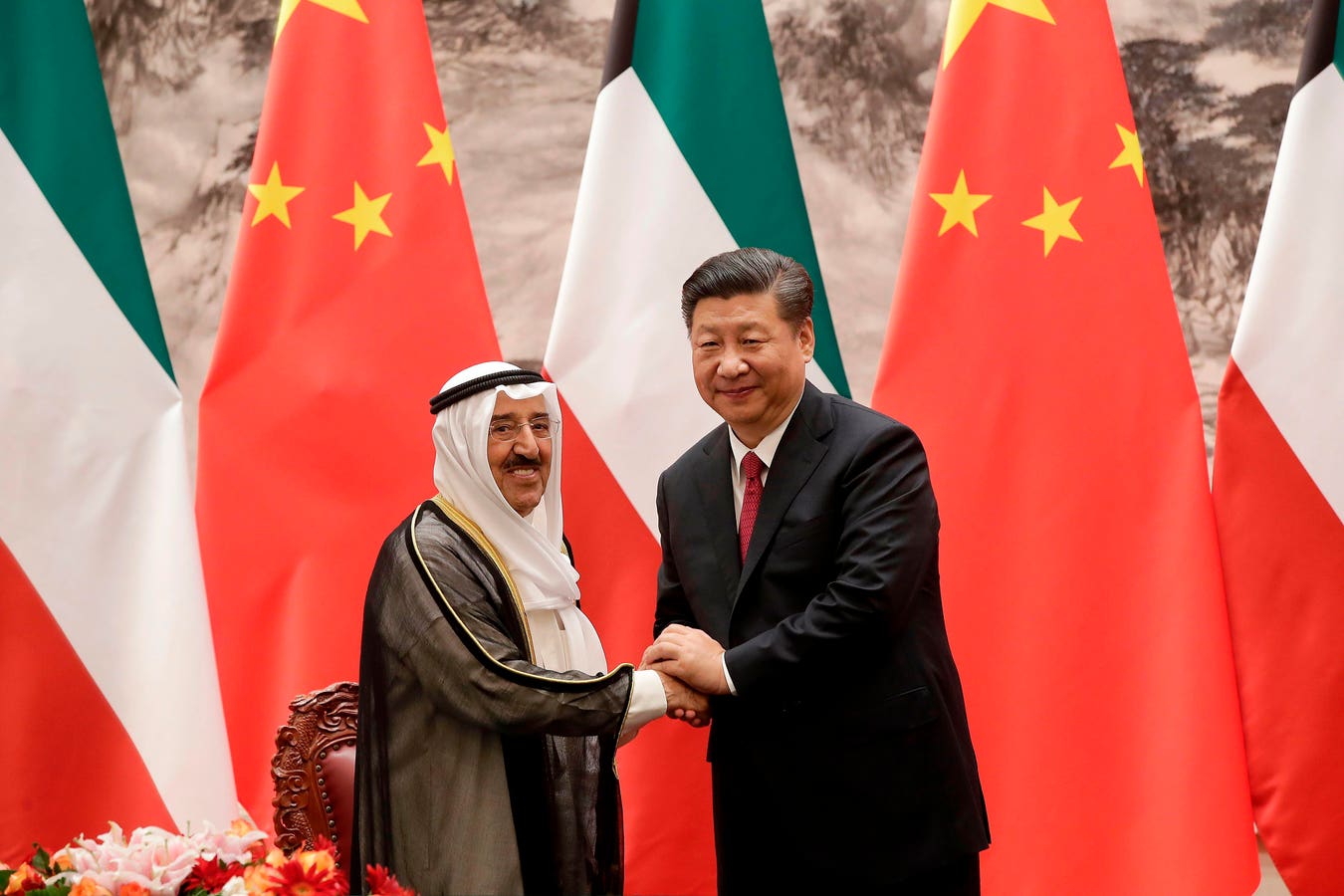
Kuwait’s deepening embrace of China, underscored by recent high-profile initiatives and strategic partnerships, signals a significant geopolitical recalibration in the heart of the Arabian Gulf. For oil and gas investors, this eastward pivot is more than just diplomatic maneuvering; it represents a fundamental shift in energy alliances that carries profound implications for global supply dynamics, market stability, and long-term portfolio strategy. Once a steadfast ally of the United States following the 1991 Gulf War, Kuwait is increasingly aligning its economic, energy, and even military interests with Beijing, challenging traditional Western foreign policy paradigms and reshaping the future landscape of international energy trade.
Kuwait’s Strategic Eastward Pivot: Beyond Cultural Exchange
The inauguration of the Kuwait-China Friendship Club in August, presided over by Princess Dr. Sheikha Al-Anoud Ibrahim Al-Duaij Al-Sabah, a prominent member of the ruling Al-Sabah dynasty with a decade-long involvement in Chinese relations, serves as a powerful symbol of this evolving relationship. Far from a mere cultural outreach, this initiative echoes the strategic influence seen in other Chinese diplomatic efforts globally, solidifying Beijing’s growing footprint in a nation critical to global oil supplies. This deepening bond signifies Kuwait’s commitment to diversifying its international partnerships, actively pursuing economic and energy alignment that takes precedence over traditional ideological or historical ties. This pragmatic approach highlights that neither China’s Communist Party governance nor its human rights record appear to hinder Kuwait’s strategic foreign policy objectives, focusing instead on mutual economic benefit and energy security.
Deepening Economic and Energy Interdependencies
The foundation of this burgeoning relationship lies in robust economic and energy interests. Kuwait, a pivotal crude oil producer, finds a natural and increasingly vital partner in China, the world’s largest energy consumer. This synergy extends beyond simple buyer-seller dynamics. Historically, Kuwait has demonstrated a willingness to forge diverse international relationships, even pursuing ties with the Soviet Union before the Gulf War. This strategic flexibility is now evident in its long-term engagement with China, which began with a military cooperation agreement as early as 1995. More recently, the pledge for closer military cooperation in August 2025, ahead of the anticipated launch of a jointly built ammunition plant now nearing completion, underscores a comprehensive, multi-faceted alliance. For investors, this signifies greater assurance of supply for China and a guaranteed, growing market for Kuwaiti crude, potentially influencing future long-term supply contracts and the overall stability of Asian energy markets. This industrial and military collaboration creates a deep-seated interdependence that will likely dictate Kuwait’s foreign policy for decades to come.
Market Snapshot: Geopolitical Undercurrents in Crude Price Volatility
The geopolitical shifts emanating from the Gulf have tangible implications for global energy markets, often manifesting as underlying pressures even amidst daily price fluctuations. As of today, Brent crude trades at $98.17 per barrel, reflecting a modest 1.23% decline within a day range of $97.92 to $98.67. Similarly, WTI crude sits at $89.74, down 1.57%, while gasoline prices dipped slightly to $3.08. While these daily movements are influenced by a myriad of factors, the broader trend reveals a significant shift: Brent crude has seen a sharp 12.4% decline from $112.57 just two weeks ago. This substantial drop underscores the market’s sensitivity to global economic indicators and perceived supply-demand balances. However, for sophisticated investors focused on long-term strategy, the structural realignment of alliances, such as Kuwait’s pivot, introduces new layers of geopolitical risk and opportunity. Such shifts can influence long-term supply stability, trade routes, and the very perception of risk premium embedded in crude prices, which our readers frequently inquire about when asking for current Brent crude prices and the models behind them.
Forward-Looking Analysis: Implications for OPEC+ Cohesion and Supply Strategy
Kuwait’s deepening ties with China hold critical ramifications for OPEC+ strategy and global supply management. With the crucial OPEC+ Joint Ministerial Monitoring Committee (JMMC) meeting scheduled for April 18th, followed closely by the Full Ministerial meeting on April 20th, the market is on high alert for production quota decisions. Investors, keenly interested in “what are OPEC+ current production quotas?”, must consider how member states’ evolving geopolitical alignments might influence their stances within the cartel. Kuwait, with its strengthened Chinese partnership, may increasingly advocate for policies that prioritize stable supply to its primary Asian market, potentially diverging from approaches favored by members with stronger Western ties. This shift could subtly, or even overtly, influence OPEC+’s collective decisions on output levels, affecting global supply-demand balances and crude price stability. The long-term implications extend to the role of the Gulf states in an increasingly multipolar energy world, where traditional alliances are being renegotiated in favor of economic pragmatism and energy security.
Investor Outlook: Navigating Shifting Alliances for Portfolio Resilience
For oil and gas investors, the evolving relationship between Kuwait and China necessitates a careful re-evaluation of portfolio exposures and risk assessments. This geopolitical pivot introduces both new opportunities and potential challenges. On one hand, the strengthening of producer-consumer ties can enhance long-term supply security for major economies, potentially reducing volatility in certain segments of the market. On the other hand, it complicates the traditional geopolitical landscape, potentially creating new fault lines in global energy governance and supply chain resilience. Investors must consider how these shifting alliances might impact future oil flows, pricing mechanisms, and the strategic positioning of national oil companies. Understanding these deep-seated, structural changes requires comprehensive analysis, moving beyond daily headlines to grasp the profound implications for long-term capital allocation in the energy sector. The resilience of an investment portfolio in the coming decade will largely depend on its ability to anticipate and adapt to these fundamental realignments in global energy geopolitics.