

(Update) March 25, 2026, 3:10 PM GMT: Article updated to add crude loadings halted.
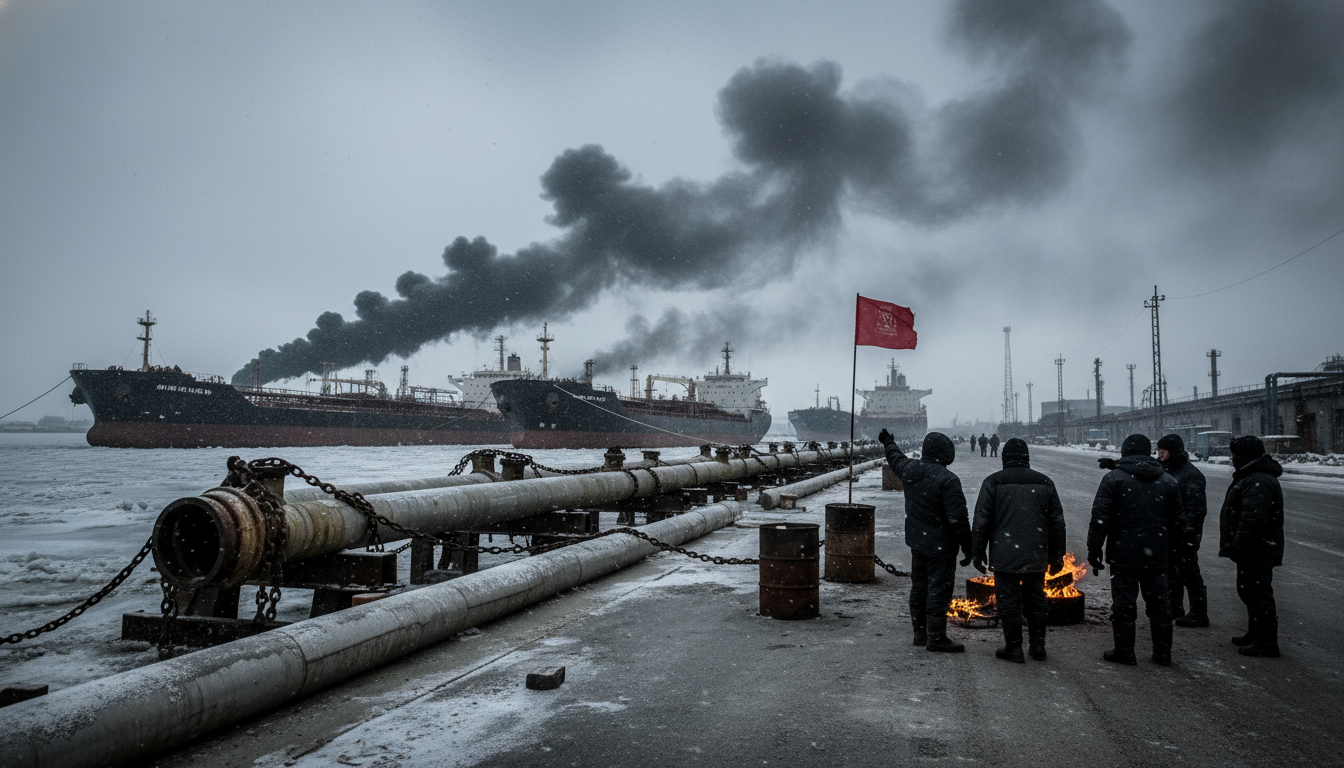
Geopolitical tensions continue to escalate in Eastern Europe, significantly impacting global energy markets. Investors are closely monitoring the situation after Russia’s vital Ust-Luga port on the Baltic Sea ceased crude oil loading operations. This dramatic development follows an intense aerial assault by Ukrainian forces, marking the most significant strike on Russian territory in over a year. The sustained drone attack on Wednesday morning inflicted considerable damage, igniting fires at key port facilities and raising immediate concerns about oil supply stability.
Reports from individuals with direct knowledge of the situation, who requested anonymity, confirm the suspension of oil loading activities. Ukraine’s General Staff, via a statement on Telegram, explicitly claimed responsibility for the drone strikes, specifying that targets included Novatek PJSC’s oil-product infrastructure within the port complex. These attacks reportedly set ablaze critical storage tanks and loading equipment, presenting a severe operational challenge for the Russian energy giant. Local governor Alexander Drozdenko acknowledged the containment of the blaze early Wednesday, though he refrained from identifying the specific facilities affected. Novatek PJSC offered no immediate comment on the incident when approached for information.
Critical Junction: Ust-Luga’s Role in Global Oil Supply
The Ust-Luga port represents a cornerstone of Russia’s energy export capabilities. Last month alone, this strategic Baltic outlet facilitated the shipment of approximately 450,000 barrels of crude oil per day. Beyond its crude terminal, operated by Transneft PJSC, Novatek’s specialized facilities at Ust-Luga are crucial for processing stable gas condensate. This raw material is then transformed into high-value refined petroleum products such as naphtha, jet fuel, and gasoil, all destined for international markets. The port’s broader infrastructure also supports the export of coal, fertilizers, and a diverse range of general cargoes, underscoring its multifaceted importance to Russia’s economy and global trade flows. Any prolonged disruption here carries significant implications for energy investors watching the interplay of supply, demand, and geopolitical risk premiums.
Escalating Strikes and Regional Vulnerability
The attack on Ust-Luga is not an isolated incident but rather part of a broader, intensifying campaign by Kyiv targeting Russian energy infrastructure. Earlier this week, Ukrainian forces also struck Primorsk, another critical Baltic oil-export facility for Russia. This previous assault caused a cargo loading hiatus of at least 36 hours, according to shipping intelligence. These coordinated actions highlight a deliberate strategy to disrupt Russia’s capacity to export hydrocarbons and consequently undermine its war financing efforts. Moscow’s defense ministry reported intercepting a staggering 389 Ukrainian drones overnight, marking the highest number recorded since March 10, 2025, according to state news agency Tass. Separately, Kyiv’s General Staff confirmed hitting the Purga patrol icebreaker at the Vyborg shipyard in Russia’s Leningrad region, a vessel under construction for border guard use, further demonstrating the expanding scope of these attacks.
Strategic Intent and Market Ramifications
Officials in Kyiv have consistently articulated their strategic rationale behind these strikes: to diminish the Kremlin’s oil revenues, which are instrumental in funding the ongoing conflict, and to reduce critical fuel supplies reaching the front lines. For oil and gas investors, these actions translate directly into heightened supply chain risks and increased market volatility. Any sustained interruption in oil exports from Russia’s key Baltic Sea ports is poised to exacerbate global supply concerns. These worries are already elevated by the ongoing Middle East conflict, now entering its fourth week, which continues to send ripples through international energy markets.
The confluence of these geopolitical flashpoints has already demonstrably impacted crude prices. The conflict in the Middle East has effectively constrained critical oil flows through the Strait of Hormuz, a pivotal export conduit for Gulf barrels, pushing the Brent benchmark above $100 per barrel. While prices have recently seen a marginal retreat, possibly influenced by renewed U.S. diplomatic initiatives aimed at de-escalating tensions with Iran, the underlying fragility of global oil supply remains a dominant theme for energy market participants.
Wider Conflict Impacts and Investor Outlook
Beyond the direct energy infrastructure hits, the broader conflict continues to inflict collateral damage. An overnight drone attack on Russia’s Belgorod region, bordering Ukraine, resulted in widespread power outages, leaving an estimated 450,000 residents without electricity. Regional governor Vyacheslav Gladkov indicated that repair efforts, though immediate, are expected to last several days. Conversely, Russia maintains its relentless assault on Ukrainian infrastructure, with Ukraine’s General Staff detecting 147 Russian drones last night. Ukrainian President Volodymyr Zelenskiy reported more than 550 launches from Russia on Tuesday, impacting cities and regions across the nation, including Lviv, Ternopil, Kharkiv, and Dnipro.
For investors focused on the oil and gas sector, these developments underscore the persistent geopolitical risk premium embedded in crude prices. The vulnerability of critical export infrastructure in regions like the Baltic Sea, coupled with ongoing tensions in the Middle East, demands a sophisticated understanding of supply dynamics and geopolitical events. The current environment signals a prolonged period of elevated volatility, where supply disruptions, even localized ones, can have outsized impacts on global energy pricing and investment strategies.
