

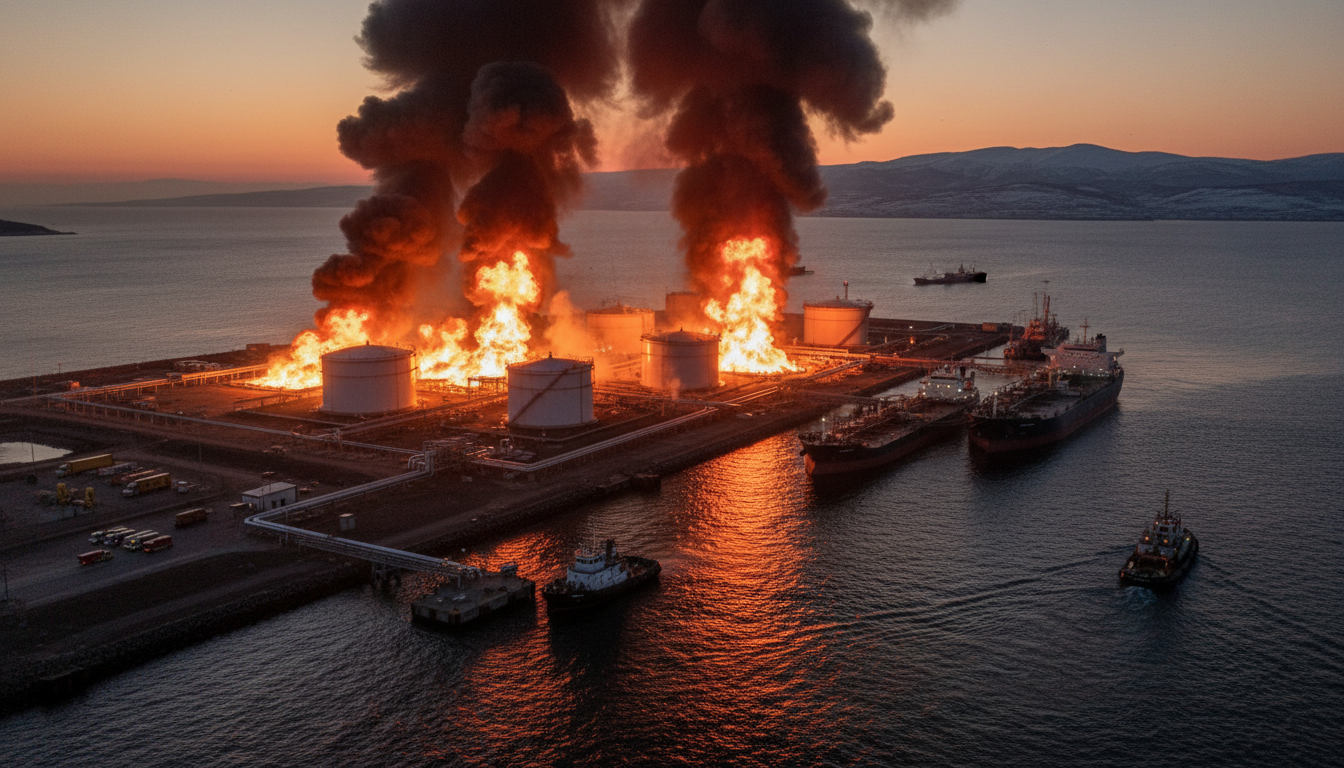
The geopolitical landscape of global energy markets has once again been rattled as Ukraine intensified its aerial campaign against Russian infrastructure, culminating in a significant drone strike on the Ust-Luga port on the Baltic Sea. This latest assault, which ignited a substantial blaze at a vital energy export hub, underscores the escalating risks to Russian oil supply chains and injects fresh volatility into an already tense international market.
Local authorities, through Governor Alexander Drozdenko, confirmed early Wednesday that the fire at Ust-Luga was being contained. While specific facilities damaged were not immediately detailed, the port’s critical role as a conduit for Russian energy exports immediately drew investor attention. Ust-Luga stands as a cornerstone of Russia’s Baltic oil export network, with monthly shipments averaging approximately 450,000 barrels of crude per day. Beyond crude, the complex also houses Novatek PJSC’s refined petroleum products terminal, alongside crucial facilities for coal, fertilizer, and general cargo, making it a multifaceted target with broad economic implications.
Strategic Targeting of Russian Energy Lifelines
This recent attack on Ust-Luga follows another key incident earlier in the week, when Ukraine struck Primorsk, another significant Russian oil export facility situated on the Baltic coast. That earlier operation resulted in a minimum 36-hour disruption to cargo loadings, as indicated by shipping intelligence. The deliberate targeting of these maritime export hubs in the Baltic Sea highlights a concerted strategy aimed at hindering Russia’s ability to generate revenue from its energy resources, a critical funding stream for its ongoing military operations.
While Kyiv has not formally claimed responsibility for the Ust-Luga incident, Ukrainian officials have consistently articulated their intent to disrupt Russia’s energy infrastructure. The stated objective is clear: to curtail the Kremlin’s financial capacity to sustain its invasion and to diminish fuel supplies reaching the front lines. These actions translate directly into elevated risk premiums for Russian energy assets and raise concerns among global commodity traders about the reliability of supply.
Global Supply Concerns Intensify
The cumulative effect of these attacks on Russia’s vital Baltic ports is poised to exacerbate existing concerns regarding global oil supply stability. Market participants are already grappling with substantial geopolitical tensions in the Middle East, a conflict now in its fourth week, which has significantly impacted global energy flows. Specifically, the strife has effectively disrupted oil flows via the Strait of Hormuz, an indispensable conduit for crude originating from the Gulf region, pushing the Brent benchmark significantly above $100 per barrel. Although Brent prices have seen a marginal retreat, buoyed by nascent U.S. diplomatic efforts to de-escalate the Middle Eastern conflict, the underlying fragility of global energy supply remains pronounced.
Investors must recognize that sustained disruptions to Russian crude and product exports, coupled with ongoing geopolitical instability elsewhere, could rapidly tighten an already finely balanced market. The strategic importance of Russia as a major global energy supplier means any impediment to its export capabilities will invariably send ripples through international crude benchmarks and refined product prices.
Escalation and Widespread Drone Activity
The drone attacks are not isolated incidents but part of a broader, intensified aerial campaign. Moscow’s Defense Ministry reported intercepting a staggering 389 Ukrainian drones overnight, marking the highest number recorded since March 10, 2025, according to state news agency Tass. This unprecedented level of aerial activity underscores the relentless nature of the conflict and the constant threat posed to infrastructure on both sides.
The reciprocal nature of these attacks is also evident. A separate overnight drone assault targeted Russia’s Belgorod region, bordering Ukraine, triggering widespread power outages that left an estimated 450,000 residents without electricity. Regional governor Vyacheslav Gladkov indicated that repairs, though commencing immediately, would likely span several days. Simultaneously, Ukraine’s General Staff reported detecting 147 Russian drones last night, while President Volodymyr Zelenskiy noted over 550 launches from Russia on Tuesday, impacting cities and regions across Ukraine, including Lviv, Ternopil, Kharkiv, and Dnipro.
Investor Outlook: Navigating Heightened Risk and Volatility
For investors focused on the oil and gas sector, these developments signal a period of continued heightened volatility and amplified geopolitical risk. The deliberate targeting of key energy export infrastructure by Ukraine demonstrates a capability and intent to inflict economic pain on Russia, directly impacting its ability to export commodities. This adds a tangible supply-side risk to the global market, distinct from the demand-side concerns or Middle Eastern supply disruptions.
Monitoring the frequency and effectiveness of these attacks, along with Russia’s capacity to mitigate their impact, will be crucial. Any sustained reduction in Russian crude or product availability from its Baltic ports, particularly the 450,000 barrels per day typically flowing from Ust-Luga, could significantly influence global benchmarks like Brent. Investors should prepare for potential upward pressure on oil prices, particularly for refined products, as supply chains adapt to these new realities. The premium on energy security and diversified supply sources will undoubtedly rise, making careful analysis of geopolitical developments an indispensable part of any sound energy investment strategy.
