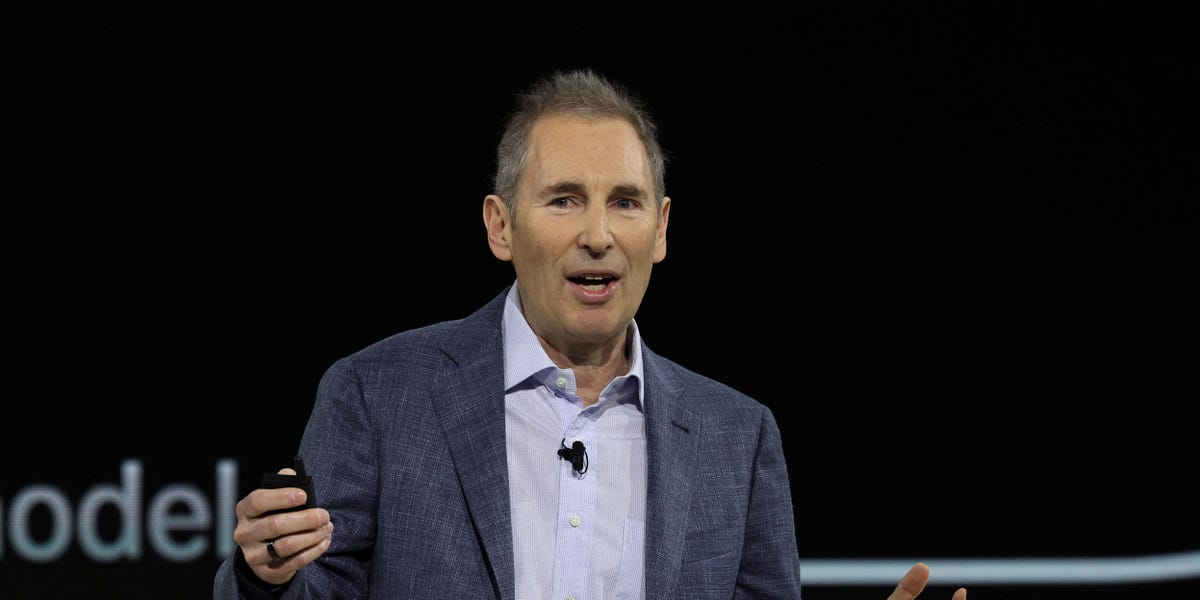
Jassy’s AI Job Outlook: Clarity for Investors
In a global energy landscape already navigating complex geopolitical currents, Amazon CEO Andy Jassy’s recent forthright comments on Artificial Intelligence’s inevitable impact on white-collar jobs introduce another layer of macro-economic uncertainty and opportunity for oil and gas investors. While Jassy’s warning primarily targets the tech sector, its implications ripple across the entire economy, potentially influencing future energy demand trajectories. Concurrently, escalating geopolitical tensions, particularly in the Middle East, continue to underpin supply-side risks, creating a dichotomy of long-term demand evolution against immediate supply disruptions. For astute investors, understanding how these disparate forces converge is paramount to navigating the coming quarters.
AI’s Economic Ripple: A Dual-Edged Sword for Energy Demand
Andy Jassy’s acknowledgment that AI “should change the way our work is done” and will likely lead to “fewer white-collar jobs” at Amazon serves as a critical signal from one of the world’s largest employers. This isn’t an isolated view; prominent figures from OpenAI’s Sam Altman to Nvidia’s Jensen Huang have echoed similar sentiments. While the immediate focus is on job displacement, the broader economic impact on energy demand is a nuanced prospect. On one hand, widespread job losses could temper consumer spending and industrial activity, potentially dampening overall energy consumption. Conversely, AI’s productivity gains, if channeled effectively, could spur new industries and drive unprecedented economic growth, demanding more energy for data centers, manufacturing, and logistics. Investors must weigh this potential for both deflationary pressures from efficiency gains and inflationary pressures from new economic activity. Our analysis suggests that in the near term, the uncertainty surrounding AI’s economic impact could contribute to a cautious outlook on demand growth, even as the technology itself consumes significant power.
Geopolitical Volatility and the Brent Price Premium
While the long-term economic implications of AI unfold, immediate geopolitical events continue to exert significant pressure on crude markets. Reports of US airstrikes on key nuclear enrichment facilities in Iran, with warnings of further actions if peace does not materialize, immediately inject a substantial risk premium into oil prices. This kind of event underscores the persistent fragility of Middle Eastern supply lines, a critical factor for global energy security. As of today, April 15th, Brent crude trades around $93.22, marking an almost 9% decline from its $102.22 high just three weeks prior on March 25th. This recent downward trend, despite fresh geopolitical headlines, illustrates a market grappling with multiple forces. While the risk of supply disruption from the Gulf remains acute, the broader macroeconomic concerns, perhaps exacerbated by the AI outlook and a stronger dollar, have prevented a sustained upward surge in response to these specific military actions. Investors are keenly aware that any further escalation could swiftly reverse this trend, highlighting the need for dynamic risk assessment.
Upcoming Catalysts: OPEC+ and Inventory Data in Focus
The coming weeks are packed with critical events that will provide further clarity on market direction. The upcoming OPEC+ Joint Ministerial Monitoring Committee (JMMC) meeting on April 18th, followed by the full ministerial session on April 20th, will be critical. The market will be closely watching for any signals regarding production policy, particularly given the recent price volatility and the ongoing supply-demand balancing act. Any indication of deeper cuts or an extension of current quotas could provide significant upward price momentum. Conversely, a decision to increase output or a lack of consensus could put downward pressure on prices. Beyond OPEC+, weekly data from the API on April 21st and the EIA’s Petroleum Status Report on April 22nd will offer fresh insights into US crude inventories and demand indicators. These reports are consistently high-impact events for traders, providing real-time snapshots of the world’s largest oil consumer. Further Baker Hughes Rig Count reports on April 17th and April 24th will also inform the supply side, indicating North American production trends. These scheduled events act as crucial waypoints for investors seeking to calibrate their positions in a volatile environment.
Navigating Investor Concerns: Forecasting Brent Amidst Complexity
OilMarketCap readers are rightly focused on constructing a robust base-case Brent price forecast for the next quarter and beyond, seeking clarity on the consensus 2026 Brent outlook. The confluence of long-term AI-driven economic shifts and immediate geopolitical flashpoints makes this a challenging but essential task. For Q2, our analysis suggests Brent will likely trade within a $90-$105 range. The lower end of this range is supported by lingering demand concerns stemming from global economic deceleration and the potential for AI-induced productivity shifts to temper energy consumption. The upper bound is heavily influenced by the persistent geopolitical risk premium, especially concerning Middle East supply security, and the potential for OPEC+ to maintain or even tighten supply. For a 2026 outlook, the consensus remains wide, but our proprietary models suggest a base case around $95, assuming a gradual global economic recovery and continued OPEC+ discipline. However, this forecast is highly sensitive to the ultimate trajectory of AI’s economic integration – whether it proves to be a net demand driver or a disruptive force – and the unpredictable nature of geopolitical events. Investors should prioritize a flexible strategy, ready to adapt to both technological advancements and escalating global tensions, which remain the dominant forces shaping the energy market.


