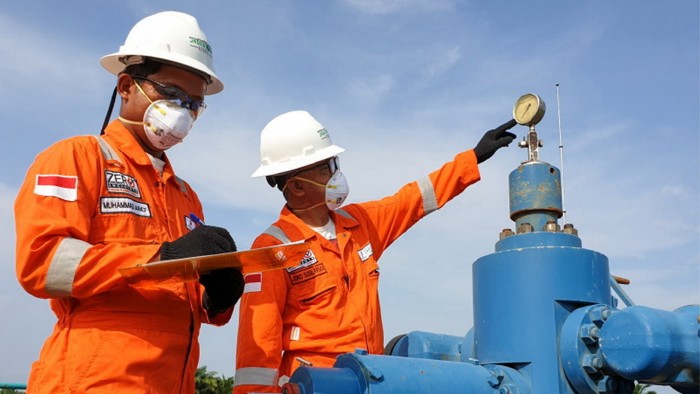
Jadestone Energy, an independent oil and gas producer with a strategic focus on Southeast Asian and Australian assets, is experiencing renewed investor interest amidst a volatile global energy landscape. While the company has navigated a period of significant share value and profitability decline, a substantial investment from Tyrus Capital, led by co-chief investment officer Gunter Waldner, signals a potential turning point. With Tyrus Capital increasing its stake to 27.4 percent, the market is scrutinizing Jadestone’s operational improvements, particularly in its ageing asset portfolio and the development of the new Akatara gasfield in Indonesia. This strategic vote of confidence comes as the broader energy sector grapples with geopolitical tensions and shifting supply-demand dynamics, positioning Jadestone for a potential re-rating.
Strategic Capital Infusion Signals Deep Value
The recent £933,333 share purchase by Tyrus Capital, a move that solidifies its position as a major investor with 27.4 percent of Jadestone Energy, is a powerful indicator that institutional money sees significant untapped value. This substantial capital injection arrived as Jadestone’s shares began to rebound from an all-time low, having previously traded close to 90p in February 2023 before their decline. Such a decisive move by a sophisticated investor like Tyrus, with director Gunter Waldner at the helm, suggests a strong belief in Jadestone’s underlying asset quality and its potential for operational turnaround. Jadestone’s core strategy centers on acquiring and enhancing mature oil and gas fields, a capital-efficient approach that aims to extract remaining reserves through targeted operational improvements. The Akatara gasfield represents a notable deviation, offering a growth avenue in a new development.
Navigating Market Headwinds with Geopolitical Undercurrents
The timing of Tyrus Capital’s increased commitment is particularly salient given the current state of global energy markets. As of today, Brent crude trades at $95.58, marking a 0.83 percent gain within a daily range of $91 to $96.89. WTI crude also saw an uptick, reaching $91.75, up 0.51 percent. These figures reflect persistent upward price pressure, a sentiment underscored by the recent 14-day trend where Brent crude, despite some fluctuation, moved from $102.22 on March 25th to $93.22 on April 14th. This overall trajectory, especially amidst ongoing geopolitical tensions in key regions like the Middle East, suggests a supportive pricing environment for oil and gas producers. Elevated crude prices, coupled with a gasoline price holding at $3.01, can significantly bolster Jadestone’s revenue streams from its production assets across Southeast Asia and Australia, providing a crucial tailwind as the company executes its operational improvements and development plans.
Future Catalysts and Analyst Revisions Point to Long-Term Strength
Jadestone’s financial trajectory, while showing some short-term adjustments, paints an increasingly optimistic long-term picture. The company previously achieved record cash profits of $160 million in 2019, nearly matching this in 2022 with $150 million during a period of high energy prices. While analyst Sam Wahab of Peel Hunt recently revised down the Ebitdax forecast for the current year from $152 million to $124 million, this is primarily due to minor delays in production schedules. Crucially, Wahab significantly increased Ebitdax forecasts for 2026 and 2027 by 50 percent and 20 percent respectively, projecting figures around $200 million for each year. This forward-looking strength is attributed to stronger anticipated production and a dramatically improved balance sheet, with a forecast of net cash by 2027. These projections will be keenly watched by investors, especially as a series of upcoming industry events could further shape market sentiment. The OPEC+ Joint Ministerial Monitoring Committee (JMMC) meeting on April 18th, followed by the Full Ministerial meeting on April 20th, will be critical in signaling future supply policies. Any production adjustments could directly impact global crude prices, thereby influencing Jadestone’s profitability. Furthermore, the weekly API and EIA crude inventory reports scheduled for April 21st, 22nd, 28th, and 29th will provide ongoing insights into demand and supply balances, contributing to the broader market context that underpins Jadestone’s operational success.
Addressing Investor Focus: Value Unlocking in a Dynamic Market
Our proprietary reader intent data indicates that investors are keenly focused on understanding future price environments, with frequent queries about the consensus 2026 Brent forecast and requests for base-case Brent price projections for the next quarter. This pervasive interest in macro oil price trends underscores the importance of a favorable market for companies like Jadestone. The Tyrus Capital investment suggests a belief that Jadestone’s intrinsic value is not fully reflected in its current share price, particularly when considering its operational improvements and the potential for a sustained higher oil price environment. Investors are looking for opportunities that offer “protection against whatever comes next from the Middle East” – a sentiment directly benefiting companies with diversified production bases and strong operational control. Jadestone’s focus on enhancing production from its existing assets, coupled with the long-term outlook for a robust balance sheet reaching a net cash position by 2027, addresses fundamental investor concerns regarding financial stability and sustainable growth. This blend of strategic asset management, a supportive macro environment, and institutional backing positions Jadestone as a compelling consideration for those seeking value in the upstream oil and gas sector.