Italy’s Growing Climate Risk: A Looming Challenge for European Energy Infrastructure
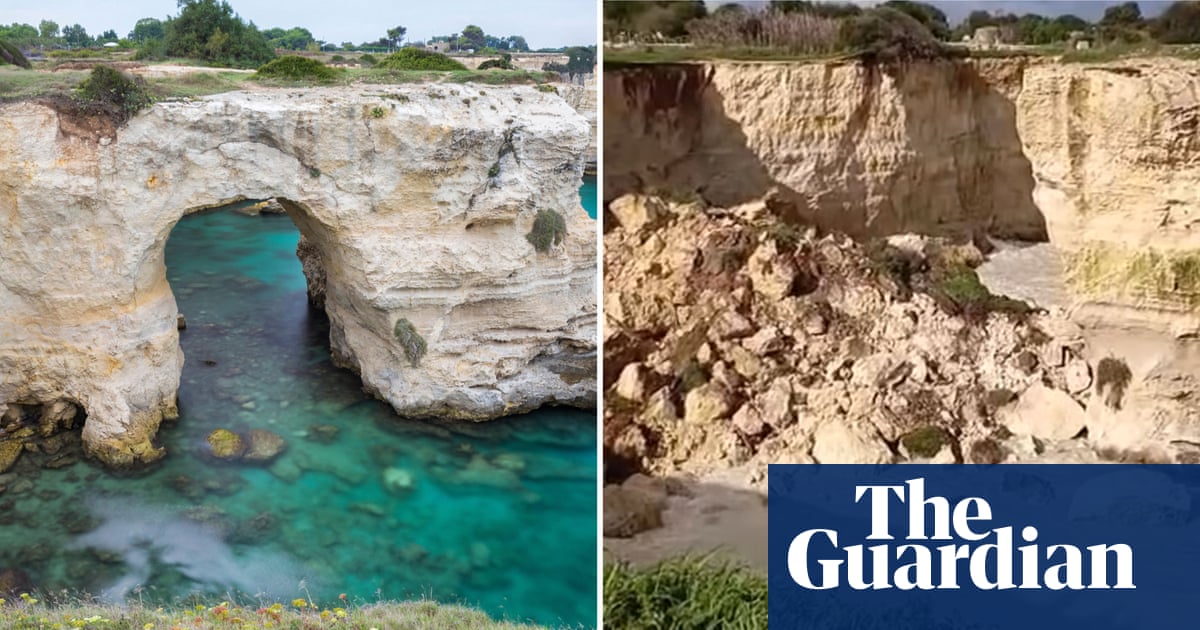
The recent collapse of the iconic Lovers’ Arch in Sant’Andrea, Puglia, following severe storms and coastal erosion, serves as a stark reminder of the escalating climate-driven infrastructure risks across Southern Italy. While a natural landmark, this event is far from isolated. It is emblematic of a broader trend of “Medicanes”—Mediterranean cyclones—that are increasingly battering the region, devastating ports, roads, and residential areas. For oil and gas investors, these seemingly localized events carry significant implications for European energy security, supply chain resilience, and the operational viability of critical infrastructure assets. The accelerating pace of climate change, with the Mediterranean experiencing some of its hottest years on record, is supercharging these extreme weather events, demanding a re-evaluation of risk profiles for energy sector investments in the region.
Coastal Erosion and the Vulnerability of Energy Supply Chains
The destructive force of Medicanes, characterized by winds exceeding 60mph and waves up to 15 meters, has already left a trail of widespread devastation. Beyond natural arches, these events have destroyed ports, torn up roads, and caused significant landslides, such as the 4km chasm created in Niscemi, Sicily, by Cyclone Harry in January. For the energy sector, this translates directly into heightened operational risk and potential supply chain disruptions. Southern Italy is a crucial gateway for energy imports into Europe, particularly for natural gas via pipelines and LNG terminals, and for refined petroleum products through its coastal ports. Damage to these ports, coastal refineries, or even the land-based transmission infrastructure connecting them to the wider European grid, could lead to severe bottlenecks, increased transportation costs, and potentially volatile regional energy prices. Investors must consider the capital expenditure required for climate-proofing existing assets and the potential for regulatory pressure to mandate such upgrades, which could impact profitability for companies with significant exposure to this vulnerable coastline.
Current Market Dynamics Reflect Broader Investor Uncertainty
The investment landscape for oil and gas is already navigating a complex web of geopolitical tensions and demand uncertainties. As of today, Brent Crude trades at $92.24, marking a 2% increase, while WTI Crude stands at $88.73, up 1.5% from its daily lows. Gasoline prices have also seen an uptick, reaching $3.11, a 2.31% rise. However, this daily bounce must be viewed in the context of a significant downturn; over the past 14 days, Brent has shed nearly 20% of its value, plummeting from $118.35 to $94.86. This sharp correction underscores a market grappling with bearish pressures. Our proprietary reader intent data reveals a prevalent investor focus on directional price movements, with frequent queries like “is WTI going up or down” and predictions for “the price of oil per barrel by end of 2026.” The escalating infrastructure risks in Italy, while regional, contribute another layer of uncertainty to this already volatile environment, prompting investors to scrutinize the long-term stability of European energy supply and demand dynamics, and the operational resilience of companies operating in vulnerable areas.
Upcoming Events and Strategic Shifts for Energy Players
Looking ahead, the next two weeks bring several key events that could either amplify or mitigate current market anxieties, particularly in light of the growing infrastructure challenges in Southern Italy. The OPEC+ JMMC Meeting scheduled for 2026-04-21 will be closely watched for any signals on production policy, which could directly impact supply stability. While the immediate focus of OPEC+ is on global supply, the resilience of demand centers and their ability to import and distribute energy efficiently will undoubtedly factor into their long-term outlook. Furthermore, the EIA Weekly Petroleum Status Reports on 2026-04-22 and 2026-04-29, along with the Short-Term Energy Outlook on 2026-05-02, will provide crucial insights into inventory levels and demand projections. These reports, while global in scope, will be interpreted by investors through a lens that increasingly factors in regional risks like those manifesting in Italy. For energy companies like Repsol, which some of our readers are specifically inquiring about regarding its April 2026 performance, a proactive strategy focusing on diversifying supply routes, investing in resilient infrastructure, or accelerating transitions to less vulnerable energy sources will be paramount. The frequency of Baker Hughes Rig Count updates (2026-04-24, 2026-05-01) will also offer insights into producer confidence, which could be indirectly affected by broad concerns over demand stability in regions facing climate-induced economic disruption.
Investment Implications: Risk Mitigation and New Opportunities
For investors, the growing infrastructure risk in Italy presents both challenges and potential opportunities. The immediate challenge is increased operational expenditure for energy companies maintaining assets in vulnerable coastal regions, coupled with potentially higher insurance premiums. Supply chain disruptions, even localized ones, can have ripple effects across the European market, impacting commodity prices and the profitability of downstream operations. Companies with significant asset exposure to the Mediterranean coastline may face increased scrutiny from ESG-focused investors regarding their climate adaptation strategies. However, this also opens doors for new investment themes. Companies specializing in climate-resilient infrastructure design and construction, such as those building robust port facilities or advanced coastal protection systems, are likely to see increased demand. Furthermore, the imperative for energy security in the face of centralized infrastructure vulnerabilities could accelerate investment in decentralized, localized renewable energy projects that are less susceptible to large-scale grid failures or port closures. Investors seeking to navigate the evolving energy landscape should prioritize companies with demonstrated resilience strategies, diversified asset portfolios, and a clear vision for adapting to the undeniable realities of climate change and its impact on critical infrastructure.


