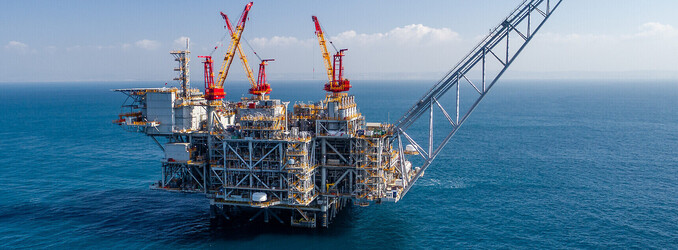
The Eastern Mediterranean energy landscape is once again highlighting its inherent geopolitical volatility, as Israel’s Energy Ministry has ordered the temporary shutdown of some natural gas fields following strikes on Iran. This decisive security measure, notably impacting Energean Plc’s Karish deposit, echoes similar actions taken last year, underscoring the persistent vulnerability of regional gas supplies. For investors, this recurring disruption necessitates a deeper look at energy security premiums, export reliability, and the broader implications for both natural gas and crude oil markets as geopolitical tensions simmer in a critical energy-producing region.
Immediate Repercussions: Eastern Mediterranean Gas Flows Under Scrutiny
The confirmed suspension of operations at the Karish field, primarily serving Israel’s domestic market, is a direct consequence of escalating regional conflict. While Energean Plc has publicly acknowledged the directive, the status of Israel’s larger export-oriented fields, Leviathan and Tamar, operated by Chevron Corp., remains under close observation. This uncertainty is particularly critical for Egypt, a nation that became a net gas importer in 2024 and relies heavily on contracted Israeli gas. Leviathan alone is slated to send approximately 4.5 Bcm annually to Egypt, with a massive $35 billion deal setting the stage for 130 billion cubic meters of supply between 2026 and 2040. The interruption, reminiscent of last summer’s shutdown which forced Egypt to curtail supplies to key industries like fertilizer production, starkly illustrates the fragile nature of this vital energy artery. Investors tracking regional energy infrastructure must factor in this elevated operational risk when evaluating assets or long-term supply agreements in the Eastern Mediterranean basin.
Crude Market Dynamics: A Disconnect Amidst Geopolitical Heat
Despite the palpable increase in geopolitical risk stemming from the US-Israeli attacks and Tehran’s retaliation, the immediate reaction in crude oil markets presents an intriguing dynamic. **As of today, Brent Crude trades at $93.93, showing a modest increase of 0.74%**, while **WTI Crude stands at $90.35, up 0.76%** within its daily range of $89.71-$90.70. This relatively muted response contrasts sharply with the **significant 14-day Brent trend, which saw prices decline by nearly 20% from $118.35 on March 31st to $94.86 on April 20th.** This substantial correction suggests that underlying market fundamentals, perhaps a perception of adequate global supply or robust strategic reserves, have buffered the impact of recent headlines. Investors are clearly asking, “is WTI going up or down?” and “what do you predict the price of oil per barrel will be by end of 2026?” The current market data indicates that while geopolitical events can introduce volatility, the broader supply-demand picture and inventory levels are exerting a stronger influence on price trajectory for now. However, this equilibrium could rapidly shift with any further escalation, demanding constant vigilance from energy sector investors.
Forward Outlook: Key Events Shaping Future Energy Prices
Looking ahead, several critical events on the energy calendar will provide further signals for crude and natural gas investors, potentially influencing price direction for the coming months. The **OPEC+ JMMC Meeting on April 21st** is an immediate focal point. Any statements regarding production quotas, compliance levels, or future supply strategies will directly impact market sentiment and crude price expectations. Following this, the **EIA Weekly Petroleum Status Reports on April 22nd and April 29th**, alongside the **API Weekly Crude Inventory reports on April 28th and May 5th**, will offer crucial insights into U.S. inventory builds or draws, refinery utilization, and overall domestic demand. These figures are fundamental drivers, particularly for WTI, and can indicate underlying market strength or weakness. Furthermore, the **EIA Short-Term Energy Outlook, due on May 2nd**, will provide a comprehensive, official forecast for global supply, demand, and price scenarios. This outlook will be instrumental in shaping longer-term investor expectations, directly addressing reader questions about the end-of-year price outlook for oil and helping investors position their portfolios accordingly amidst the ongoing geopolitical uncertainty.
Investment Strategy: Navigating Volatility and Regional Risk Premiums
For discerning investors, the recurring disruptions in the Eastern Mediterranean underscore the growing importance of regional risk premiums in energy asset valuation. While Israel’s natural gas production primarily affects regional and domestic supplies, any prolonged or escalated conflict could indirectly tighten global LNG markets, especially if Egypt’s import needs increase. For crude oil, the current market response suggests that while geopolitical tensions are high, they are not yet translating into a sustained, sharp price rally. This could change rapidly if the conflict broadens, directly impacting major shipping lanes or production facilities in the wider Persian Gulf. Investors should consider the diversification of their energy holdings, favoring companies with robust operational resilience and geographically dispersed assets. Furthermore, closely monitoring the upcoming OPEC+ decisions and EIA forecasts will be paramount for understanding the balance of supply and demand, allowing for agile adjustments to investment strategies in a market where geopolitical events continue to add an unpredictable layer of complexity to fundamental analysis.