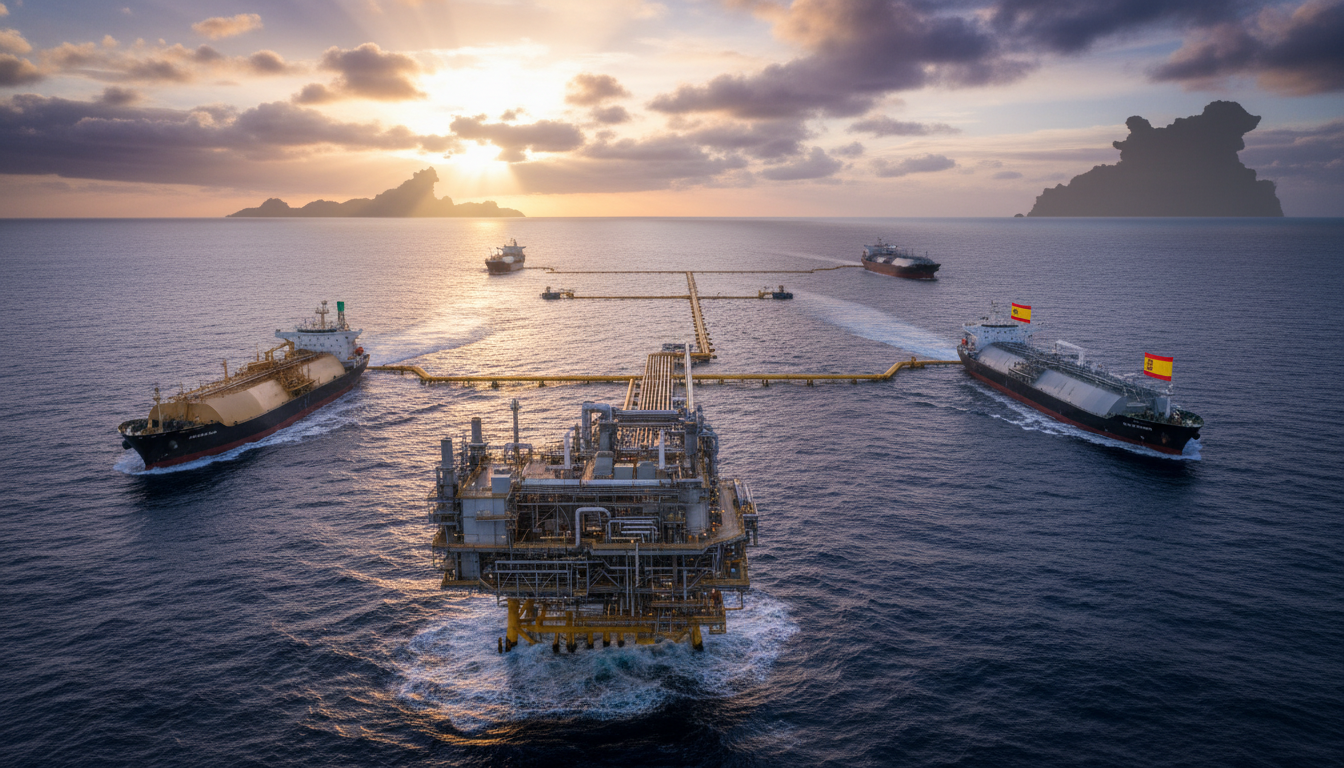
Ireland is making calculated strides to fortify its energy independence and accelerate its decarbonization pathway, moves that warrant close attention from investors tracking Europe’s evolving energy landscape. Recent bilateral agreements with Spain and the United Kingdom, forged at the WindEurope conference, underscore a strategic pivot towards enhanced grid infrastructure, expansive offshore renewable deployment, and deeper market integration. These initiatives, particularly significant as Ireland gears up for its EU Presidency in 2026, position the nation as a pivotal player in regional energy security and the broader European green transition. For investors, these developments signal emerging opportunities in critical infrastructure, renewable energy projects, and associated technologies, reshaping the risk-reward profile of the European energy sector.
Ireland’s Interconnector Gambit: Forging Direct European Links
At the heart of Ireland’s renewed energy strategy is the groundbreaking agreement with Spain, establishing a formal framework for assessing a future electricity interconnector. This ambitious project, if realized, would dramatically expand Ireland’s direct physical connection to continental Europe, mitigating the island nation’s historical energy isolation. The memorandum, signed by Minister for Climate, Energy and the Environment Darragh O’Brien and Spain’s Minister for the Ecological Transition and the Demographic Challenge, Sara Aagesen Muñoz, outlines a structured, phased process involving collaboration between transmission system operators and rigorous joint technical and economic analysis. For investors, this signifies a potential multi-billion-euro infrastructure development opportunity. An interconnector would unlock Ireland’s vast offshore wind potential, enabling it to export surplus renewable energy, reduce curtailment, and enhance system stability amidst increasing intermittent generation. This aligns perfectly with Europe’s wider push for a more integrated, resilient, and decarbonized grid, positioning Ireland’s project as a cornerstone of the continent’s long-term energy architecture.
Sustaining Cross-Border Cooperation Amidst Shifting Market Tides
Concurrently with its Spanish overture, Ireland has reaffirmed its robust energy cooperation framework with the United Kingdom, signing an updated memorandum. This enduring partnership focuses on critical areas such as shared grid infrastructure, collaborative offshore renewables development, and seamless market integration. While Ireland seeks new continental links, the continued collaboration with the UK acknowledges the deep-seated energy ties and shared challenges in navigating the energy transition. This dual approach highlights Ireland’s pragmatic strategy: diversifying its energy partners while strengthening existing, vital relationships. The commitment to these long-term stability measures occurs against a backdrop of dynamic global energy markets. As of today, Brent crude trades at $111.78, reflecting a 1.25% gain, while WTI sits at $105.90, up 0.79%. This recent upward trajectory, with Brent having surged by over 12% in the last two weeks alone, from $99.36 on April 13th to its current level, underscores the persistent demand for conventional energy even as nations like Ireland accelerate their transition. These price movements influence the capital allocation decisions for both traditional fossil fuel assets and the burgeoning renewable infrastructure projects, making Ireland’s strategic moves all the more critical for future energy stability.
Investor Signals: Navigating Opportunities in Ireland’s Energy Future
Our proprietary data indicates that investors are keenly focused on “2026 weekly trend for crude oil” and looking to “build a base-case Brent price forecast for next quarter,” alongside inquiries about “which OPEC+ members are over-producing this month.” This sentiment reflects a market grappling with short-term volatility while also seeking long-term structural shifts. Ireland’s proactive energy strategy directly addresses these longer-term investment horizons. For those looking beyond immediate crude price fluctuations, the nation presents a compelling case for investment in green energy infrastructure. Looking ahead, the next two weeks bring crucial market indicators, including the Baker Hughes Rig Count on May 1st and 8th, the EIA Short-Term Energy Outlook on May 2nd, and the IEA Oil Market Report on May 12th. These reports will offer fresh data points on supply-demand dynamics and global energy trends, which will undoubtedly influence how investors perceive the risk-reward profile of large-scale infrastructure projects like Ireland’s proposed interconnector. The clear policy signals from Dublin create a predictable environment for capital deployment into offshore wind farms, HVDC transmission lines, smart grid technologies, and energy storage solutions. Investors should particularly watch for developments related to the technical and economic feasibility studies for the Spain interconnector, as these will provide concrete timelines and investment pathways.
Decarbonization, Resilience, and the European Vision
Ireland’s coordinated energy strategy with both Spain and the UK is more than a national endeavor; it’s a significant contribution to Europe’s broader decarbonization and energy security agenda. By prioritizing interconnectivity and renewable energy integration, Ireland is actively participating in the continent-wide effort to reduce reliance on fossil fuels, enhance grid resilience, and meet ambitious climate targets. The potential for Ireland to become a net exporter of green electricity, powered by its abundant offshore wind resources, could transform its role in the European energy ecosystem. The agreements demonstrate a practical commitment to strengthening electricity networks, accelerating renewable deployment, and balancing decarbonization targets with critical energy security and affordability concerns. For investors, this signifies robust governmental support and alignment with major regional funding initiatives, de-risking long-term capital commitments in the renewable and grid infrastructure sectors across the European Union. This holistic approach to energy planning creates a compelling narrative for sustained growth and stable returns in the European energy transition.


