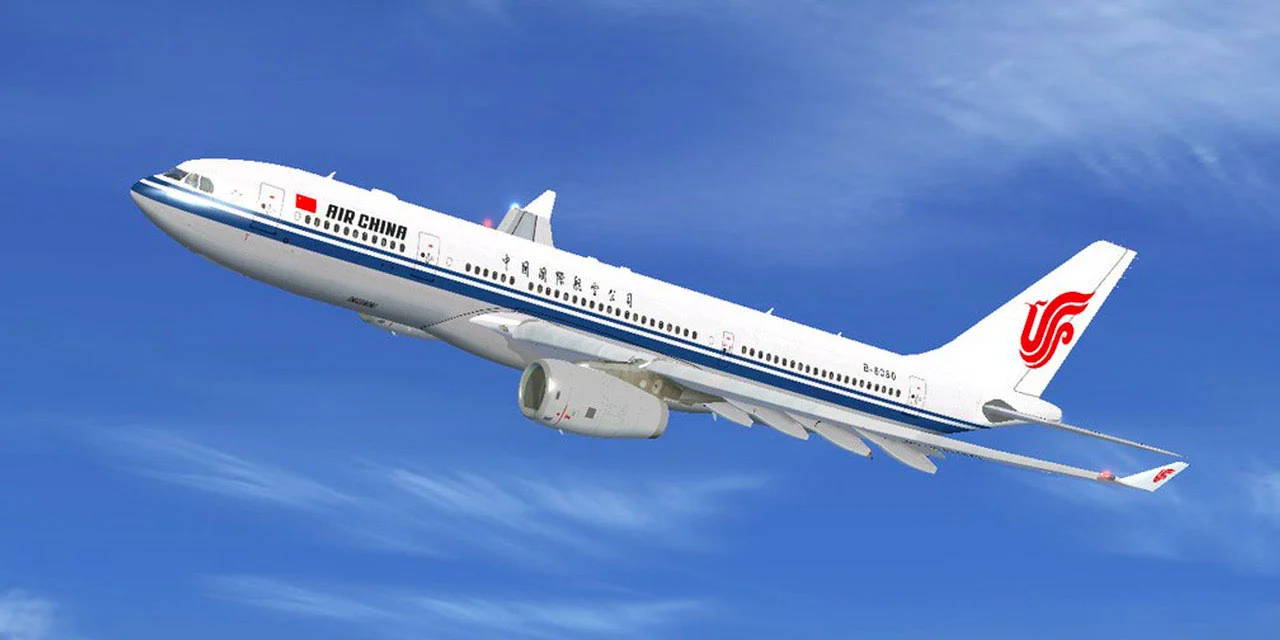
The release of Air China Limited’s 2025 Sustainability and ESG Report offers more than just a glimpse into an airline’s environmental and social commitments; it provides crucial signals for oil and gas investors tracking long-term jet fuel demand and the evolving energy landscape. As the aviation sector grapples with both escalating operating costs and increasing pressure to decarbonize, Air China’s eighteenth consecutive ESG disclosure underscores a significant strategic pivot towards operational efficiency and sustainable practices. For energy markets, this translates into a complex interplay of continued conventional fuel demand in the near term, coupled with an accelerating drive for optimization and diversification that will shape the future of aviation fuel.
Air China’s Comprehensive ESG Mandate: A Blueprint for Fuel Strategy
Air China’s 2025 Sustainability and ESG Report is not merely a compliance exercise; it represents a deep integration of environmental, social, and governance principles across its expansive operations. Covering the parent company and key subsidiaries such as Aircraft Maintenance and Engineering Corporation, Shenzhen Airlines, Shandong Aviation Group, Beijing Airlines, and Dalian Airlines, the report demonstrates a group-wide commitment to sustainability. This broad scope, combined with adherence to stringent reporting standards from China’s State-owned Assets Supervision and Administration Commission, the Shanghai Stock Exchange, Hong Kong Exchanges and Clearing Limited Listing Rules Appendix C2, Global Reporting Initiative Standards, and national GB/T 36001 guidelines, signals a serious and strategic commitment. For oil and gas investors, this robust framework implies that the airline’s initiatives to improve operational efficiency and manage emissions are not superficial but are deeply embedded in their business model, directly impacting their long-term fuel consumption patterns and preferences.
Jet Fuel Dynamics Amidst Rising Crude Volatility
The financial imperative behind Air China’s focus on “green transformation” and “improving operational efficiency” is starkly illuminated by current energy market conditions. As of today, Brent crude trades at $110.72, reflecting a modest daily gain of 0.29%, while WTI crude sits at $104.59. However, this snapshot belies a significant upward trend in recent weeks, with Brent having surged by 12.4%—a notable $12.34 increase—from $99.36 on April 13th to $111.7 by April 30th. Such a pronounced increase in crude prices directly translates to higher jet fuel costs, putting immense pressure on airline profitability. This sustained upward trajectory, along with the recent daily range of $110.49-$112.43 for Brent and $104.38-$106.65 for WTI, reinforces the strategic necessity for Air China to optimize every aspect of its fuel consumption, from fleet modernization to route planning. The airline’s emphasis on “managing emissions within existing systems” is a clear indication that immediate fuel efficiency gains are a paramount financial and environmental objective.
Forward Outlook: Anticipating Supply & Demand Signals for Aviation Fuel
Investors are keenly observing the 2026 weekly trend for crude oil and actively seeking base-case Brent price forecasts for the next quarter, underscoring the critical need for forward-looking analysis. The near-term trajectory of jet fuel prices will be heavily influenced by a series of upcoming energy market events. The EIA Short-Term Energy Outlook, due on May 2nd, will provide crucial insights into global supply-demand balances, while the IEA Oil Market Report on May 12th will offer an independent assessment of market fundamentals. Additionally, weekly data from the API and EIA on crude inventories (May 5th/6th and May 12th/13th) and the Baker Hughes Rig Count reports (May 1st and May 8th) will signal changes in U.S. production and inventory levels. These events are pivotal for understanding potential shifts in crude prices, which directly impact the cost of aviation fuel. Air China’s long-term strategy, as outlined in its ESG report, suggests that while it will continue to navigate these market fluctuations, its ultimate goal is to reduce its vulnerability to such volatility through increased efficiency and, eventually, adoption of sustainable aviation fuels (SAF).
Investor Implications: Navigating the Aviation Sector’s Energy Transition
For oil and gas investors, Air China’s ESG report, coupled with current market sentiment, highlights critical considerations. Reader inquiries about OPEC+ over-production and crude oil price trends reflect a focus on the supply-side factors influencing the cost of conventional jet fuel. However, the airline’s comprehensive sustainability efforts signal a gradual, yet significant, shift in demand dynamics. While the immediate demand for conventional jet fuel remains substantial due to the sheer scale of global aviation, the long-term trend points towards optimized consumption and eventual diversification. This means O&G companies must increasingly consider their exposure to the aviation sector’s decarbonization goals. Investing in research and development for Sustainable Aviation Fuels (SAF), carbon capture technologies, or alternative energy sources for ground operations could position energy firms favorably. Air China’s commitment to “integrating climate action into its core business” serves as a bellwether for the broader aviation industry, indicating that while fossil fuels will power much of the sector for years to come, the emphasis on efficiency and lower-carbon alternatives will only intensify, influencing investment decisions across the entire energy value chain.


