

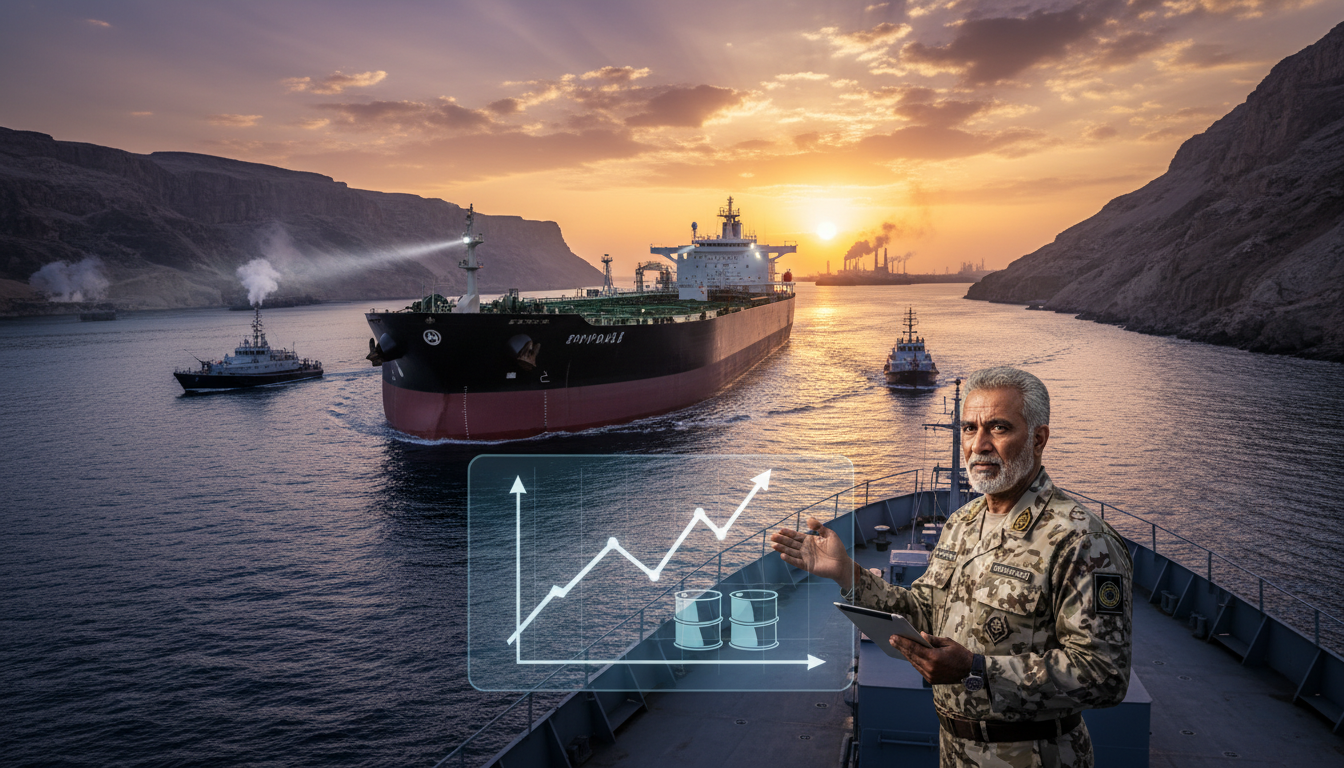
The Strait of Hormuz, a choke point through which a fifth of the world’s liquefied natural gas and nearly a third of all seaborne oil passes, finds itself at the epicenter of escalating geopolitical tensions. Recent developments suggest a significant shift in maritime transit through this vital artery, with implications reverberating across global energy markets and investor portfolios. A new report from a prominent shipping intelligence firm indicates that Iran’s Islamic Revolutionary Guard Corps (IRGC) has effectively implemented a new, mandatory ‘toll booth’ regime for vessels navigating the strait.
This unprecedented system reportedly compels commercial ships to adhere to stringent protocols: submitting comprehensive documentation, securing specific clearance codes, and accepting IRGC-escorted passage through a designated, controlled corridor. This enforced compliance marks a departure from established international maritime conventions governing free navigation through such critical passages. The implications for oil and gas shipping, and consequently, global energy security, are profound.
Shifting Sands: New Transit Regime and Market Dynamics
Since March 13, a significant pattern has emerged. Industry tracking data reveals that at least 26 vessels have successfully transited the Strait of Hormuz by submitting to this new IRGC vetting scheme and following an approved route. Alarmingly, an analysis of Automatic Identification System (AIS) data compiled by shipping intelligence suggests that since March 15, no vessels have been tracked using the conventional, unrestricted route. This abrupt cessation of ‘normal’ transits underscores the IRGC’s asserted control and the shipping industry’s reluctant adaptation to the new reality.
For investors in the energy sector, this development immediately translates into heightened risk premiums and potential operational disruptions. Tanker operators face increased complexity and potentially longer transit times, impacting freight rates and delivery schedules. Insurers are likely reassessing coverage and premiums for voyages through the region, contributing to rising operational costs for oil and gas companies reliant on these shipping lanes. The perceived weaponization of this strategic maritime passage has the potential to introduce unprecedented volatility into crude oil and natural gas prices, directly affecting upstream producers, midstream transporters, and downstream refiners globally.
International Rejection Meets Iranian Assertion
The global community has been swift to react to these claims, though responses have varied. India’s Ministry of Shipping unequivocally rejected any notion of tolls or levies being imposed on vessels transiting the Strait of Hormuz, branding such reports as “baseless.” Rajesh Sinha, Special Secretary in the Ministry of Shipping, forcefully reiterated that this is an international strait, governed by global conventions that guarantee freedom of navigation, thereby prohibiting the imposition of any transit fees. His stance underscores the international legal framework that traditionally upholds the unhindered passage through such strategic waterways.
Conversely, Iran has offered its own narrative regarding the altered transit rules. Iranian Foreign Minister Abbas Araghchi stated that Tehran has permitted passage for “friendly countries” including India, China, Russia, Iraq, and Pakistan. This assertion suggests a selective enforcement policy, potentially based on diplomatic ties and political alignment. Furthermore, the Iranian mission in New York declared on March 25 that “non-hostile vessels,” including those from or associated with other states, may utilize safe passage through the Strait of Hormuz, provided they do not participate in or support acts of aggression against Iran and fully comply with declared safety regulations, in coordination with Iranian authorities. The Iranian Defence Council further solidified this, stating that transit for “non-hostile vessels” is now strictly contingent upon prior “coordination with Iranian officials.” This “coordination” framework appears to be the operational mechanism of the IRGC’s ‘toll booth’ system, granting Tehran significant discretionary control over one of the world’s most critical energy conduits.
Navigating the Investor Landscape: Risks and Opportunities
The immediate practical impact of this selective transit policy is already evident. As of Thursday, at least five India-bound vessels have reportedly transited the Strait safely, with two, the Jag Vasant and Pine Gas, expected to dock by the end of the week. While these successful transits might offer a temporary reassurance, the underlying framework of mandatory coordination and vetting introduces an element of unpredictability and state control that alarms energy investors.
UN Secretary-General Antonio Guterres has voiced grave concerns, emphasizing that the prolonged closure or disruption of the Strait of Hormuz would “choke” the movement of vital commodities like oil, gas, and fertilizers, especially at a critical juncture for global agricultural planting seasons. He highlighted the severe harm and profound insecurity inflicted upon civilians across the region and beyond, urging an immediate end to the underlying conflict. This high-level condemnation underscores the humanitarian and economic magnitude of the situation, directly impacting the stability required for predictable energy flows.
For investors focused on oil and gas, closely monitoring the situation in the Strait of Hormuz is paramount. Potential investment risks include increased volatility in crude oil benchmarks like Brent and WTI, upward pressure on natural gas prices if LNG shipping is affected, and a rise in operating costs for tanker companies. Geopolitical risk premiums could inflate, impacting the valuation of energy assets, particularly those with significant exposure to Middle Eastern crude or LNG production. Opportunities might arise for companies with diversified supply routes, robust hedging strategies, or those specializing in maritime security and alternative energy sources that become more attractive under such scenarios of supply chain fragility. The evolving situation demands continuous assessment and strategic adaptation to safeguard energy investments in an increasingly complex global environment.
