The global oil and gas markets are gripped by unprecedented uncertainty as the conflict involving Iran escalates, threatening a significant portion of the world’s energy supply. This latest geopolitical flashpoint in the Middle East has rapidly transformed the market’s risk landscape, pushing supply disruption scenarios from improbable to reality. Investors are now grappling with a complex calculus of potential price ceilings, the duration of the conflict, and the broader economic implications, all against a backdrop of already volatile global energy dynamics.
The Immediate Impact: Supply Disruptions and Market Repercussions
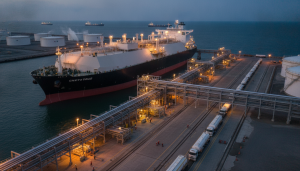
The escalation of hostilities has swiftly translated into tangible supply disruptions, most notably impacting the crucial Strait of Hormuz. This vital chokepoint, through which approximately one-third of the world’s seaborne oil exports transited in 2025, has seen tanker traffic come to a near standstill, a situation described by analysts as an almost total halt to shipping in modern history. Furthermore, the Islamic Republic’s retaliatory strikes have extended to regional energy infrastructure, evidenced by Qatar’s recent shutdown of liquefied natural gas (LNG) production following drone attacks on key facilities. With roughly 20% of global LNG exports originating from the Gulf, primarily Qatar, and passing through the Strait, the ripple effects are profound.
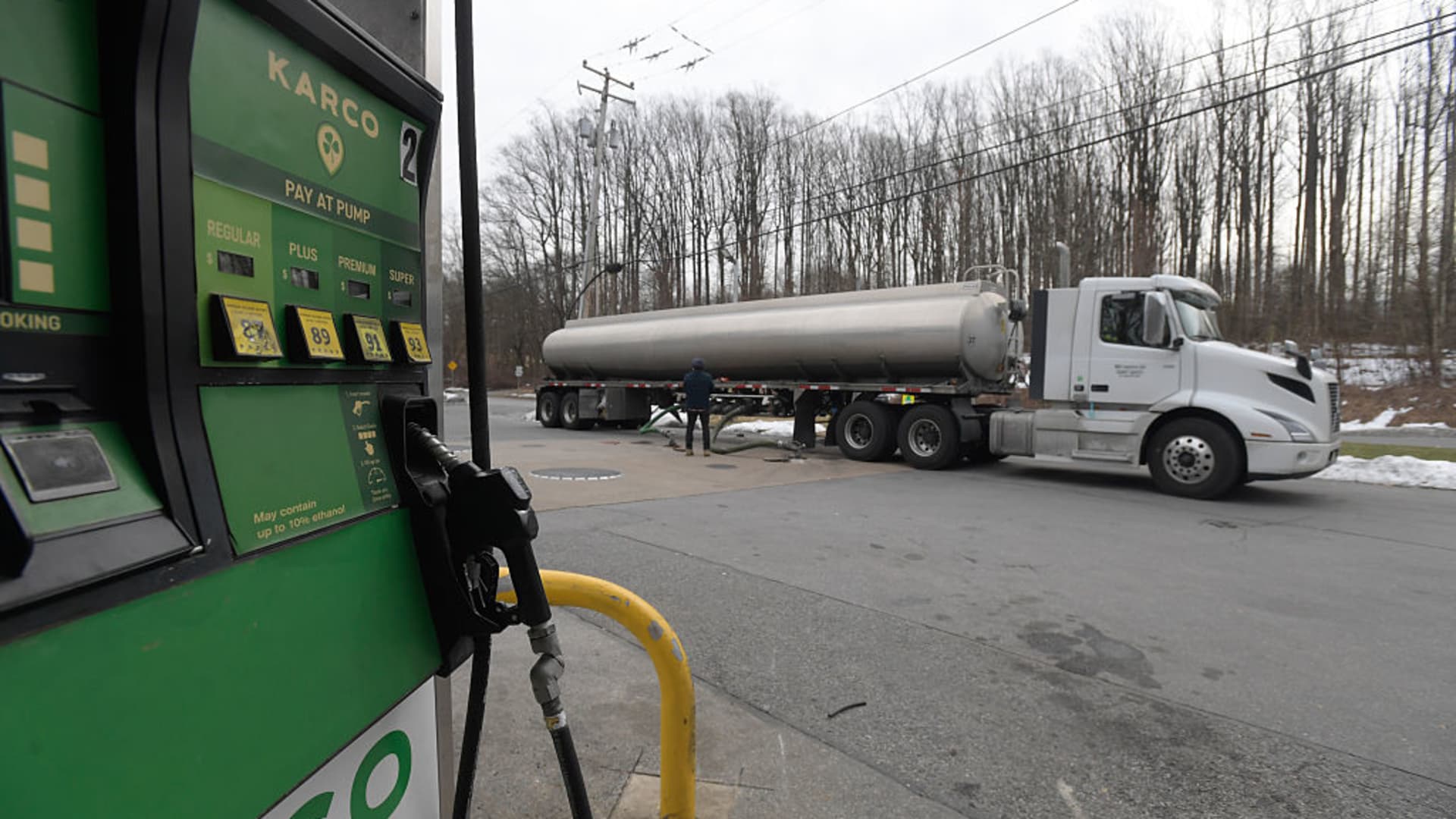
As of today, Brent Crude trades at $93.93 per barrel, marking a modest +0.74% increase within a day range of $93.52-$94.21. WTI Crude stands at $90.35, up +0.76% in a range of $89.71-$90.7. Gasoline prices, currently at $3.13 per gallon, have not yet fully reflected the upstream surge, though petroleum analysts anticipate an average 10- to 30-cent per gallon increase at the pump over the coming week. While these figures represent a slight uptick today, it’s crucial to contextualize them within the broader market. Our proprietary data indicates that Brent Crude experienced a significant decline over the past two weeks, dropping from $118.35 on March 31st to $94.86 on April 20th, a decrease of nearly 20%. This sharp pullback means that despite the immediate crisis and reported surges earlier this week, current prices are rebounding from a considerably lower base, highlighting the extreme volatility and investor indecision preceding this latest escalation.
Understanding the Price Ceiling Scenarios
The critical question for investors revolves around how high oil and gas prices could realistically climb. Industry experts are modeling several severe scenarios, each contingent on the conflict’s duration and scope. Analysts at Bank of America project Brent prices could surge above $100 per barrel, with European natural gas prices potentially breaking 60 euros per megawatt-hour, particularly if Tehran adopts a hardline stance and targets neighboring energy facilities. A more prolonged disruption within the Strait of Hormuz could add an additional $40 to $80 per barrel to Brent prices, underscoring the severe impact of sustained logistical blockades.
The most dire projections come from JPMorgan, where analysts suggest that a conflict lasting more than three weeks could exhaust the Gulf countries’ storage capacity. With barrels building up and no viable export routes, producers would be forced to shut down operations. Under this scenario, Brent, the international benchmark, could reach $120 per barrel. For context, oil prices last broke the $100 mark following Russia’s invasion of Ukraine in February 2022, leading to an all-time national high for gasoline at $5.016 per gallon by June of that year. The current situation, involving a direct threat to the world’s most critical oil chokepoint, carries the potential for even more acute and immediate supply shocks than seen previously, especially if the conflict aligns with the five-week duration speculated by some political figures.
Navigating Uncertainty: Upcoming Events and Investor Concerns
In this highly fluid environment, energy investors are keenly seeking clarity on market direction. Our first-party intent data reveals that readers are actively asking about the future trajectory of WTI and broader oil prices, with many questioning whether WTI will go up or down and what the price of oil per barrel will be by the end of 2026. This desire for forward-looking insight underscores the critical role of timely analysis during geopolitical crises. Furthermore, investors are looking beyond the benchmarks, examining how specific companies, such as Repsol, might perform under these volatile conditions, linking individual stock performance directly to macro-level energy disruptions.
The coming weeks will be critical, with several key energy events on the calendar that could further shape market sentiment and supply dynamics. Tomorrow, April 21st, the OPEC+ Joint Ministerial Monitoring Committee (JMMC) meeting will be closely watched for any indication of a policy shift in response to the escalating Middle East tensions. Will the alliance maintain its current production cuts, or will it consider boosting output to mitigate potential supply shortages? Additionally, the EIA Weekly Petroleum Status Reports on April 22nd and April 29th will provide vital insights into U.S. crude inventories and production levels, offering a glimpse into how quickly global supplies might absorb any disruption. The Baker Hughes Rig Count on April 24th and May 1st will indicate North American drilling activity, while the EIA’s Short-Term Energy Outlook on May 2nd will offer updated forecasts, all of which will be scrutinized for signals amidst the current geopolitical storm. These events, coupled with ongoing developments in the Strait, will provide crucial data points for investors attempting to chart the market’s course.
Investment Implications and Risk Management Strategies
For investors, the current landscape demands a robust approach to risk management and a deep understanding of potential outcomes. The scenarios outlined by leading analysts suggest that the market could see sustained higher prices, particularly if the conflict proves prolonged and impacts production directly. Companies with significant exposure to the Middle East or those heavily reliant on Strait of Hormuz transit will face heightened operational risks. Conversely, producers in more stable regions, such as U.S. shale operators, might see increased demand for their output, potentially benefiting from an elevated price environment.
Diversification remains a key strategy, as does a keen focus on companies with strong balance sheets that can withstand market volatility. Investors should also consider hedging strategies to mitigate exposure to extreme price swings. The unprecedented nature of the current disruption, marked by a near-total halt in shipping through the Strait, underscores the need for continuous monitoring of geopolitical developments and market data. Staying informed through real-time proprietary data pipelines and expert analysis will be paramount for navigating these turbulent waters and positioning portfolios effectively for the range of potential price ceiling scenarios.