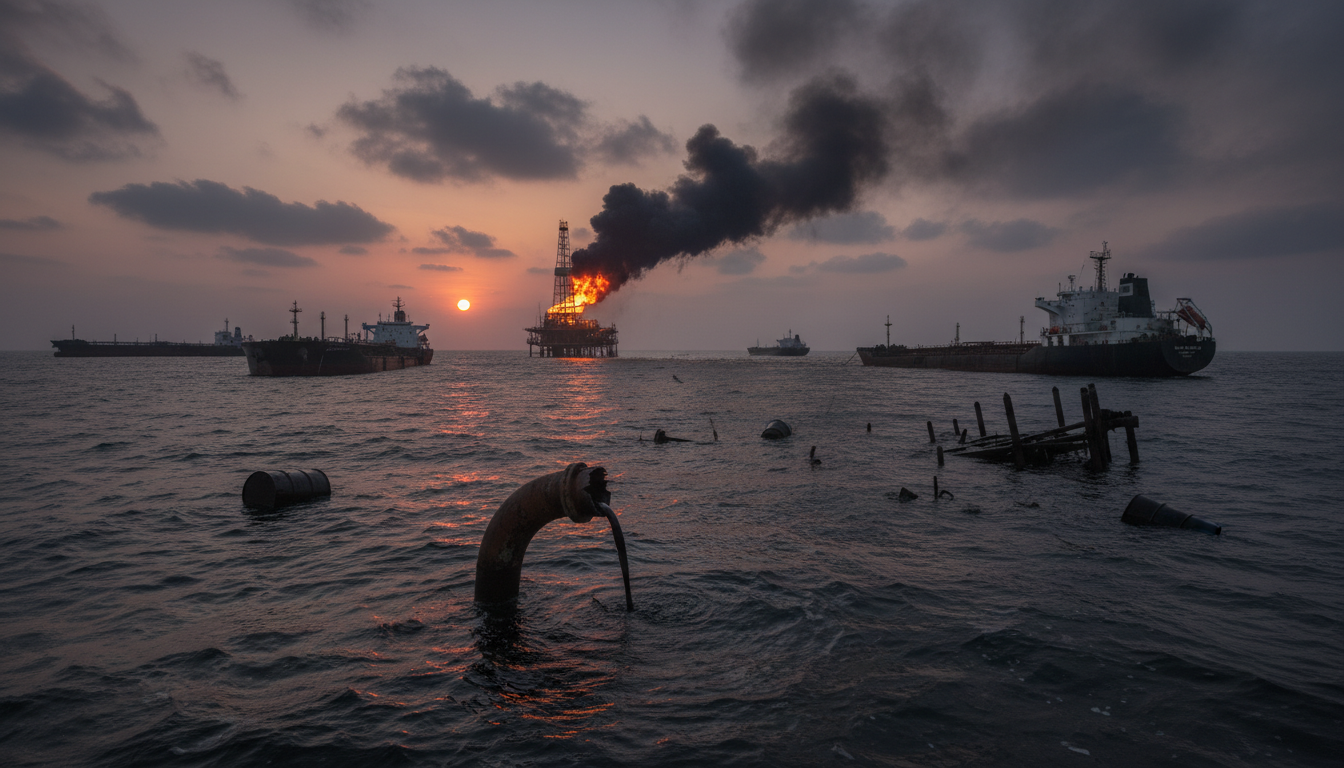
Map source: Global Energy Infrastructure
Strait of Hormuz Closure Shatters Energy Market Confidence, Redefines Geopolitical Risk
The global energy landscape faces an unprecedented paradigm shift as the extended closure of the Strait of Hormuz casts a long shadow over its historical role as a dependable conduit for vital oil and gas flows. International Energy Agency (IEA) Executive Director Fatih Birol has delivered a stark warning: the Strait’s reputation as a reliable artery for global energy trade is irrevocably broken, signaling profound long-term implications for investors navigating the volatile commodity markets.
Birol, speaking from Vienna ahead of crucial talks with OPEC Secretary General Haitham Al Ghais, underscored the severity of the situation. He unequivocally stated, “The vase has been broken. You can’t glue it back together.” This powerful metaphor highlights that even if maritime traffic were to resume, the fundamental trust in this critical choke point has evaporated. The precedent set by the current disruption means, as Birol warned, “If it was once closed, it can be closed again,” embedding a new layer of systemic risk into the future of energy supply chains and investor portfolios.
Unprecedented Geopolitical Upheaval and Market Implications
The dual blockade imposed by the United States and Iran has plunged the global energy sector into an era of profound uncertainty. This strategic waterway, a linchpin of international trade, historically facilitated approximately one-fifth of the world’s crude oil and liquefied natural gas (LNG) flows. Its obstruction represents not merely a logistical challenge but a seismic geopolitical event that Birol described as “a historical period in terms of energy, foreign policy and geopolitics.” For energy investors, this translates directly into heightened volatility and a re-evaluation of long-term asset valuations and regional risk premiums.
The ripple effects of this disruption extend far beyond the immediate crude oil and natural gas futures markets. Supply chains for a vast array of goods and services are feeling the pinch. Industries ranging from agricultural inputs, which rely heavily on natural gas for fertilizer production, to global air travel, directly impacted by jet fuel prices and availability, face significant cost increases and operational bottlenecks. Investors must consider the broad economic contagion stemming from elevated energy costs, influencing everything from consumer spending power to corporate profitability across diverse sectors.
Inflationary Headwinds and Economic Deceleration
The IEA’s chief voiced serious concerns that the continued trade disruption in the Strait of Hormuz could ignite a further surge in global oil and gas prices. Such a scenario carries dire economic consequences, as Birol elaborated, potentially causing “significant implications on inflation numbers and cut economic growth in many countries.” For institutional investors and individual traders alike, this warning signals a challenging environment where persistent inflation could erode investment returns and central banks may be compelled to maintain or even tighten monetary policies, potentially stifling broader economic expansion.
Higher energy costs act as a regressive tax on economies worldwide. Businesses face increased operational expenditures, which are often passed on to consumers, fueling inflationary spirals. Simultaneously, households confront rising utility bills and transportation costs, diminishing disposable income and dampening demand. This dual pressure on both supply-side costs and demand-side spending presents a formidable obstacle to sustainable economic recovery and growth, demanding a proactive risk management approach from investors.
Re-evaluating Global Energy Security and Investment Strategies
The permanent impairment of confidence in the Strait of Hormuz forces a fundamental re-evaluation of global energy security paradigms. Energy majors, national oil companies, and independent producers must now factor in an elevated, ongoing risk associated with critical maritime chokepoints. This could accelerate investments in alternative energy routes, albeit often more costly and time-consuming, or incentivize greater domestic production and diversification of supply sources where feasible.
For investors focused on oil and gas, this period necessitates a deep dive into the geopolitical resilience of their portfolio holdings. Companies with diversified global operations, access to multiple export routes, or a strong position in less geographically constrained basins may prove more robust. Conversely, firms heavily reliant on exports through the Middle East, particularly the Persian Gulf, face a heightened risk profile. This market shift emphasizes the premium on supply chain flexibility and the ability to adapt swiftly to unforeseen geopolitical shocks.
The Diplomatic Imperative: Beyond Energy Markets
Crucially, Birol emphasized that the ultimate resolution to this profound crisis extends beyond the immediate purview of energy markets. “The solution to this problem doesn’t go through the energy sector, but through diplomacy,” he asserted. While energy markets react acutely to supply and demand imbalances, the underlying stability hinges on intricate geopolitical negotiations and de-escalation efforts between key state actors.
This perspective underscores a critical challenge for investors: while fundamental analysis of energy assets remains vital, the overriding factor determining market stability and long-term price trajectories now increasingly lies in the unpredictable realm of international relations. Understanding the nuances of geopolitical developments, monitoring diplomatic overtures, and assessing the likelihood of de-escalation are now indispensable components of an informed energy investment strategy. The current turmoil serves as a potent reminder that in the interconnected world of global energy, political stability is as crucial as crude oil production metrics.