

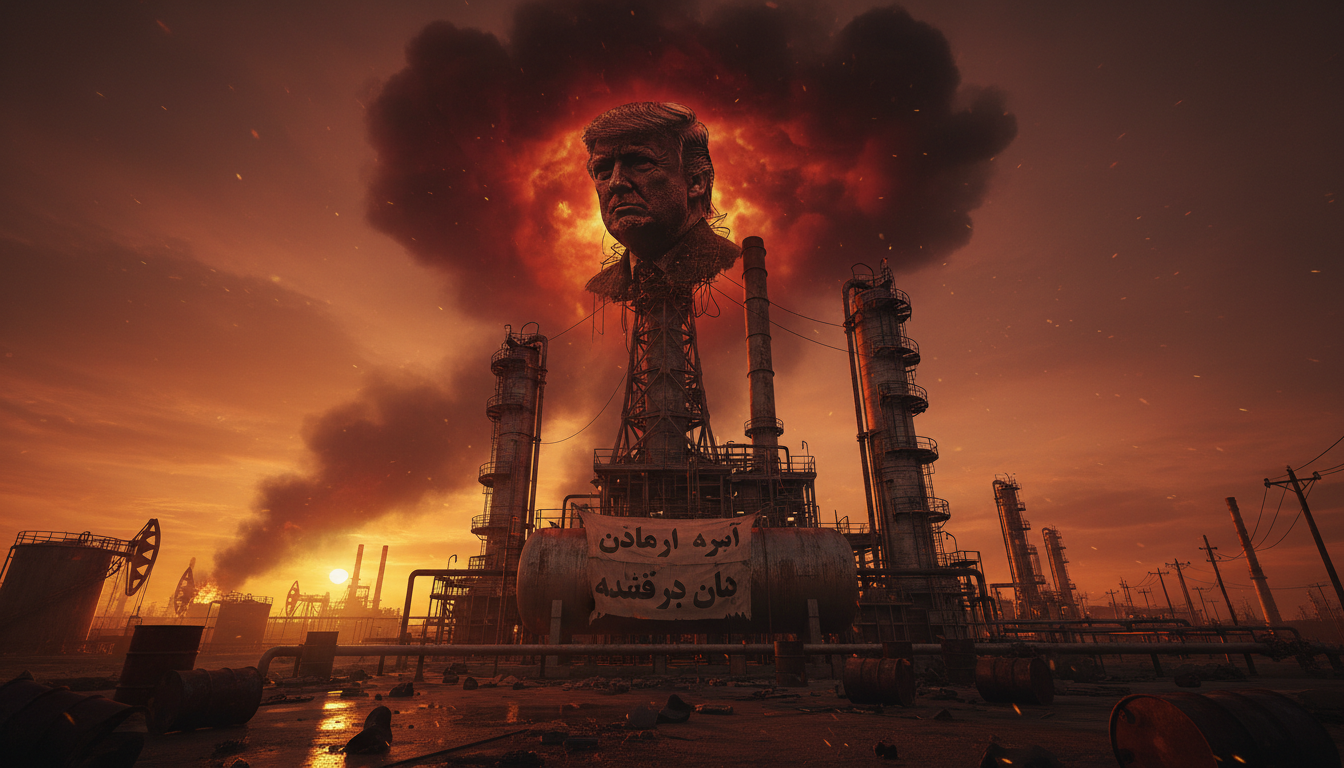
Geopolitical Tensions and the Information War: Impact on Global Energy Markets
In a rapidly evolving geopolitical landscape, the traditional battleground has expanded into the digital realm, profoundly influencing investor sentiment and commodity markets, particularly crude oil. As a critical flashpoint in the Middle East continues to simmer, the ongoing “information war” between major global players injects significant volatility and uncertainty into the energy sector. Reports on February 26, 2026, highlighted intensified diplomatic efforts in Geneva alongside a striking display of anti-U.S. sentiment in Tehran, signaling the deep ideological chasm driving current global anxieties.
The contemporary conflict transcends conventional military engagements, embracing social media as a pivotal front. Both sides are actively deploying sophisticated digital propaganda, employing pop-culture references and ironic memes to shape perceptions and narratives. This strategic shift underscores what experts term a “war of aesthetics,” where control over online discourse directly translates to influencing public and investor mood. For energy market participants, understanding these underlying psychological and narrative battles is as crucial as monitoring physical supply chains.
Iran’s leadership has swiftly adopted an aggressive online posture, targeting prominent U.S. figures with a barrage of critical and mocking content. Key members of Iran’s parliament, the powerful Islamic Revolutionary Guard Corps (IRGC), and even President Masoud Pezeshkian himself, leverage platforms like Facebook and X to propagate their message. This includes a series of digitally generated videos, some utilizing a distinctive Lego-esque animation style, depicting simulated military successes against U.S. and Israeli forces. One notable example portrays a frantic U.S. President ordering airstrikes amidst revelations from sensitive files, flanked by allegorical figures. Another, a rap track, lambastes the U.S. leader as a “loser” and “puppet,” juxtaposed with imagery of stock market downturns, missile launches, and caskets—a direct appeal to economic and human costs often associated with conflict.
These Iranian digital offensives frequently reference specific controversial figures and conspiracy theories, aiming to undermine the U.S. administration by exploiting perceived political vulnerabilities. The objective extends beyond merely projecting defiance or countering assessments of its military capabilities; it seeks to weave a narrative that resonates with fragmented Western audiences by blending grievances with popular meme culture, focusing on anti-war sentiment and the broader economic ramifications of ongoing hostilities. For oil investors, such tactics amplify geopolitical risks, suggesting a prolonged period of instability and an increased likelihood of supply disruptions or price shocks emanating from the region.
U.S. Counter-Narratives and Market Implications
The U.S. administration, in parallel, has integrated internet culture into its wartime communication strategy, particularly in the initial phases of the conflict. Official accounts disseminated videos combining clips from various sports, films, and video games with actual military footage of strikes. This approach complements the robust and often bombastic rhetoric from U.S. officials, who frequently assert the “obliteration” of adversary military assets and imminent achievement of strategic objectives.
While this digital strategy has faced criticism for potentially trivializing the serious human cost of conflict—with over a dozen U.S. service members reportedly killed and hundreds injured—White House officials defend its effectiveness in capturing attention and engaging younger demographics. They emphasize its role in showcasing the valor of U.S. forces and highlighting the successful degradation of Iranian ballistic missile capabilities, production facilities, and nuclear ambitions. For oil and gas investors, such bold declarations, whether aiming to reassure allies or intimidate adversaries, create an environment of heightened speculation regarding the conflict’s trajectory and potential impact on global supply chains. The explicit mention of destroying production facilities or nuclear aspirations suggests a readiness to escalate, a factor that invariably fuels energy market uncertainty and pushes risk premiums higher.
The Evolving Landscape of War Propaganda and Energy Markets
The nature and intent of current war propaganda represent a significant departure from historical norms. Observers note a distinctive lack of a traditional, comprehensive campaign to justify the conflict prior to the initial strikes on February 28. Instead, the focus has shifted to a series of digital memes and assertive statements, primarily aimed at galvanizing the U.S. administration’s domestic support base and commanding public attention. This strategy appears to have been effective in terms of reach, with four videos posted on the official White House X account between March 5 and 6 accumulating nearly 100 million impressions by April 1. The sheer viral potential of these narratives means that geopolitical developments can propagate globally at unprecedented speeds, influencing market sentiment almost instantaneously.
Iran’s strategic objective, despite domestic internet outages, appears to be an international “response offensive” designed to erode global support for the U.S. and its allies. By highlighting the perceived inconsistencies or negative impacts of U.S. policy, Iran seeks to capitalize on any existing fractures in international alliances. Such a weakening of global consensus could significantly complicate any future coordinated efforts to stabilize the Middle East, potentially leading to more fragmented and unpredictable responses to energy supply disruptions. Investors must consider this dynamic, as a less unified international front often translates to greater market volatility and prolonged uncertainty regarding crude oil flows.
Direct Economic Warfare and Investor Guidance
Beyond the realm of memes, Iranian officials are directly engaging with the economic ramifications of the conflict, particularly its destabilizing effects on the global economy and energy prices. On a recent Sunday, Mohammad-Bagher Ghalibaf, the Speaker of Iran’s Parliament, used X to suggest that U.S. presidential updates from a particular social media platform were strategic moves designed to manipulate stock markets. He explicitly advised investors to consider such “news” as a “reverse indicator,” recommending counter-intuitive trading strategies: “If they pump it, short it. If they dump it, go long. See something tomorrow? You know the drill.”
This unprecedented direct advice from a foreign official to global investors underscores the intertwining of geopolitics and financial markets. The immediate market reactions further validate this connection: on the Monday morning following a U.S. presidential post about “serious discussions with A NEW, AND MORE REASONABLE, REGIME to end our Military Operations in Iran,” the S&P 500 concluded the trading day lower, while critical oil prices paradoxically continued their upward trajectory. This specific market behavior suggests a deep-seated investor skepticism or a persistent pricing-in of long-term supply risk, irrespective of perceived de-escalation rhetoric. Furthermore, Ghalibaf’s subsequent highlighting of rising U.S. gasoline prices and attributing them to misplaced U.S. foreign policy priorities serves to directly connect the conflict to the everyday economic burdens faced by American consumers, a narrative that could further shape political will and market sentiment.
For discerning investors in the oil and gas sector, these developments highlight the necessity of closely monitoring not only traditional geopolitical indicators but also the sophisticated, often psychological, warfare waged across digital platforms. The “meme war” is not merely entertainment; it is a critical component of statecraft with tangible implications for energy supply, demand, and ultimately, investment returns.
