

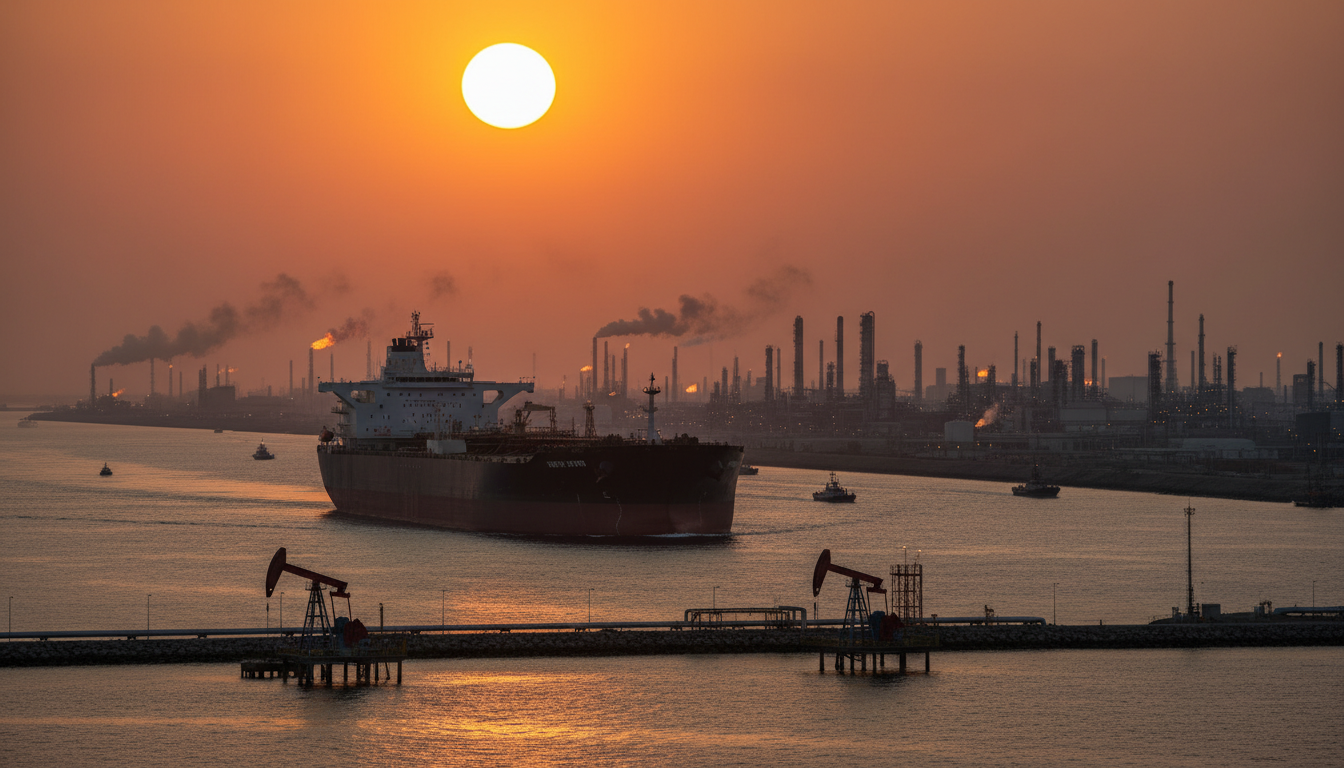
In a striking turn of events, Iran’s crude oil exports are not merely holding steady amidst escalating regional tensions, but are also commanding significantly higher prices, delivering a substantial revenue windfall to Tehran. This unexpected resilience in Iranian oil flows, coupled with a unique advantage in navigating the critical Strait of Hormuz, positions the nation as a key beneficiary in a volatile global energy landscape.
While other major Gulf crude producers grapple with the severe disruptions impacting supply routes, Iranian tankers continue their transit through the Strait of Hormuz unimpeded. This strategic advantage, combined with a dramatic surge in international crude benchmarks and a sharp reduction in historical discounts for Iranian barrels, has translated into millions of additional dollars flowing into the Islamic Republic’s coffers since the onset of the recent conflict.
Iran’s Unhindered Passage Through the Strait of Hormuz
The Strait of Hormuz, a narrow waterway crucial for a significant portion of the world’s oil supply, has become a focal point of regional instability. Yet, Iran stands alone among its Gulf neighbors in maintaining consistent oil export volumes through this vital choke point. This uninterrupted access offers a distinct competitive edge, allowing Iran to capitalize on global demand when other sources face severe logistical and security challenges.
Maritime intelligence firms, including Windward, have confirmed the sustained resilience of Iranian crude exports. This consistent flow during a period of intense geopolitical upheaval underscores Iran’s capacity to maintain its export infrastructure and find buyers, despite external pressures and sanctions frameworks that have historically complicated its market access. Investors in global energy markets must recognize this unique operational continuity as a critical factor influencing regional supply dynamics.
Surging Revenues and Shrinking Discounts: A Financial Windfall
The financial benefits for Iran are pronounced. Estimates suggest that the nation likely generated approximately $139 million per day from sales of its flagship Iran Light crude throughout March. This impressive figure represents a notable increase of nearly $25 million per day compared to the average daily proceeds of $115 million recorded in February, according to calculations derived from Tankertrackers.com export data and current pricing for Iranian Light crude.
Several convergent factors underpin this substantial revenue growth. Firstly, the massive supply shock emanating from the Middle East has propelled international crude prices dramatically upward. Brent crude, the global benchmark, has been trading above $100 per barrel, reaching around $105 per barrel early last Thursday. This elevated price environment naturally inflates the value of every barrel exported.
Secondly, and perhaps most critically for investors monitoring Iranian crude, the previously significant discount on Iranian oil relative to Brent has contracted sharply. Before the recent escalations, Iranian barrels typically traded at a discount exceeding $10 per barrel. This week, that discount has tightened to a mere $2.10 per barrel. Such a dramatic narrowing reflects strong demand for available crude supply and a perceived reduced risk premium for Iranian barrels in the current market climate, amplifying per-barrel profitability.
Geopolitical Dynamics and Market Realities
The backdrop to this financial resurgence is a highly charged geopolitical environment, marked by recent military actions involving the U.S. and Israel, including reports of the killing of the Ayatollah. While these events have triggered widespread concerns about global energy security, they have paradoxically created an advantageous scenario for Iranian oil. The perceived threat to wider Middle Eastern supply routes has undoubtedly contributed to the spike in crude prices, inadvertently benefiting the one producer seemingly able to navigate the chaos.
Furthermore, while a U.S. waiver on Iranian oil sales may not be attracting a broad new base of international buyers, its impact on existing market dynamics is undeniable. The primary customers for Iranian crude, particularly Chinese independent refiners, continue to be active. The waiver’s effect, combined with global supply tightness, appears to be primarily driving up the price of Iranian crude itself, pushing its discount closer to Brent rather than necessarily opening new trade avenues beyond established channels. This indicates a market prioritizing supply availability over typical geopolitical considerations, at least for existing buyers.
Investor Outlook: Navigating Volatile Energy Markets
For investors keenly observing the global oil and gas landscape, Iran’s current position presents a compelling case study in geopolitical risk arbitrage. The nation is demonstrating a remarkable ability to monetize its crude resources effectively, even as regional instability intensifies. This scenario underscores the critical importance of understanding unique supply chain resilience and the nuanced interplay between geopolitics and commodity pricing.
The ongoing strength of Iranian oil exports and its improved pricing power suggest that global crude markets are highly sensitive to any perceived supply disruptions, regardless of origin. While long-term sanctions and political tensions remain, the short-to-medium term outlook points to Iran maintaining a significant, if somewhat under-the-radar, role in global oil supply. Energy investors should factor in this persistent revenue generation when assessing the broader stability of Middle Eastern crude flows and the potential for continued price volatility.
In conclusion, Iran’s oil sector is currently experiencing a period of robust performance, characterized by resilient export volumes and substantially enhanced revenues. The unique ability to transit the Strait of Hormuz unhindered, coupled with a surging Brent price and a dramatically narrowed discount for its crude, paints a picture of unexpected financial strength amidst regional turmoil. This dynamic offers a critical lens through which to view current global energy market conditions and the complex factors driving oil prices and supply decisions.
