

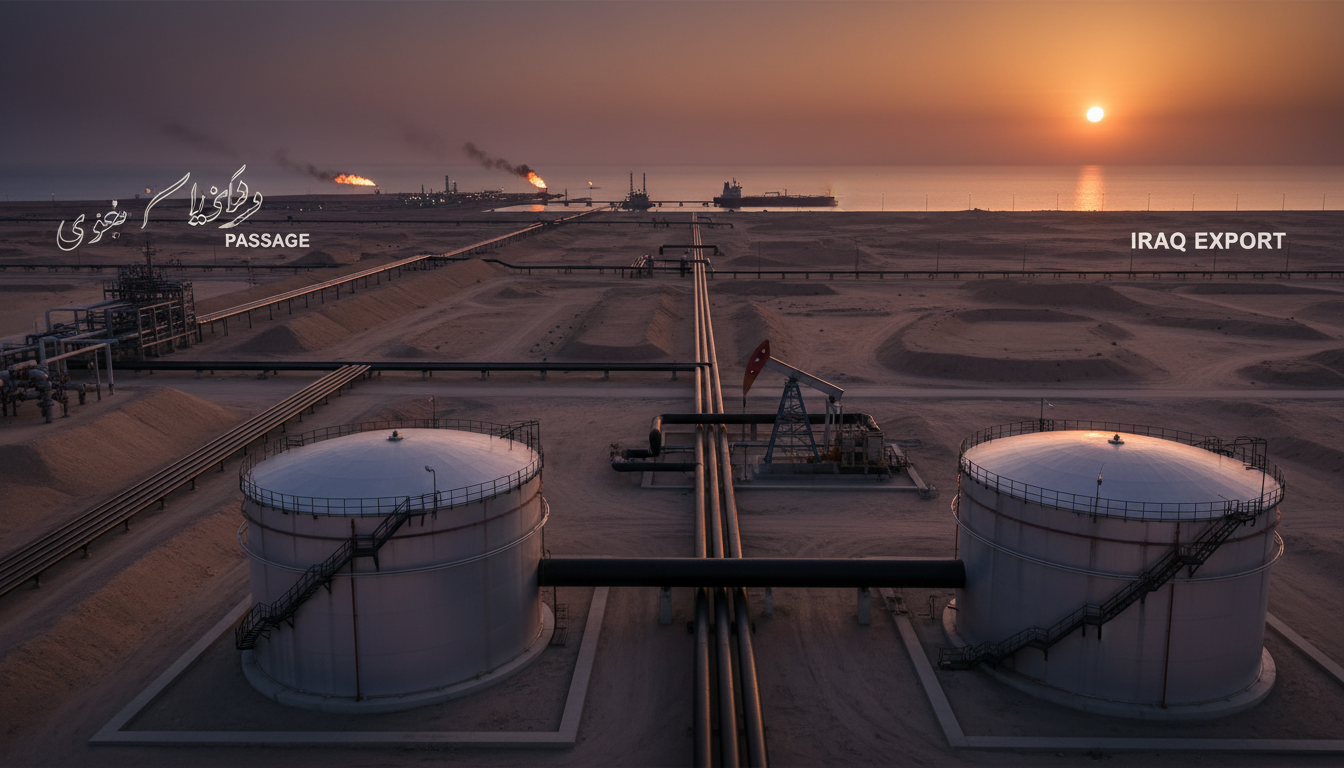
Energy investors are closely monitoring significant developments unfolding in the Middle East, as Iraq moves decisively to resume critical crude oil export operations through the Strait of Hormuz. Baghdad’s state oil marketing company, SOMO, has issued an urgent directive to its international clients, demanding the submission of loading schedules within the next 24 hours. This pivotal move follows a crucial green light from Iranian authorities, signaling a potential easing of severe regional supply bottlenecks that have plagued global oil markets.
The directive from SOMO explicitly calls on “esteemed companies” to provide their lifting programs promptly, including vessel nominations and contractual volumes. This urgency underscores Iraq’s determination to maintain the flow of its vital crude shipments. Crucially, the Iraqi oil marketing entity has unequivocally affirmed the full operational status of all loading terminals, specifically highlighting the Basrah Oil Terminal (BOT) and its associated infrastructure. SOMO asserts its complete readiness to fulfill all contractual lifting obligations without any limitations, a strong reassurance for anxious crude oil buyers and energy sector investors worldwide.
Iraq Secures Critical Hormuz Passage, Bolstering Global Supply Confidence
This assertive posture from Baghdad comes on the heels of reports indicating a breakthrough in the highly sensitive Strait of Hormuz transit. Early reports confirmed that the Iranian military has granted Iraqi vessels permission to traverse the strategic chokepoint. This significant development was underscored by Kpler data, which tracked the passage of the tanker “Ocean Thunder,” laden with a substantial cargo of 1 million barrels of Basra heavy crude, successfully navigating the Strait. The authorization was publicly affirmed by an army spokesman in Tehran, who declared that “Brotherly Iraq is exempt from any restrictions we have imposed on the Strait of Hormuz, as those restrictions only apply to hostile states.” This statement provides a critical insight into Iran’s selective application of its maritime control in the region, offering a lifeline for specific, deemed non-hostile, nations.
For investors focused on oil and gas, this news represents a distinctly positive shift in the volatile Middle Eastern energy landscape. The global market had been grappling with a severe tightening of crude oil supply, exacerbated by regional producers struggling with overflowing storage capacities and a virtual paralysis of tanker traffic through the Strait of Hormuz. The impediment to shipping had driven up insurance premiums and created immense logistical challenges, threatening to push crude prices higher amidst dwindling reserves and constrained export options. Iraq’s confirmed ability to resume unimpeded exports offers a much-needed injection of stability into global crude oil markets, potentially alleviating immediate supply concerns and tempering upward price pressure.
Broader Regional Implications and Investor Scrutiny
The precedent set by Iraq’s situation is not isolated. Recent reports highlighted a similar breakthrough for Oman, where three of its vessels, including two crude tankers and one liquefied natural gas (LNG) carrier, successfully transited the Strait of Hormuz. These individual negotiations with Tehran suggest a nuanced, albeit complex, diplomatic pathway that could enable neighboring countries to sustain critical oil and gas exports despite broader regional tensions. For energy sector investors, this pattern of selective engagement demands close monitoring, as it could indicate either a fragile de-escalation strategy or merely a pragmatic, tactical adjustment by Iran.
The Strait of Hormuz, through which roughly one-fifth of the world’s total petroleum liquids and LNG volumes pass, remains a focal point of geopolitical risk. Any disruption to this vital shipping lane sends immediate tremors across global energy markets, impacting everything from crude oil prices and tanker freight rates to energy security narratives. Iraq’s re-establishment of a clear export pathway is crucial, given its status as OPEC’s second-largest producer. Sustained, reliable Iraqi exports of Basra crude are fundamental for balancing global supply and demand dynamics, particularly as other producers face their own operational or geopolitical constraints.
Navigating the Evolving Geopolitical Calculus for Energy Investments
While the immediate relief for crude oil supply chains is palpable, investors must maintain a vigilant watch on the broader geopolitical calculus. The exemption granted to Iraq, and previously observed for Oman, underscores the intricate and often unpredictable nature of Middle Eastern politics. The selective nature of these permissions means that while some avenues for oil flow may open, the underlying tensions and potential for renewed disruptions persist for other nations or in broader contexts. This environment necessitates a dynamic risk assessment framework for any portfolio exposed to the region’s energy assets.
For those invested in the shipping and logistics sectors, the resumption of regular tanker traffic through Hormuz, even if selective, offers a significant boon. Increased activity could lead to better utilization rates and potentially stabilize, if not improve, freight revenues. However, the lingering uncertainty around the broader regional security situation will likely continue to factor into insurance premiums and route planning, preventing a full return to pre-crisis operational costs. Investors should therefore weigh the potential benefits against the inherent volatility that defines the Middle Eastern energy transit corridors.
In conclusion, Iraq’s successful effort to restore its crude oil export pipeline through the Strait of Hormuz, facilitated by Iranian approval, represents a critical positive development for global energy markets. It signals a potential alleviation of severe supply crunch fears and logistical impediments that have recently gripped the oil sector. While this offers a degree of confidence to energy investors regarding immediate supply continuity, the broader geopolitical landscape in the Middle East remains inherently complex and fluid. Market participants must continue to actively assess the strategic implications of these selective engagements, understanding that sustained stability in this vital energy hub will require ongoing diplomatic efforts and a careful balancing of regional power dynamics.
