

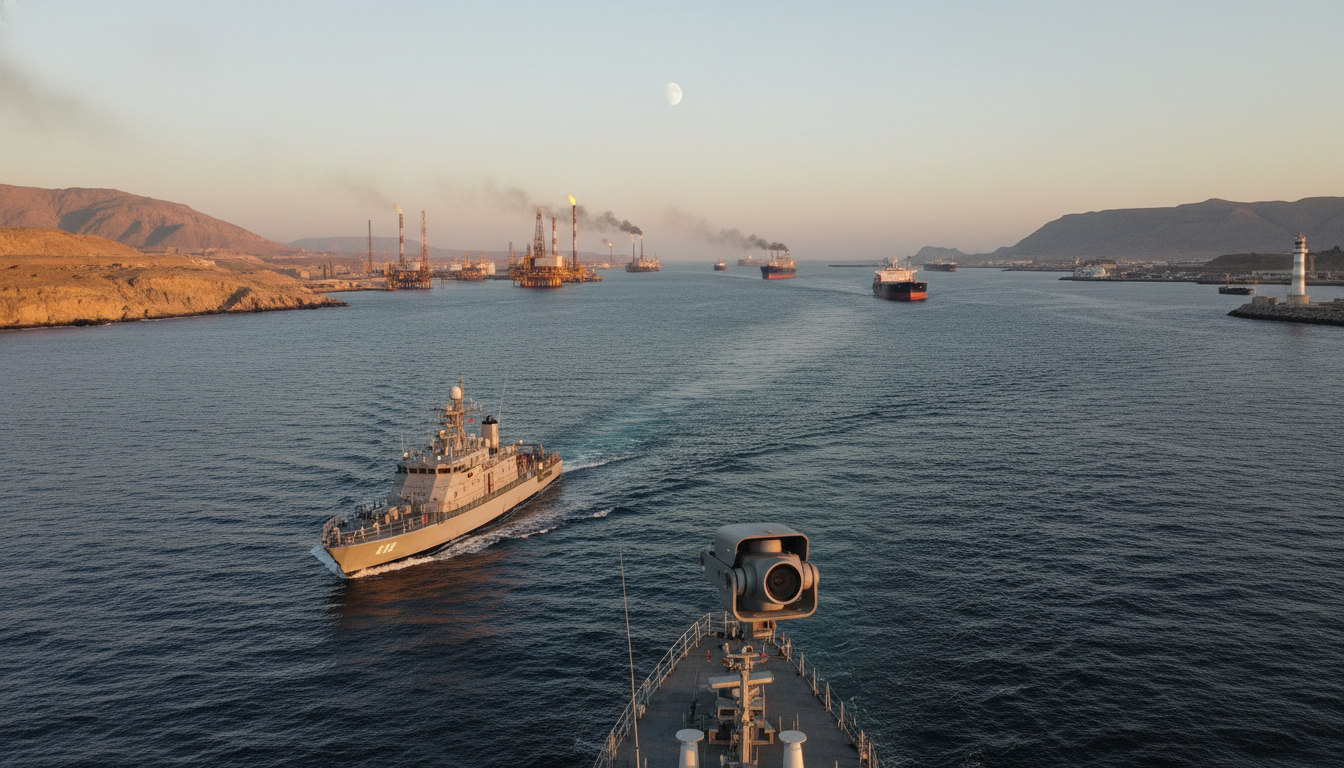
The global oil market, perpetually on edge amidst escalating geopolitical tensions, received a significant, albeit cautious, glimmer of hope this week. Reports from the Iranian state news agency IRNA indicate that Iran and Oman are actively developing a framework designed to oversee transit through the strategically vital Strait of Hormuz. This initiative, if successfully implemented, could signal a potential de-escalation of maritime risks in a waterway crucial to global energy flows.
According to Kazem Gharibabadi, Iran’s deputy minister of legal and international affairs, the proposed protocol aims to establish a joint supervision and coordination mechanism between the two nations for all tanker traffic navigating the Strait. Gharibabadi emphasized that these requirements are not intended as restrictive measures but rather as a means to enhance safety, streamline passage, and provide improved services for vessels utilizing this critical maritime corridor. For investors tracking the volatile energy sector, this development represents a pivotal shift from outright blockade towards managed access, potentially alleviating some of the acute supply fears that have gripped markets.
Strait of Hormuz: A Global Chokepoint Under Scrutiny
The Strait of Hormuz remains an undisputed chokepoint for the international oil trade, with approximately one-fifth of the world’s total oil consumption and a substantial portion of global liquefied natural gas (LNG) transiting its narrow channels daily. The economic reverberations of any disruption here are immense and far-reaching. Since a series of U.S. and Israeli military actions against Iran commenced on February 28th, leading to Iran’s retaliatory effective closure of the Strait, the global economy has been grappling with an unprecedented energy crisis.
This prolonged blockade has precipitated a historic and rapid surge in crude oil prices, triggering a cascading effect across various industries and nations. Supply chain disruptions, heightened shipping insurance premiums, and the looming specter of energy shortages have contributed to a climate of uncertainty, making informed investment decisions more challenging than ever. The mere prospect of a structured reopening, even under joint supervision, offers a crucial psychological relief valve for anxious markets.
Market Response: A Swift Reversal of Fortunes
The immediate market reaction to the IRNA report underscored the profound impact of geopolitical developments on investor sentiment. U.S. stock indexes, which had been trading sharply lower throughout Thursday morning in response to President Donald Trump’s earlier signals suggesting a prolonged conflict with Iran, experienced an abrupt reversal. The news of the Iran-Oman protocol spurred a sudden upswing, demonstrating the market’s hunger for any indication of de-escalation or a pathway to stability.
Similarly, the oil market, which had witnessed an overnight surge to multi-year highs driven by acute supply anxieties, saw prices ease back from their daily peaks following the announcement. While the fundamental supply challenges posed by the Strait’s closure remain substantial, the diplomatic overture between Iran and Oman offered a tangible hope that military intervention might not be the sole recourse for resuming traffic. For crude oil futures traders, the development suggested a potential cap on the upward trajectory of prices, at least in the short term, as the possibility of a non-military resolution gained traction.
The American Consumer and Global Oil Interconnectedness
Despite President Trump’s assertion that the United States remains largely unaffected by the Strait’s closure due to its comparatively low direct oil imports via this route, the reality for the American consumer tells a different story. In an address to the nation on Wednesday night, the President stated, “We haven’t needed it, and we don’t need it,” implying national resilience against the energy crisis.
However, the global nature of oil markets means that even countries with robust domestic production and diverse import sources cannot fully insulate themselves from significant international price shocks. The dramatic increase in international crude benchmarks inevitably translates to higher costs at the pump. Across the U.S., average gasoline prices have soared by more than 30% in just a single month, breaching the $4 per gallon threshold for the first time in several years. This surge directly impacts consumer spending, inflates transportation costs for businesses, and poses a palpable threat to broader economic stability. Investors must recognize that while the U.S. may be a net energy exporter, its economy remains deeply intertwined with global energy pricing dynamics.
Investor Outlook: Navigating Uncertainty with Cautious Optimism
For savvy investors in the energy sector and beyond, the Iran-Oman protocol represents a critical inflection point. While the details of the “monitoring” framework are still emerging, and its practical implementation remains to be seen, the very act of drafting such an agreement signals a potential shift from confrontation to negotiation. This could lead to a more predictable operating environment for shipping companies, insurers, and the upstream and downstream segments of the oil and gas industry.
However, prudence dictates cautious optimism. The geopolitical landscape of the Middle East is notoriously complex, and this diplomatic step is but one piece of a much larger, intricate puzzle. Investors should closely monitor the progress of these negotiations, any official ratification of the protocol, and the actual implementation of supervised passage. Factors such as regional security guarantees, enforcement mechanisms, and the broader U.S.-Iran relationship will continue to influence the viability and longevity of any such agreement.
Companies with significant exposure to Middle Eastern crude supplies, tanker operators, and global refiners stand to benefit from any sustained easing of tensions and restoration of free passage through the Strait. Conversely, a breakdown in these talks or renewed hostilities would quickly reignite supply fears, sending oil prices soaring once more. Portfolio managers are advised to maintain diversified positions and stress-test their energy holdings against both optimistic and pessimistic scenarios, recognizing that market volatility stemming from this critical chokepoint is far from over.
