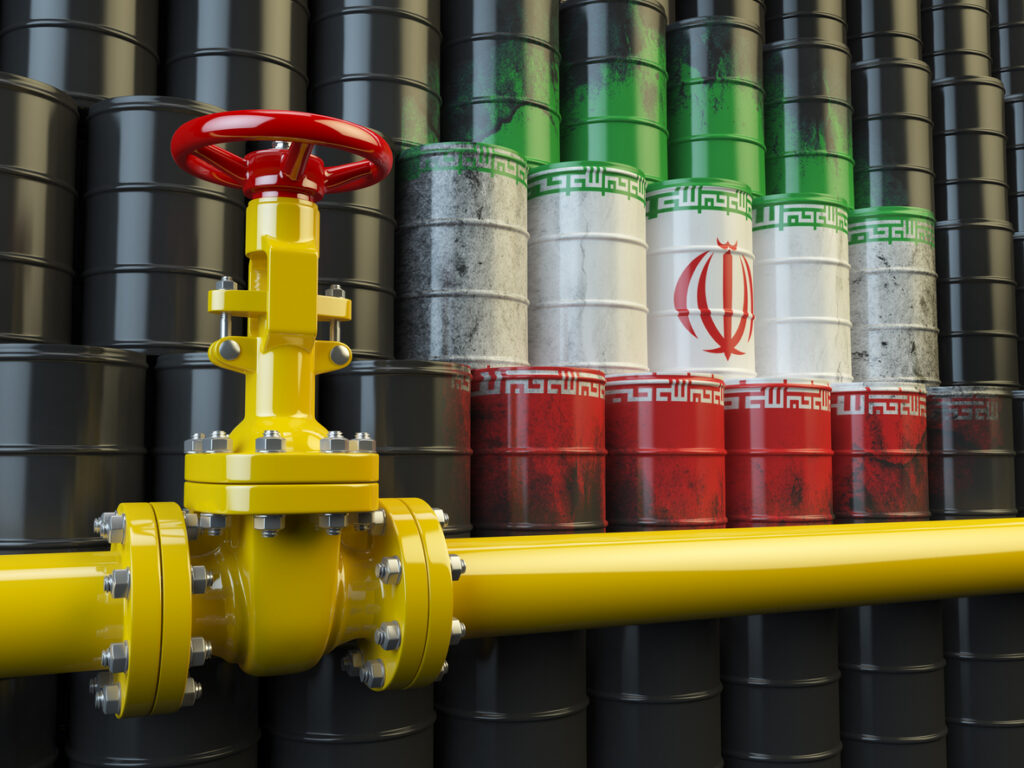
The global oil market is grappling with a paradox that demands immediate attention from discerning investors. While escalating tensions in the Middle East, particularly around the critical Strait of Hormuz, have led to a near standstill for non-Iranian oil exports from the Gulf, Iranian crude continues to flow at a surprisingly robust pace. Our proprietary data pipelines reveal a market attempting to price in geopolitical risk, yet seemingly underestimating the precarious balance in one of the world’s most vital maritime chokepoints. This analysis dives into the implications of Iran’s unwavering export capacity amidst regional chaos, dissecting why this dynamic persists and what it means for your energy portfolio.
The Hormuz Paradox: Steady Iranian Flows vs. Crippled Gulf Exports
The ongoing geopolitical friction in the Middle East has profoundly impacted shipping lanes, yet Iranian crude exports defy expectations. Since February 28th, Iran has reportedly moved between 13.7 million and 16.5 million barrels of crude, translating to an export rate of 1.1 million to 1.5 million barrels per day (bpd) through March 11th. This rate is remarkably close to Iran’s average of 1.69 million bpd recorded last year, indicating minimal disruption to its shadow fleet operations. In stark contrast, other Gulf nations have seen their vessel transits through the Strait of Hormuz severely curtailed, forcing them to reduce output. This asymmetry presents a critical supply-side puzzle for investors.
As of today, Brent Crude trades at $92.85, down 0.42% within a day range of $92.57 to $94.21. WTI Crude stands at $89.39, down 0.31%, fluctuating between $88.76 and $90.71. Gasoline prices reflect this moderation at $3.11, down 0.64%. Our 14-day Brent trend data shows a notable pullback, with prices dropping from $101.16 on April 1st to $94.09 on April 21st, a decline of $7.07 or approximately 7%. This recent downward trend in benchmark prices, even amidst severe regional disruptions, suggests the market might be overlooking the full extent of the geopolitical risk. The continued flow of Iranian oil, while creating a temporary buffer, masks the underlying fragility of global supply chains if this delicate balance were to tip.
Iran’s Strategic Calculus: Incentives to Keep the Spigot Open
The ability of Iran to maintain its oil exports without reported interceptions, even as it is accused of attacks on other vessels, is a testament to a calculated strategy. Experts suggest that Iran has a strong incentive to keep the Strait of Hormuz open, at least to some degree, because its own vessels rely on this passage. This contrasts sharply with past U.S. military campaigns, such as the naval blockade tactics deployed against Venezuela, which successfully seized vessels attempting to bypass sanctions. The absence of a similar direct interdiction campaign against Iranian tankers signals a geopolitical tightrope walk.
The reasoning is clear: if the U.S. were to initiate a full-scale interdiction of Iran-linked vessels, Tehran would have less to lose by potentially escalating the conflict further, possibly even through measures like mining the strait. This strategic forbearance from major powers allows Iran’s “shadow fleet” – a network of vessels adept at circumventing Western sanctions – to operate with relative impunity. Our satellite imagery analysis confirms Very Large Crude Carriers (VLCCs) are still actively loading oil at Iran’s Kharg Island export hub, indicating robust operational capacity and a clear intent to capitalize on current market conditions.
Investor Questions: Pricing Geopolitical Risk and Future Outlook
Our proprietary reader intent data reveals a heightened investor anxiety surrounding oil price direction. Common questions like “is WTI going up or down?” and requests for “prediction[s for] the price of oil per barrel by end of 2026?” underscore a market hungry for clarity amidst extreme uncertainty. The current situation in the Strait of Hormuz is a prime example of an asymmetric risk profile: while Iranian exports provide some near-term supply, averting a sharper price spike, the potential for escalation remains immense and largely unpriced. The market’s recent softening, despite the regional turmoil, could be a dangerous miscalculation.
Investors are right to be concerned about future price trajectories. The delicate balance maintained by Iran’s self-interest in keeping Hormuz partially open could unravel rapidly if external pressures intensify. Any move by the U.S. to directly challenge Iranian oil exports would likely trigger retaliatory actions, potentially leading to a full closure or significant disruption of the strait. Such a scenario would immediately impact global crude supplies, which currently benefit from Iran’s continued output, and send prices soaring far beyond current levels. The current market prices, while reflecting some geopolitical premium, do not fully encapsulate the tail risk associated with a complete shutdown of this critical chokepoint.
Navigating the Next Fortnight: Key Events and Escalation Risks
The coming weeks are crucial for investors monitoring energy markets. Several key events on our calendar could provide further insights or trigger new volatility. The EIA Weekly Petroleum Status Report, scheduled for April 22nd and April 29th, will offer critical updates on U.S. crude inventories, refinery activity, and demand. These reports will be particularly scrutinized for any signs of how the broader market is reacting to regional supply concerns, or whether the current Iranian flows are helping to build inventories elsewhere. Furthermore, the Baker Hughes Rig Count on April 24th and May 1st will indicate domestic production trends, which could offer some counterbalance to international supply risks.
A significant forward-looking event is the EIA Short-Term Energy Outlook on May 2nd. This comprehensive report will provide updated projections for global supply and demand, potentially incorporating revised assessments of geopolitical risks in the Middle East. Any adjustments to supply forecasts, particularly concerning OPEC+ output or the impact of regional conflicts, will be closely watched. The ongoing dialogue (or lack thereof) regarding potential U.S. actions against Iranian oil exports remains a major unquantified risk. Should Washington signal a change in strategy, the market’s current equilibrium could shatter, leading to rapid price appreciation. Investors must remain agile, interpreting these data points through the lens of heightened geopolitical instability.