The global oil market finds itself at a critical juncture, navigating the escalating geopolitical tensions stemming from the ongoing conflict with Iran. Recent demands from U.S. President Donald Trump for an “unconditional surrender” by Iran, following the tragic death of Supreme Leader Ayatollah Ali Khamenei, have injected a significant new layer of uncertainty and risk premium into energy prices. For oil and gas investors, understanding the interplay between these hardline political stances, Iran’s internal leadership vacuum, and underlying market fundamentals is paramount to positioning portfolios effectively in a volatile landscape. Our proprietary data pipelines reveal a complex picture where immediate geopolitical shocks meet broader, more subtle market trends, demanding careful analysis beyond headline reactions.
Iran’s Leadership Vacuum and Escalating Geopolitical Demands
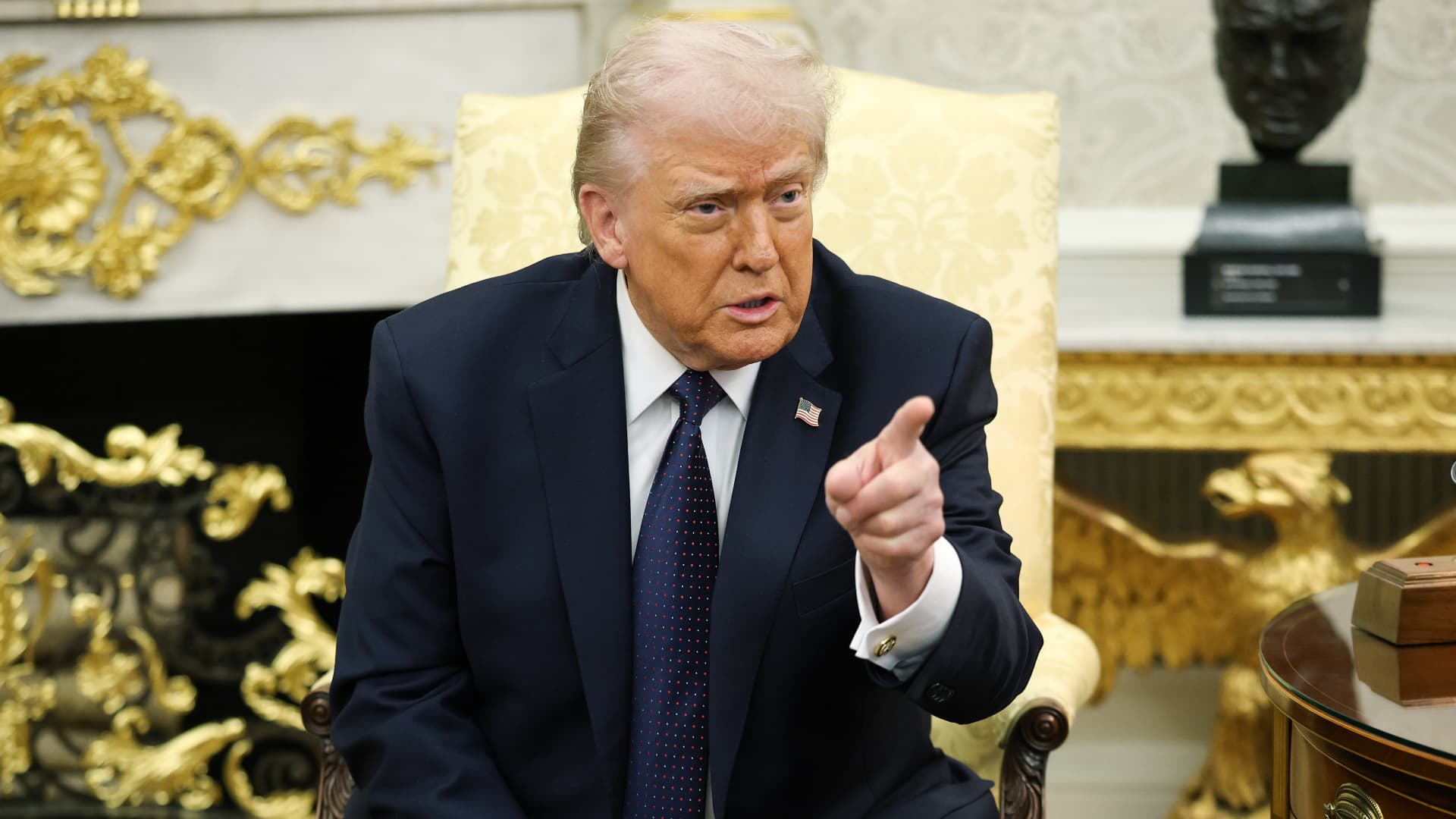
The recent intensification of the U.S.-Iran conflict, marked by the demise of Ayatollah Ali Khamenei in an air strike, has created a dangerous power vacuum within Iran. Against this backdrop, President Trump’s unequivocal demand for “unconditional surrender” signifies a zero-tolerance approach, leaving little room for diplomatic negotiation. This hardline stance, echoed from a similar demand last June, underscores a consistent U.S. policy objective to exert maximum pressure. The absence of a clear successor to Khamenei further complicates the situation, creating an environment ripe for internal power struggles and potentially unpredictable responses from Tehran. This geopolitical instability inherently elevates the risk profile for global oil supply, particularly given the critical role the region plays in energy transit. Investors must recognize that a prolonged period of uncertainty surrounding Iran’s leadership could translate directly into sustained market volatility and an enduring geopolitical risk premium.
Market Reaction: Beyond the Initial Spike, A Nuanced Trend Emerges
The immediate market reaction to President Trump’s demand saw an initial surge in crude prices, reflecting the heightened risk. However, our first-party market data provides a deeper, more nuanced perspective. As of today, Brent crude trades at $93.31, showing a modest daily gain of 0.08%, with an intraday range of $92.57 to $94.21. Similarly, WTI crude stands at $89.7, up 0.03%, trading between $88.76 and $90.71. While these levels clearly reflect a significant geopolitical premium, our proprietary 14-day Brent trend data offers a crucial insight: prices have actually experienced a broader decline of approximately 7% over the last two weeks, falling from $101.16 on April 1st to $94.09 on April 21st (before today’s slight uptick). This indicates that while the recent Iran news caused an immediate upward spike, the wider market has been contending with other bearish pressures, suggesting that underlying supply/demand dynamics or broader economic concerns are also at play. The current Brent-WTI spread, with Brent maintaining a premium of over $3.50, highlights the continued focus on international supply security, particularly concerning the Middle East. Downstream, gasoline prices currently hover at $3.12, reflecting a slight daily dip of 0.32%, indicating that the immediate crude price shock hasn’t fully translated to the pump, possibly due to existing inventory levels or demand elasticity.
Navigating Near-Term Volatility with Key Data Points
Many of our readers are keenly focused on immediate price direction, with questions like “is WTI going up or down?” dominating investor inquiries. This reflects the intense short-term volatility in the current environment. To effectively navigate this, investors must closely monitor upcoming fundamental data releases. The next 14 days present a series of critical market catalysts that will provide clarity on supply-demand balances and U.S. production trends. The EIA Weekly Petroleum Status Reports, scheduled for April 22nd, April 29th, and May 6th, will offer crucial insights into crude oil, gasoline, and distillate inventories, as well as refinery utilization rates. Significant draws could amplify geopolitical price pressures, while unexpected builds might temper them. Complementing these are the API Weekly Crude Inventory reports on April 28th and May 5th. Furthermore, the Baker Hughes Rig Count, due on April 24th and May 1st, will signal the ongoing health and expansion intentions of the U.S. upstream sector, a key counter-balance to international supply concerns. Finally, the EIA Short-Term Energy Outlook on May 2nd will provide updated projections for global and domestic oil markets, offering a forward-looking perspective that can either confirm or challenge current market sentiment. These data points will be instrumental in distinguishing between pure geopolitical noise and more fundamental shifts in the supply landscape.
Long-Term Outlook: Strategic Implications Amidst Heightened Risk
Beyond the immediate market gyrations, investors are also looking ahead, with questions probing “what do you predict the price of oil per barrel will be by end of 2026?” The long-term implications of the escalating Iran situation are profound. Qatar’s energy minister, Saad al-Kaabi, has issued a stark warning: oil prices could skyrocket to $150 per barrel if the critical Strait of Hormuz, a choke point for roughly a fifth of global oil supply, faces disruption. Such a scenario would not only push prices far beyond current levels but could, as al-Kaabi suggested, “bring down the economies of the world.” For investors, this underscores the enduring, high-stakes nature of geopolitical risk in the energy sector. Companies with diversified asset bases, strong balance sheets, and robust hedging strategies will be better positioned to weather prolonged periods of elevated prices and supply chain uncertainty. Exposure to regions less susceptible to Middle Eastern instability, or investments in energy transition technologies that offer a degree of insulation from fossil fuel price volatility, may also become increasingly attractive. While the short-term market will react to daily headlines and inventory reports, the strategic threat posed by the Iran situation demands a long-term perspective on portfolio resilience and risk management in the oil and gas sector.