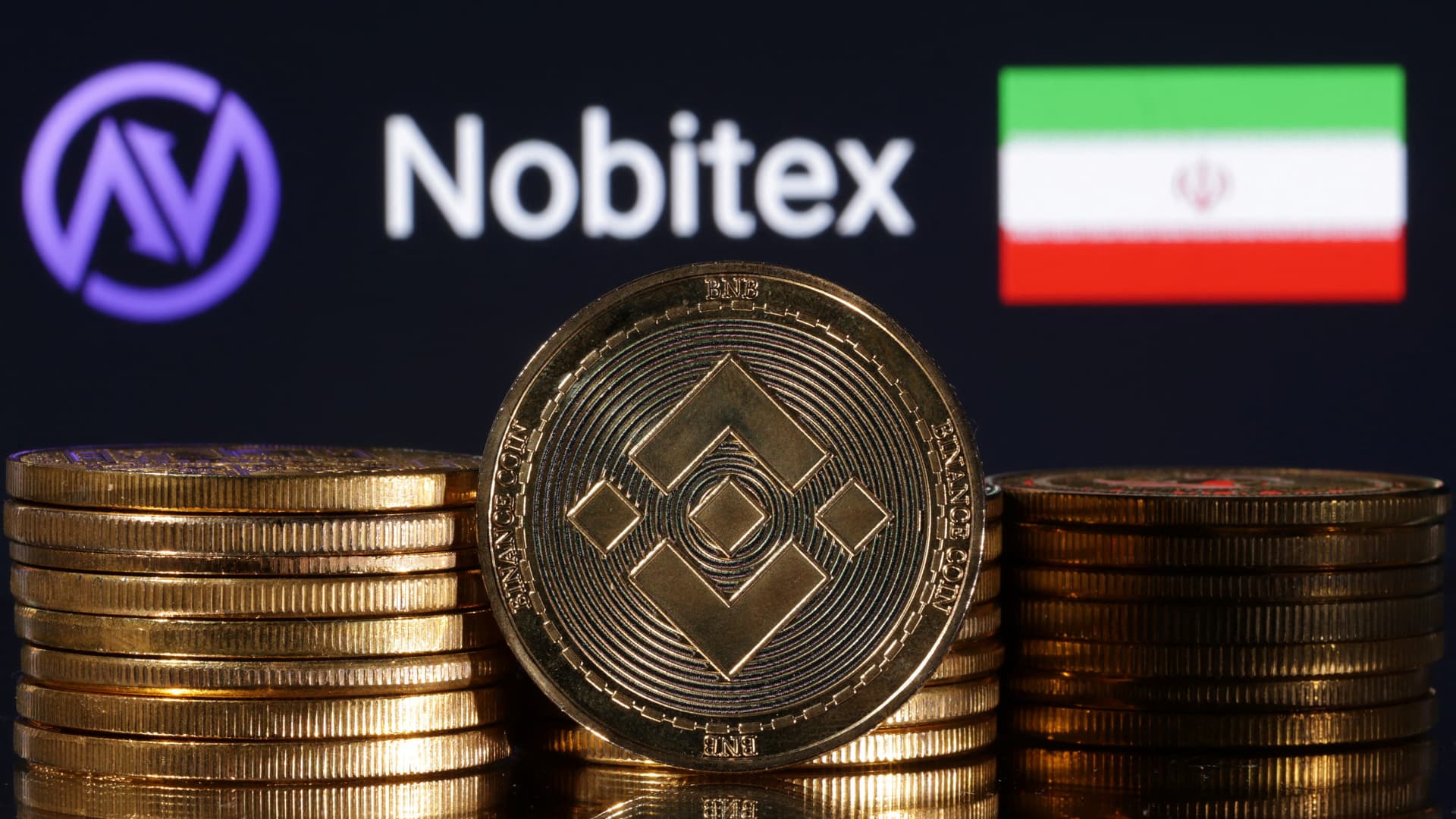
The geopolitical landscape across the Middle East remains a critical driver for global energy markets, and recent events in Iran underscore this volatility. A politically motivated cyberattack against Nobitex, Iran’s largest cryptocurrency exchange, saw over $90 million in digital assets effectively destroyed, not stolen for profit, by a pro-Israel hacking group. This incident, occurring amidst escalating missile exchanges between Israel and Iran and ongoing threats from Iranian leadership, serves as a stark reminder of the multifaceted and increasingly digital nature of regional conflict. For oil and gas investors, these developments translate directly into an elevated risk premium, demanding careful consideration of supply stability, demand outlook, and the potential for broader economic disruption.
Cyber Warfare Adds a New Dimension to Regional Energy Risks
The Nobitex cyberattack, claimed by the pro-Israel group Gonjeshke Darande (“Predatory Sparrow”), represents more than just a digital intrusion; it’s a strategic maneuver in the ongoing shadow war between regional adversaries. The destruction of over $90 million in various cryptocurrencies, including Bitcoin, Ethereum, and Solana, into burner addresses where the attackers could not retrieve them, highlights a clear intent to inflict symbolic damage rather than financial gain. More critically for energy market watchers, blockchain analysis links Nobitex to Iran’s Islamic Revolutionary Guard Corps (IRGC), a powerful entity designated as a terrorist organization by multiple Western nations. Further investigations have connected the platform to sanctioned IRGC-linked operatives and even wallets associated with groups like Hamas, Palestinian Islamic Jihad, and the Houthis. This intricate web of connections means that an attack on Iranian financial infrastructure, even digital, is perceived as a direct strike against entities deeply embedded in the region’s geopolitical landscape. While not a direct assault on oil infrastructure, such actions elevate the baseline level of instability and signal a willingness to engage in disruptive tactics that could, in other forms, impact energy flows.
Crude Prices Reflect Underlying Tensions Amidst Daily Fluctuations
Despite the heightened geopolitical temperature, today’s crude market has shown a nuanced reaction, highlighting the complex interplay of risk premiums and fundamental drivers. As of today, Brent Crude trades at $94.78 per barrel, marking a modest decline of 0.73% within a daily range of $93.98 to $95.69. Similarly, WTI Crude is at $86.5, down 1.05%, fluctuating between $85.5 and $86.78. These daily movements, while negative, are relatively contained given the fresh news of regional aggression. However, a broader perspective reveals significant underlying volatility. Over the past 14 days, Brent Crude has seen a substantial price correction, dropping from $118.35 on March 31st to $94.86 on April 20th – a decline of nearly 20%. This sharp depreciation suggests that while current geopolitical events add a new layer of concern, the market has also been grappling with other bearish factors, perhaps related to demand outlooks or broader economic sentiment. The current prices reflect a geopolitical risk premium that is constantly being re-evaluated against existing supply-demand fundamentals and, crucially, the *type* of conflict. A cyberattack, while significant, does not carry the immediate threat of physical supply disruption that a direct strike on oil fields or shipping lanes would.
Investor Focus on Future Direction and Critical Upcoming Events
Our proprietary reader intent data reveals a clear focus among investors on the future trajectory of crude prices, with questions ranging from “is WTI going up or down?” to predictions for “the price of oil per barrel by end of 2026?” These inquiries underscore the pervasive uncertainty driven by global economic signals and, increasingly, by geopolitical flashpoints like the recent Iranian cyberattack. Looking forward, the next two weeks are packed with critical energy events that will be closely watched for their impact on market sentiment and supply-demand balances. The OPEC+ Joint Ministerial Monitoring Committee (JMMC) Meeting on April 21st (Tuesday) is particularly significant. Amidst escalating regional tensions, the committee’s rhetoric and any potential adjustments to output policies will be scrutinized. Will the geopolitical premium encourage them to maintain tighter supply, or will global demand concerns dictate a different approach? Following this, the EIA Weekly Petroleum Status Reports on April 22nd and April 29th, alongside the Baker Hughes Rig Count on April 24th and May 1st, will offer crucial insights into U.S. inventory levels and production activity. These reports will be interpreted through the lens of heightened Middle East instability, potentially amplifying any bullish or bearish signals. Finally, the EIA Short-Term Energy Outlook on May 2nd will provide a comprehensive forecast that will undoubtedly factor in the evolving geopolitical landscape, offering clarity on potential price paths for the remainder of the year and into 2026. For investors, monitoring these events in conjunction with the unfolding regional dynamics will be paramount to navigating the market’s direction.
The Imperative of Risk Management in a Volatile Landscape
The current environment, marked by both traditional military skirmishes and sophisticated cyber warfare, necessitates an updated approach to risk management for energy investors. The Nobitex incident, while distinct from direct attacks on oil infrastructure, highlights the expanding toolkit of disruption available to state and non-state actors in the Middle East. This broadening scope of conflict means that threats to energy stability can emerge from unexpected vectors, not just physical blockades or direct attacks on production facilities. The interlinked nature of global finance, digital assets, and critical infrastructure implies that a cyberattack, even on a cryptocurrency exchange, can send ripple effects through investor confidence and capital flows. Investors must consider not only the immediate supply-side impacts but also the potential for broader economic contagion or a systemic escalation that could disrupt trade routes, impact insurance premiums, or even trigger larger-scale military responses. Maintaining diversified portfolios and hedging against extreme price movements through derivatives are prudent strategies in this climate. Furthermore, staying informed about the evolving nature of geopolitical threats, including cyber warfare capabilities and their targets, will be essential for anticipating market reactions and protecting capital in an increasingly unpredictable energy market.