

India’s Potential Return to Iranian Crude: A High-Stakes Bet for Global Energy Markets
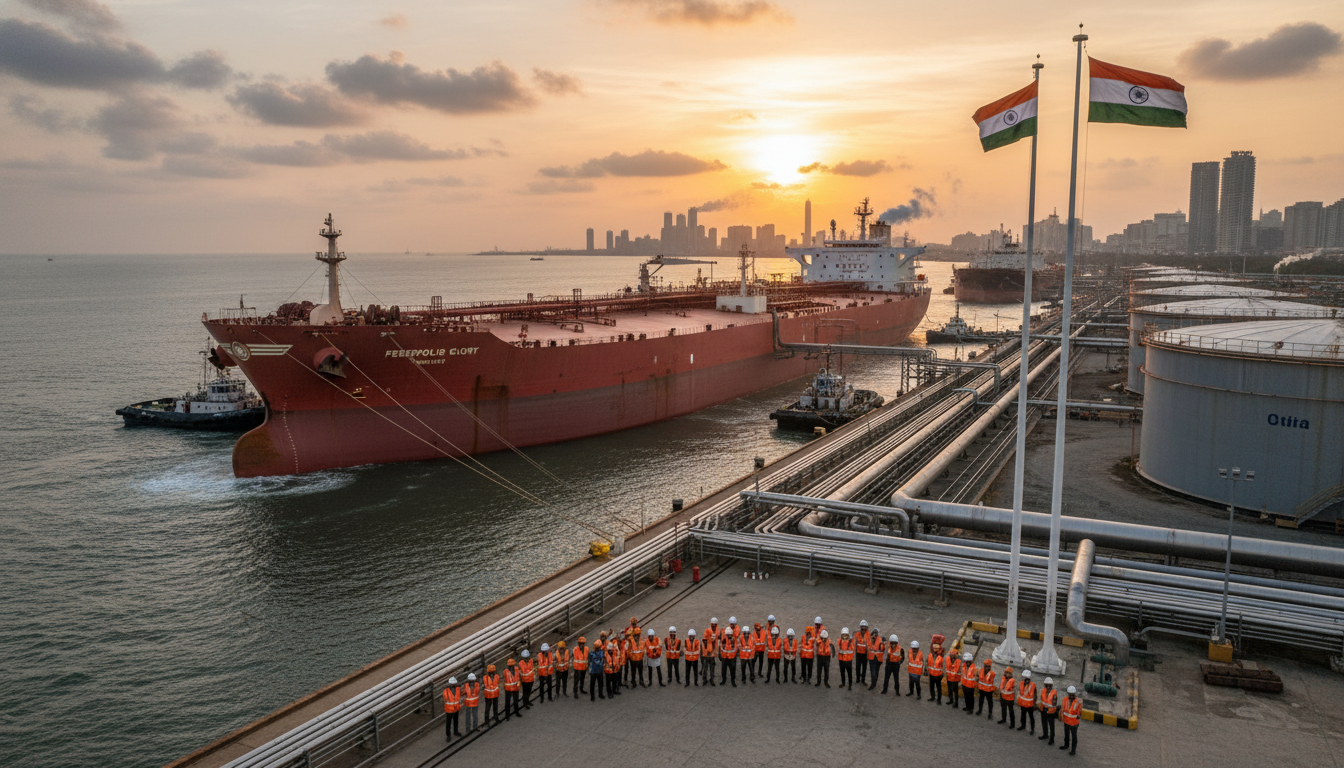
A significant development is unfolding in global energy trade as a U.S.-sanctioned vessel, laden with Iranian crude, signals its imminent arrival in India. This move, if successful, would mark India’s first direct import of Iranian oil in nearly seven years, a strategic shift with profound implications for energy markets and investor portfolios. The vessel, named Ping Shun, an Aframax tanker built in 2002 and under U.S. sanctions since 2025, recently updated its destination to Vadinar, a key port on India’s west coast, expecting to arrive later this week. Its journey began with loading crude from Iran’s Kharg Island in early March, according to leading ship-tracking firms like Kpler and Vortexa.
Geopolitical Pressures and India’s Energy Imperative
The potential resumption of Iranian crude imports by India comes at a critical juncture for the South Asian economic powerhouse. With global oil prices remaining elevated and Middle East fuel supplies experiencing disruptions stemming from the escalating U.S.-Israeli conflict with Iran, India faces considerable pressure to secure diverse and affordable energy sources. The original article mentions the “effective closure” of the Strait of Hormuz in this context, underscoring the perceived vulnerability of traditional supply routes and the urgent need for strategic alternatives. For investors, this highlights the growing geopolitical risk premium embedded in oil prices and the complex calculus facing major energy consumers like India.
India previously ceased importing Iranian barrels in May 2019 due to the imposition of stringent U.S. sanctions. A successful discharge by the Ping Shun would signal a bold re-engagement with Iranian crude, challenging the established contours of the sanctions regime. This evolving situation demands close scrutiny from investors monitoring global crude flows and the stability of supply chains.
Navigating the Sanctions Labyrinth: Waivers, Payments, and Persistent Hurdles
The U.S. government, recognizing the market strain, recently attempted to provide some relief by issuing temporary waivers on its sanctions specifically for Iranian crude oil already loaded onto tankers. However, these waivers have not eradicated the formidable challenges associated with such transactions. Indian state-backed buyers have, until now, largely steered clear of these purchases, grappling with complex hurdles related to payment mechanisms, shipping logistics, and insurance coverage. The transparency with which the Ping Shun is now signaling its destination to Vadinar could indicate that buyers are nearing a resolution on these intricate issues, a positive signal for those tracking the potential loosening of supply constraints.
Despite this potential breakthrough, significant obstacles persist. A recent case involving an Iranian liquefied petroleum gas (LPG) shipment to India underscores these difficulties. The vessel, Sea Bird, arrived at Mangalore on March 30 but has yet to discharge its cargo. Reports from port agents suggest the receiver is not yet prepared for delivery, with payment issues still being ironed out by parties familiar with the matter. This incident serves as a stark reminder for investors that even with waivers, the practicalities of trading with sanctioned entities remain arduous.
Furthermore, the financial infrastructure presents a formidable barrier. Even with temporary waivers, many banks that serve as intermediaries for U.S. dollar payments across Asia have expressed reluctance to facilitate transactions for Iranian crude. Their concern stems from the fact that such dealings would still involve sanctioned Iranian entities, a scenario that remains prohibited under their internal compliance frameworks. This banking hesitancy highlights the deep-seated impact of sanctions, complicating even government-backed efforts to ease market pressures.
Who Benefits and What’s Next for Indian Refiners?
Prior to its rerouting to Vadinar this week, the Ping Shun had indicated China as its destination, a country where it has completed several previous deliveries. This impending voyage would mark the tanker’s inaugural known delivery to India. Nycity Shipmanagement Co. Ltd., the China-based manager of the Ping Shun as per the Equasis database, did not immediately respond to inquiries. Its owner, Blue Venice Shipping Inc., shares identical contact details with Nycity.
Vadinar port is a critical gateway for major Indian state-run refiners, including Indian Oil Corp., Bharat Petroleum Corp., and Rosneft-backed Nayara Energy Ltd., which receive their crude oil cargoes there. Notably, Nayara Energy’s plant is scheduled for a month-long maintenance shutdown this month, which would temporarily eliminate its immediate need for crude imports. This detail suggests that if the Ping Shun successfully discharges, the crude would likely be destined for Indian Oil Corp. or Bharat Petroleum Corp. Investors should watch these refining entities closely for any statements or confirmations regarding these highly sensitive transactions.
Investor Outlook: Monitoring a Shifting Landscape
The potential return of Indian buyers to the Iranian crude market represents a significant development for global energy investors. It signals a strategic effort by a major crude importer to diversify its supply base and potentially mitigate the impact of rising oil prices and geopolitical volatility. While a single shipment may not dramatically alter global supply-demand balances, it could pave the way for more consistent Iranian oil exports to India, influencing crude benchmarks and the competitive landscape for other producers. Investors should carefully monitor the resolution of payment and insurance hurdles, the enforcement of U.S. sanctions, and the broader geopolitical environment. The ultimate success of this venture could open new avenues for investment in the Indian refining sector and potentially shift global crude trade patterns, making this a critical storyline for the discerning oil and gas investor.
