

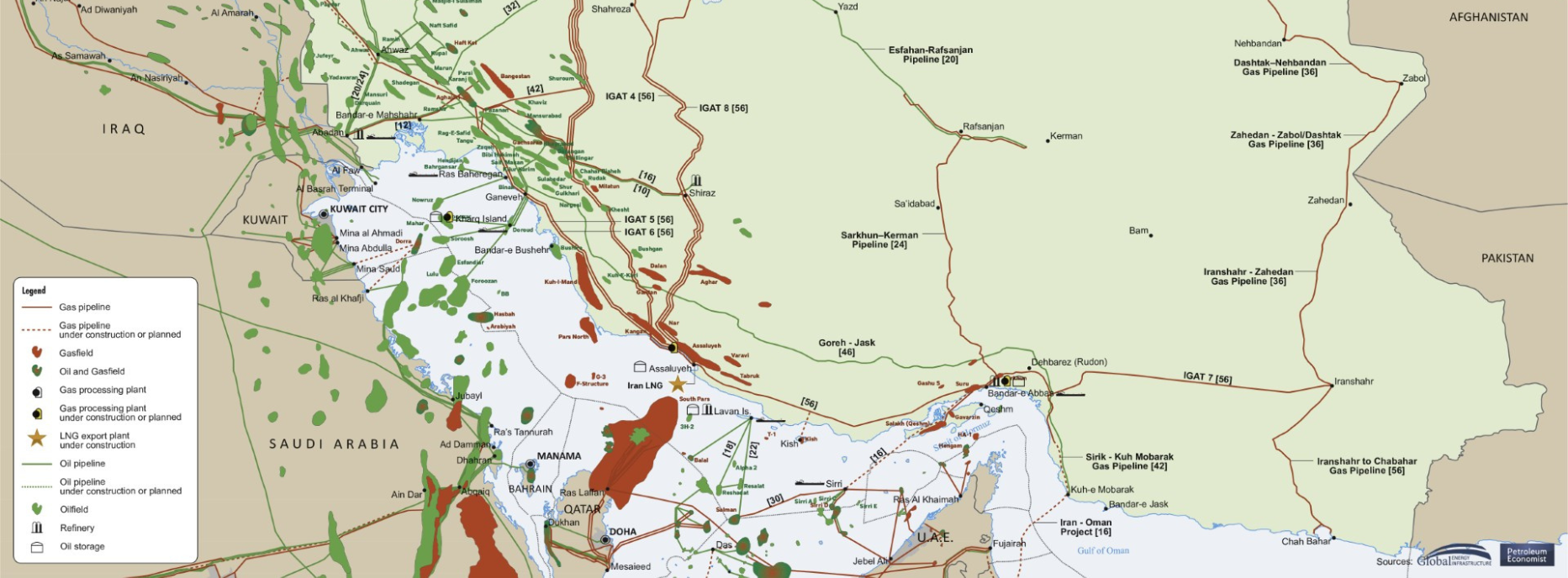
Escalating tensions between the U.S. and Iran are raising the risk of significant disruptions to global oil and liquefied natural gas (LNG) flows, according to new analysis from Enverus Intelligence Research (EIR). The firm estimates that oil markets currently reflect a geopolitical risk premium of $10–$15/b, but warns that price exposure could increase materially if transit through the Strait of Hormuz is impaired.

Approximately 14 MMbpd of crude — about one-third of global seaborne supply — moves through the Strait of Hormuz, along with roughly 20% of global LNG volumes. EIR Head of Macro Research Al Salazar said even a one-month closure of the strait could draw roughly 400 million bbl from global inventories, quickly eliminating the current surplus and pushing prices higher as importers move to secure supply.
The firm also highlighted risks to Iranian exports following reported damage near Kharg Island, which could place about 2 MMbpd of crude at risk. If the terminal were offline for an extended period, EIR estimates Brent prices could rise an additional $10–$15/b above its current 2026 forecast of $63/b.
LNG markets have already reacted sharply. Disruptions linked to QatarEnergy affect an estimated 10–11 Bcf/d — about one-fifth of global LNG trade. Given limited short-term supply elasticity, EIR expects price, rather than volume, to absorb most of the adjustment. Japan-Korea Marker prices nearly doubled following the developments, underscoring the sensitivity of gas markets to multi-Bcf/d supply shocks.
While OECD crude and product inventories remain above five-year averages, EIR cautioned that inventory buffers could erode quickly under sustained disruption. The U.S. Strategic Petroleum Reserve remains roughly 200 million bbl below 2018 levels, limiting flexibility compared to previous crises. Although geopolitical price spikes have historically proven temporary, Enverus expects elevated near-term volatility as insurance costs rise, time spreads widen and Asian importers compete for prompt supply.
