The recent joint U.S. and Israeli military action targeting OPEC member Iran has dramatically reset the geopolitical risk premium in global oil markets, ushering in a new era of volatility. This escalation, centered in a region critical for global energy supplies, immediately thrusts the strategic Strait of Hormuz into the spotlight, threatening a major disruption that could reverberate through the world economy. Investors are now grappling with the very real possibility of significant supply shocks, prompting a re-evaluation of energy portfolios and a heightened focus on the stability of Middle Eastern crude flows. Our analysis delves into the immediate market reaction, the existential threat posed by a disrupted Strait, and what upcoming events and investor sentiment signal for the path ahead.
Immediate Market Reaction and Underlying Price Dynamics
The initial market response to the escalating tensions has been swift and decisive. As of today, Brent Crude trades at $93.92 per barrel, marking a 0.73% increase within the day’s range of $93.52 to $94.21. Similarly, WTI Crude has climbed to $90.48, up 0.9% for the session, oscillating between $89.71 and $90.7. This upward momentum stands in stark contrast to the preceding weeks; proprietary data reveals Brent crude experienced a notable decline, dropping from $118.35 on March 31st to $94.86 on April 20th, representing a significant 19.8% reduction over a fortnight. This prior downward pressure, indicative of other market fundamentals or perhaps a perceived calm, has now been abruptly overridden by the geopolitical event. Gasoline prices, currently stable at $3.13, are also under scrutiny for potential future impacts. The market’s immediate re-pricing reflects a recognition that the risk of a supply disruption from the Middle East, long underestimated by some traders, is now a tangible threat, demanding a substantial risk premium be added to current valuations.
The Strait of Hormuz: A Pivotal Chokepoint Under Threat
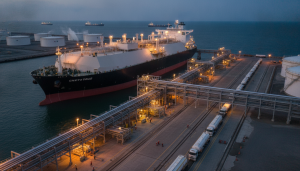
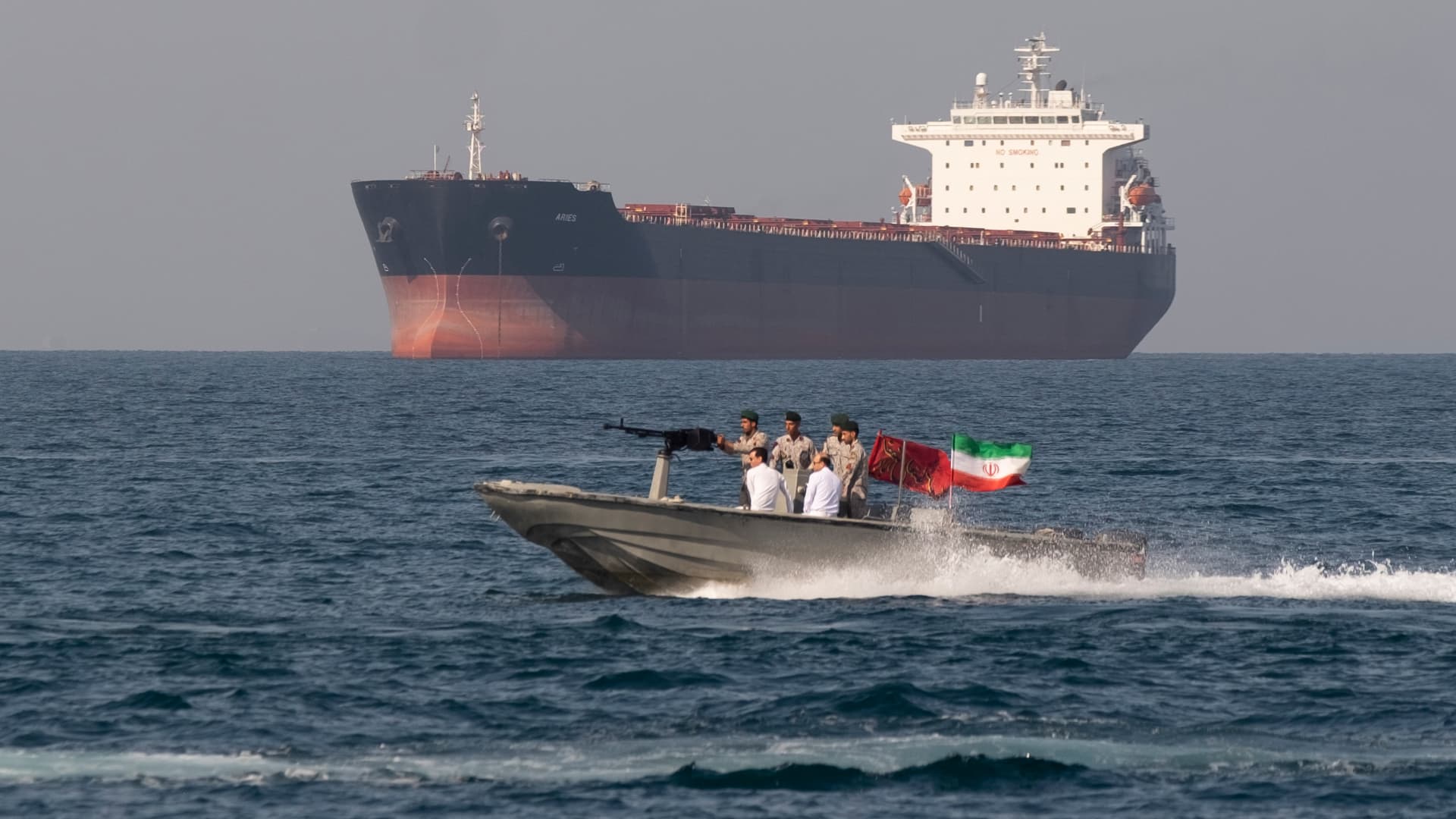
At the heart of the current crisis lies the Strait of Hormuz, an indispensable artery for global oil trade. Iran, holding a critical coastline along this waterway, is not just the fourth-largest oil producer within OPEC, with January output exceeding 3 million barrels per day; it also possesses the means and motive to disrupt the Strait. Intelligence suggests Tehran maintains significant stockpiles of mines and short-range missiles capable of severely impeding commercial shipping. The scale of potential disruption is immense: in 2025, over 14 million barrels per day, or roughly one-third of the world’s total seaborne crude exports, transited through the Strait. A substantial three-quarters of these barrels were destined for key Asian economies including China, India, Japan, and South Korea, with China alone receiving half of its crude imports via this narrow passage. Should the Strait become unsafe for transit, the implications are dire. Not only would the vast output from Saudi Arabia, Iraq, the United Arab Emirates, Kuwait, and Qatar—amounting to over 20 million barrels loaded for export daily—be effectively sealed off from the global market, but approximately 20% of the world’s liquid natural gas exports, predominantly from Qatar, would also face an irreplaceable blockage. This scenario would trigger an unprecedented “bidding war” for available energy supplies, especially among Asian importers, with global spare capacity proving useless if it cannot reach the market.
Investor Sentiment and Upcoming Market Catalysts
The heightened uncertainty is clearly reflected in the questions dominating investor discourse this week. Our proprietary reader intent data shows a strong focus on directional bets, with queries such as “is WTI going up or down” and longer-term outlooks like “what do you predict the price of oil per barrel will be by end of 2026?” These questions underscore the urgent need for clarity amidst the volatility. Investors are seeking guidance on how this geopolitical flashpoint will shape short-term trading decisions and influence the broader oil price trajectory for the remainder of the year. Beyond the immediate news cycle, several key energy events in the coming weeks will provide critical data points and potential market catalysts. Tomorrow, April 22nd, the EIA Weekly Petroleum Status Report will offer fresh insights into U.S. crude inventories and demand. This will be followed closely by the Baker Hughes Rig Count on April 24th, providing a pulse on drilling activity. The OPEC+ JMMC Meeting today, April 21st, is particularly crucial; any statements or indications regarding production policy will be scrutinized for how the cartel plans to address or mitigate potential supply shortfalls. Further EIA and API inventory reports, along with the EIA Short-Term Energy Outlook on May 2nd, will continue to shape market expectations. Each of these events, typically drivers of market sentiment, will now be interpreted through the lens of heightened Middle East tensions, offering investors clues on supply, demand, and the resilience of the global energy system in a crisis.
Economic Repercussions and Strategic Investment Considerations
The potential closure of the Strait of Hormuz is not merely an oil market event; it represents a direct threat to global economic stability. Analysts widely agree that a prolonged disruption would be a guaranteed trigger for a global recession. The sheer volume of crude and natural gas reliant on this passage means that no amount of strategic petroleum reserves or marginal spare capacity could offset a significant, sustained blockage. The resulting surge in oil prices would not be met with elastic demand; rather, prices would need to climb to levels high enough to induce significant demand destruction, effectively forcing a global economic slowdown to rebalance the market. For investors, this scenario necessitates a strategic reassessment. Diversification away from overly concentrated energy plays, particularly those with direct exposure to Middle Eastern crude production or transit routes, becomes paramount. Considering companies with robust balance sheets, diversified asset bases, or operations in less geopolitically sensitive regions could offer a defensive posture. Furthermore, understanding the interplay between energy prices and broader inflation, interest rates, and consumer spending will be critical. Active monitoring of diplomatic efforts, regional military posturing, and the response from major consuming nations will be essential for navigating what promises to be a period of unprecedented uncertainty in global energy markets.