

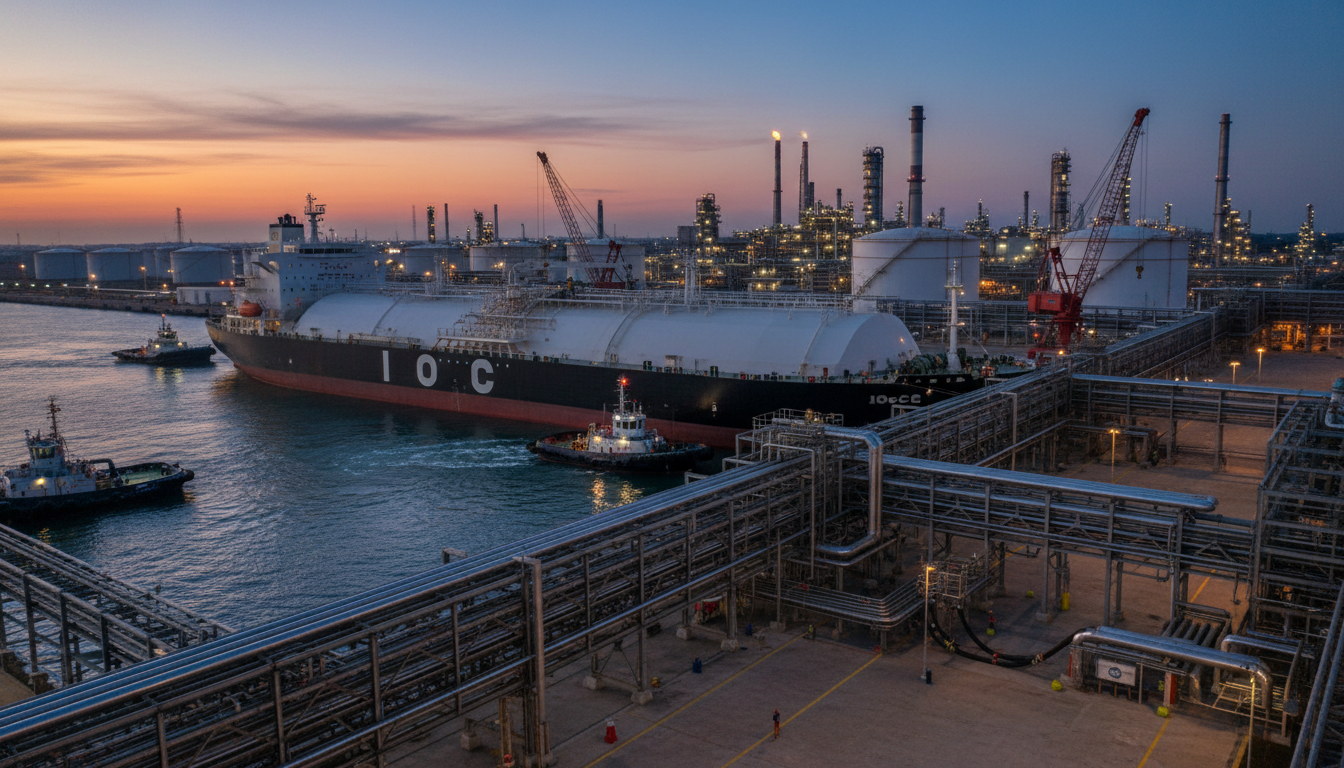
In a significant move signaling shifting energy market dynamics and heightened geopolitical influence, India’s state-owned energy giant, Indian Oil Corporation (IOC), has executed a landmark purchase of liquefied petroleum gas (LPG) from Iran. This transaction marks the first direct energy procurement from the Islamic Republic by IOC in nearly eight years, underscoring India’s proactive strategy to secure vital cooking fuel supplies amidst escalating regional tensions.
The strategic acquisition arrives as India grapples with an emerging shortfall of LPG, a critical commodity for millions of households. Disruptions to established supply chains, largely a consequence of the ongoing conflict in the Middle East, have tightened availability and necessitated alternative sourcing. This initial cargo of Iranian LPG is slated for distribution among India’s major public sector oil marketing companies, with Bharat Petroleum Corporation Ltd (BPCL) and Hindustan Petroleum Corporation Ltd (HPCL) set to share the incoming shipment.
India’s Vulnerable LPG Supply Chain Amidst Middle East Strife
India stands as one of the world’s largest consumers of LPG, importing approximately two-thirds of its total requirements. A staggering 90 percent of these imports traditionally originate from the Middle East, primarily transiting through the Strait of Hormuz. This geographical concentration has historically exposed India to considerable supply chain vulnerabilities, a risk that has now materialized with severe ramifications.
The current conflict in West Asia has dramatically intensified these disruptions, rendering the Strait of Hormuz an increasingly perilous passage for maritime trade. The resulting bottlenecks have not only constrained the physical availability of LPG but also fueled concerns over domestic distribution stability. Reports from various parts of the country indicate noticeable shortages, pushing some communities to revert to less efficient cooking methods like firewood and leading to frustratingly long queues for cylinder refills. In response, the Indian government has taken decisive measures, including curtailing LPG supplies to commercial entities such such as hotels and restaurants, and accelerating critical natural gas pipeline development projects under emergency provisions to diversify energy infrastructure.
The Return of Iranian Barrels: A Sanctions Landscape Shift
This pivotal purchase from Iran follows closely on the heels of a temporary waiver issued by the United States earlier this month. This exemption permits India to procure crude oil and petroleum products from Iran, effectively easing stringent sanctions that had largely kept Iranian energy cargoes off the global market. The re-entry of Indian buyers into the Iranian energy arena is being closely monitored by international markets, offering an early indicator of potential broader shifts in trade patterns should more nations opt to leverage similar waivers.
The last time Indian Oil Corporation sourced LPG from Iran was in June 2018, according to data intelligence firms. The current consignment, estimated at approximately 43,000 tonnes of combined butane and propane, represents a relatively modest volume against India’s colossal daily consumption, meeting roughly half a day’s national demand. However, its strategic importance far outweighs its volumetric contribution, signaling a readiness by India to navigate complex geopolitical landscapes for energy security.
Navigating High Seas: The Logistical Chess Game
Ship-tracking data confirms the LPG carrier “Sea Bird” is currently en route, transporting the Iranian LPG cargo. Its anticipated arrival at India’s Mangalore port on Thursday highlights the intricate logistics involved in these sensitive transactions. Interestingly, the vessel’s journey has been marked by unusual navigation: initially indicating a destination in China, the “Sea Bird” subsequently altered its course, temporarily switched off its transponder signals, and later reappeared in the Arabian Sea, sailing eastward – a clear divergence from its previously declared intention to proceed to Dubai. Such maneuvers underscore the sensitivities and operational complexities associated with trading sanctioned commodities.
Beyond this immediate delivery, India is actively engaged in advanced negotiations to secure safe passage for two additional LPG cargoes through the Strait of Hormuz. These future shipments, contracted by Bharat Petroleum Corporation Ltd (BPCL), involve the vessels “Green Asha” and “Green Sanvi.” The ongoing discussions emphasize India’s concerted efforts to de-risk its energy supply lines and ensure a stable flow of essential fuels.
Investor Outlook: Geopolitics, Supply Chains, and Commodity Prices
For investors keenly observing the global oil and gas landscape, India’s return to Iranian energy markets presents several compelling implications. Firstly, it highlights the growing impact of geopolitical events on commodity prices and supply chain reliability. The Strait of Hormuz, a critical chokepoint, continues to exert significant influence on global energy flows, with any disruption immediately impacting availability and price stability.
Secondly, this development suggests that strategic waivers from sanctions, even temporary ones, can quickly alter trade dynamics. Investors should closely watch for further easing or tightening of sanctions regimes as they directly affect the re-entry of previously constrained energy producers into the market. This could introduce new supply into the system, potentially influencing global price benchmarks for LPG and other petroleum products.
Finally, India’s proactive diversification strategy signals a long-term commitment to enhancing its energy security. While the volumes are currently modest, the precedent set by this Iranian purchase indicates a willingness to explore all viable sourcing options. This strategy could lead to more diversified global energy trade routes, potentially mitigating the impact of regional conflicts on individual importing nations. Investors in shipping, energy infrastructure, and oil and gas exploration should monitor these evolving trade corridors and the potential for new partnerships shaping the future of global energy supply.
