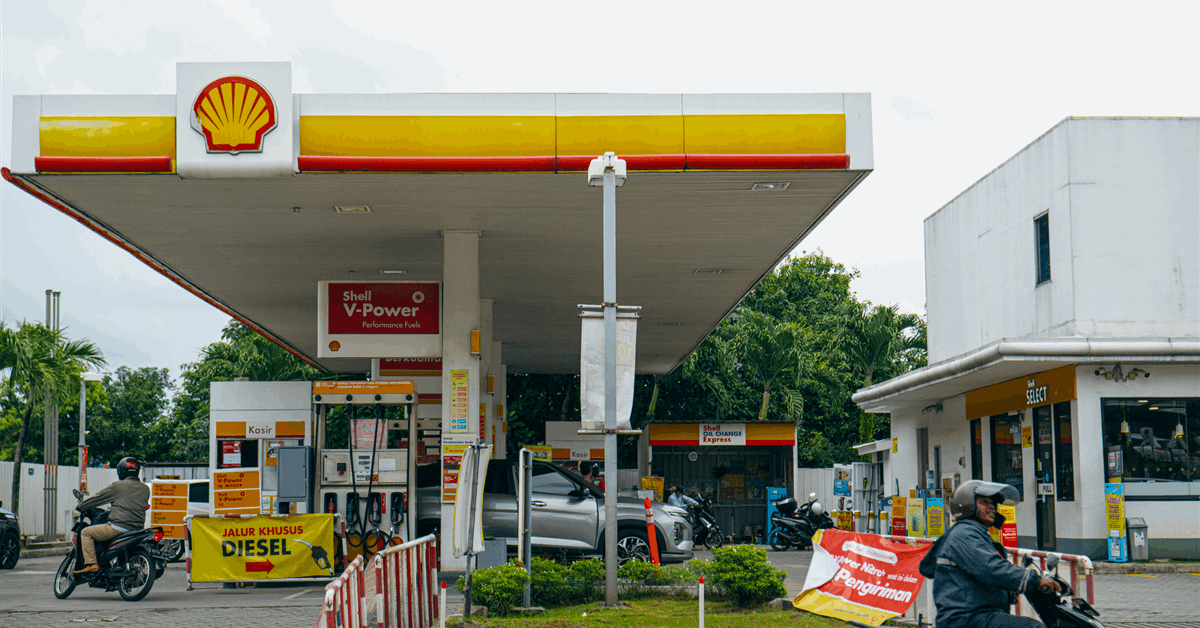
The recent fuel shortages impacting Shell Plc and BP Plc-branded stations in Indonesia serve as a stark reminder of the complex interplay between global energy markets, domestic policy, and the operational challenges faced by international oil companies (IOCs) in key emerging economies. While Indonesia represents a smaller fraction of global fuel demand, the specific dynamics at play here – driven by government-imposed import restrictions and a push towards national energy security – offer critical insights for investors assessing risk and opportunity in the broader oil and gas sector.
Indonesia’s Supply Squeeze: A Microcosm of Market Access Challenges
Shell and BP have both confirmed significant disruptions to their fuel supply in Indonesia, leading to unavailability of certain gasoline grades at some locations. Shell, a relatively minor player in the Indonesian retail market, is actively coordinating with the country’s Energy Ministry to address the issue. Similarly, BP-branded stations, operating under PT Aneka Petroindo Raya, are grappling with product shortages across their network of approximately 50 forecourts.
The root cause of these shortages lies in Indonesia’s government-regulated import quotas. Data indicates a substantial 22% year-on-year decline in gasoline imports by the end of August. As a net oil importer with insufficient domestic refining capacity, Indonesia heavily relies on imported petroleum products to meet its consumption needs. This reliance, coupled with the government’s decision to curb imports, directly impacts the ability of private companies like Shell and BP to secure adequate supplies. For investors, this situation highlights the significant geopolitical and regulatory risks inherent in operating in emerging markets, where national energy policies can swiftly alter market conditions for foreign entities. Shell’s earlier agreement to divest its Indonesian gas stations and associated fuel distribution operations, selling them to a joint venture between Citadel Pacific Ltd. and Sefas Group, now appears particularly prescient in light of these developing supply chain bottlenecks.
Government Intervention and the Rise of National Champions
The Indonesian Energy Minister, Bahlil Lahadalia, has publicly acknowledged that private companies have requested larger import quotas. Crucially, he has also encouraged these companies to procure supplies from state-owned PT Pertamina, which holds a dominant position in Indonesia’s gasoline retailing sector. This directive underscores a broader trend of governments in resource-rich or strategically important nations prioritizing domestic entities and national energy security over unfettered market access for international players.
Further strengthening Pertamina’s role, the volume and frequency of its overseas gasoline procurement tenders for the remainder of the year have reportedly surged over the last two weeks. This indicates that while the overall national import volume is being curtailed for private players, the state-owned enterprise is stepping up to fill the gap, effectively consolidating its control over the domestic fuel supply chain. For investors, this scenario raises critical questions about the long-term viability and profitability of IOCs operating in environments where state-backed competitors enjoy preferential treatment and market dominance. It signals a need for meticulous due diligence on regulatory frameworks and competitive landscapes when evaluating investment opportunities in such regions.
Global Price Dynamics Amidst Localized Scarcity
These localized supply stresses in Indonesia are unfolding against a backdrop of dynamic global energy prices. As of today, Brent crude trades at $98.2 per barrel, reflecting a modest daily decline of 1.2%, with an intraday range of $97.92-$98.38. WTI crude similarly saw a decrease, currently priced at $89.81, down 1.49%, fluctuating between $89.57 and $90.09. Gasoline prices, while showing a slight daily dip of 0.32% to $3.08, have remained relatively stable within a day range of $3.08-$3.1.
However, zooming out, the 14-day Brent trend reveals a more significant downward movement, from $108.01 on March 26 to $94.58 on April 15, marking a substantial decline of $13.43, or 12.4%. This broader easing in global crude prices might suggest a loosening in the overall market, yet Indonesia’s experience clearly demonstrates that domestic policy decisions can override global trends, creating acute regional shortages regardless of international price movements. Investors asking about crude price models and market data must understand that while global benchmarks are crucial, local regulatory environments can introduce significant friction and create unique supply-demand imbalances, impacting retail prices and availability within specific national markets.
Forward Outlook: OPEC+ Decisions and Emerging Market Vulnerabilities
Looking ahead, the investment landscape for oil and gas will be heavily influenced by several key events in the coming weeks. Investors will be particularly focused on the upcoming OPEC+ Joint Ministerial Monitoring Committee (JMMC) meeting scheduled for April 18, followed swiftly by the full OPEC+ Ministerial Meeting on April 20. Any decisions made regarding production quotas will have immediate ramifications for global crude supply and pricing, directly affecting the cost of imports for nations like Indonesia.
A more restrictive OPEC+ stance could further tighten global markets, potentially exacerbating Indonesia’s import challenges and increasing pressure on the Energy Ministry to adjust its policies or further empower Pertamina. Conversely, a decision to increase output could alleviate some price pressure, though the underlying issue of import restrictions would remain. Furthermore, the weekly API and EIA crude inventory reports on April 21/22 and April 28/29, respectively, will provide crucial insights into U.S. supply and demand dynamics, influencing overall market sentiment. The Baker Hughes Rig Count reports on April 17 and April 24 will also offer a forward look into future production capacity. For investors seeking to understand OPEC+ current production quotas and their impact, the Indonesian situation serves as a powerful example of how global decisions filter down to local market realities, particularly for net importing nations with state-controlled energy sectors. These upcoming events will shape not only global crude prices but also the strategic calculus for IOCs navigating complex and often protectionist emerging energy markets.


