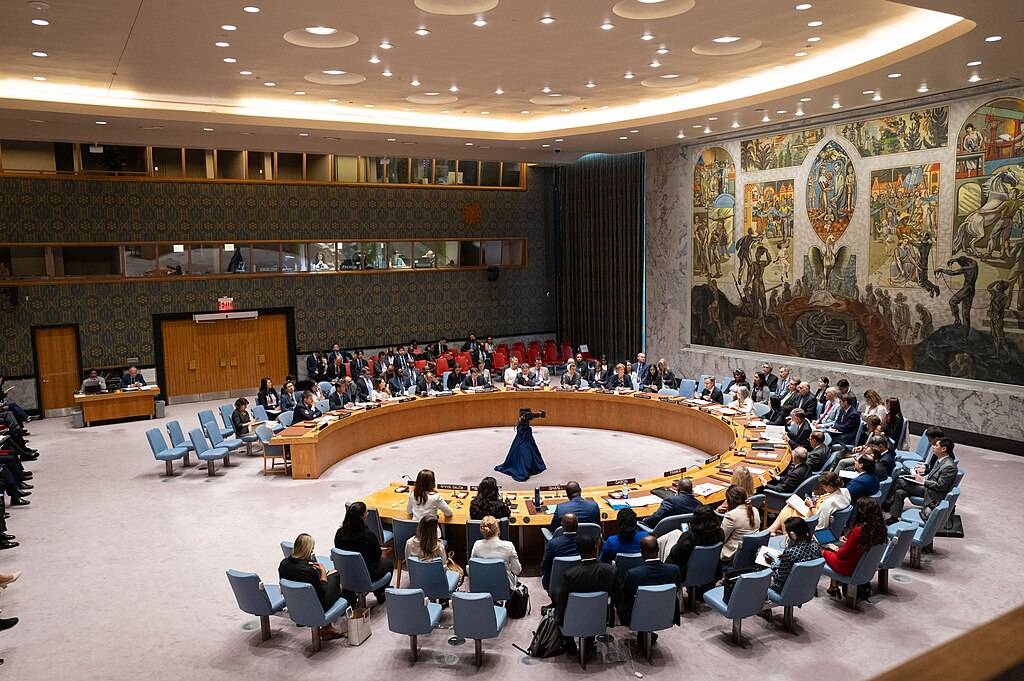
The global energy landscape consistently reacts to geopolitical tremors, and recent developments in South Asia have once again placed a spotlight on regional stability and its potential ripple effects on crude oil markets. The United Nations Security Council (UNSC) recently convened a rare, confidential session to address mounting tensions between India and Pakistan, following a devastating terror attack in Pahalgam last month. This incident tragically claimed the lives of 25 tourists and a local pony operator, igniting significant concern across India and prompting urgent diplomatic engagement worldwide. For energy investors, understanding such high-stakes diplomatic maneuvers in a nuclear-armed region is crucial, as even the perception of instability can directly influence the global risk premium on oil.
The closed-door nature of the UNSC consultation, held under the specific provisions of Rule 48 of its Provisional Rules of Procedure, underscores the extreme sensitivity of the situation. This format allows member states to engage in frank, unrecorded discussions, facilitating consensus-building away from public scrutiny. Such discretion is vital when addressing potential escalations between two nations possessing nuclear capabilities. The primary objectives of this diplomatic initiative, facilitated by senior diplomats from the Department of Political and Peacebuilding Affairs (DPPA) and coordinated with Secretary-General António Guterres, include de-escalation, reinforcement of the existing May 10 ceasefire agreement, and the establishment of channels for structured bilateral dialogue.
Geopolitical Stability and Oil Market Vulnerabilities
The UN Security Council, established in 1945, stands as the paramount body for maintaining global peace and security. With its authority to investigate disputes, impose sanctions, and even authorize military force under Chapter VII of the UN Charter, its involvement signals the gravity of the India-Pakistan situation. The Council’s 15 members—five permanent (China, France, Russia, the United Kingdom, and the United States) and ten rotating non-permanent members—wield significant geopolitical influence. Pakistan’s outreach to the UNSC in the wake of the Pahalgam attack, which intensified troop deployments along the Line of Control (LoC) and led to repeated cross-border exchanges, highlights the immediate need for international intervention to prevent a full-blown military conflict.
While the May 10 ceasefire currently holds, the peace remains exceptionally fragile, with both militaries maintaining heightened states of readiness. For oil and gas investors, this geopolitical tension, though not directly impacting major oil production facilities, introduces a measurable risk premium into crude oil prices. Even without direct supply disruptions, the potential for conflict in a strategically important region like South Asia creates uncertainty. This uncertainty can trigger speculative buying in oil futures, as traders price in the possibility of broader regional instability affecting shipping lanes, supply chains, or overall market confidence.
Assessing the Oil Market Risk Premium
The concept of a “risk premium” is fundamental to commodity markets, especially for crude oil. It represents the additional price buyers are willing to pay, or sellers demand, to account for unforeseen events that could disrupt supply or demand. Geopolitical flashpoints, like the current Indo-Pakistani tensions, are prime drivers of such premiums. India, a massive and growing consumer of crude oil, relies heavily on imports. While not a major producer itself, any significant instability impacting India’s economy or its ability to secure energy supplies could send tremors through global demand forecasts and supply logistics. Disruptions to trade routes, even if indirect, or increased insurance costs for shipping in the broader Asian region, could also contribute to upward price pressure on crude.
Furthermore, investor sentiment plays a critical role. Heightened geopolitical risk often leads to a “flight to safety,” where capital shifts away from riskier assets, including emerging market equities and some commodity-related investments, towards perceived safe havens. Conversely, the prospect of conflict can also prompt investors to increase their exposure to energy holdings as a hedge against inflation and potential supply shocks. Oil and gas companies operating globally or with significant exposure to Asian markets must closely monitor these developments, as their valuations can be sensitive to shifts in regional stability and the broader geopolitical risk landscape.
Navigating Volatility: Investor Outlook
The ongoing diplomatic efforts to de-escalate tensions between India and Pakistan are a positive signal, but the underlying fragility persists. For oil and gas investors, this situation necessitates vigilance. While a full-scale conflict is not the base case scenario, the potential for localized clashes or a breakdown in diplomatic efforts remains a tangible risk. Such events, even if short-lived, can introduce significant volatility into crude oil futures and impact the profitability of energy sector investments.
Investors should continue to track the UN Security Council’s engagements, bilateral dialogues, and military postures in the region. The interplay between geopolitical stability, global energy security, and investor confidence forms a complex web. In an interconnected world, a terror attack in Pahalgam and subsequent diplomatic efforts in New York can indeed manifest as a tangible risk premium on the price of crude oil, underscoring the imperative for a nuanced and informed approach to energy market investing.