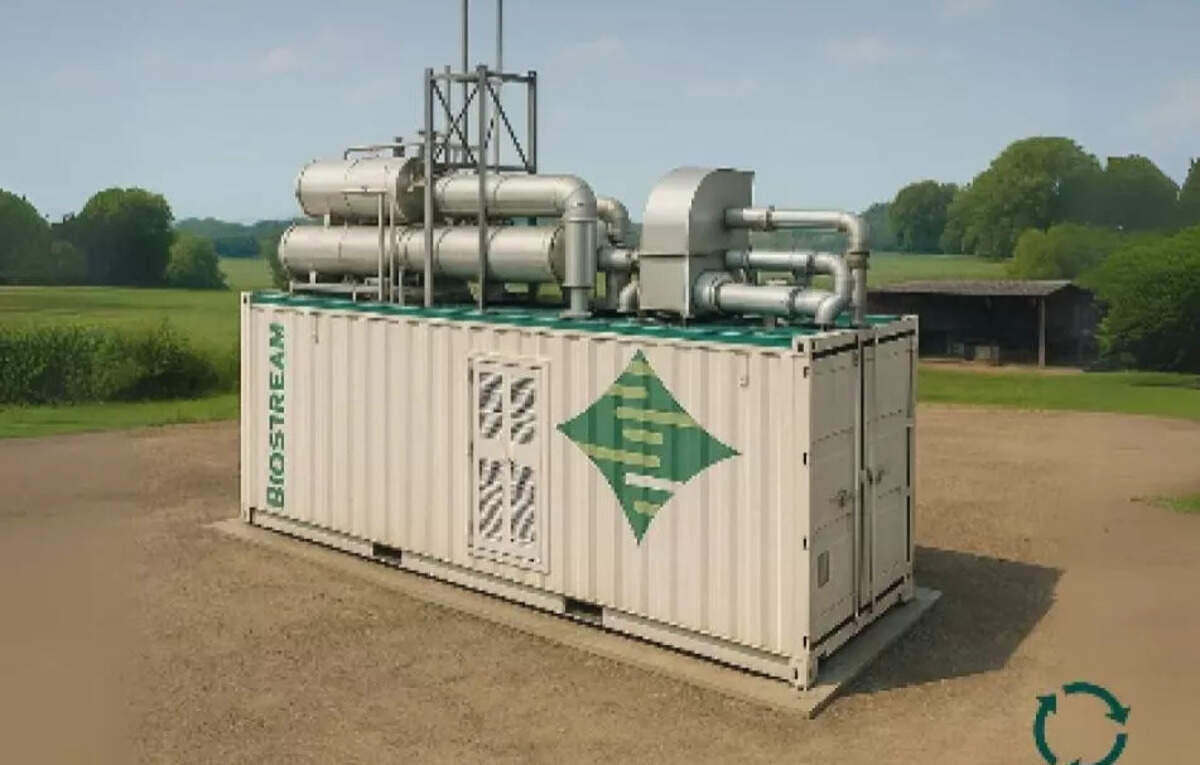
India’s ambitious decarbonization goals, coupled with its escalating energy demand, are creating fertile ground for innovative clean energy solutions. Amidst this dynamic landscape, a compelling investment narrative is emerging from an unexpected source: wastewater. A new collaboration between NetXeroC Pvt Ltd and Ivys Adsorption Inc. is spearheading a transformative approach, converting industrial wastewater into pipeline-grade Bio-CNG. This initiative, aligned with India’s SATAT (Sustainable Alternative Towards Affordable Transportation) program, isn’t just about waste management; it’s about unlocking a significant domestic energy resource, offering a scalable model for industrial decarbonization and presenting a strategic opportunity for investors eyeing the next wave of sustainable growth.
Transforming Industrial Waste into High-Value Biofuel
The strategic partnership between NetXeroC and Ivys Adsorption Inc. marks a pivotal moment in India’s clean energy transition. Their deployment of advanced biogas upgrading technology demonstrates a practical, scalable solution for generating Bio-CNG from industrial wastewater. The technical specifications are impressive: the Ivys Biostream solution boasts methane recovery rates of 98 percent and purity reaching 98 percent. This high efficiency ensures that wastewater, previously an environmental liability, can be reliably transformed into a grid-compatible methane product. The project, initially targeting the recycled paper industry, serves as a blueprint for a circular economy model, creating a new revenue stream for manufacturers grappling with rising energy costs and stringent environmental compliance. What makes this particularly appealing for investors is the system’s low-maintenance, modular design, which makes it ideal for India’s diverse industrial base, including small-to-mid scale industries with fluctuating operational loads and limited space. This isn’t a theoretical concept; NetXeroC is already actively building these solutions on the ground, leveraging proven international technology to accelerate India’s clean energy adoption.
Navigating Energy Market Volatility with Domestic Biofuel Production
The current global energy market underscores the strategic importance of domestic, stable energy sources. As of today, April 18, 2026, Brent Crude trades at $90.38 per barrel, reflecting a notable 9.07% decrease within the day, with prices ranging from $86.08 to $98.97. WTI Crude mirrors this volatility, sitting at $82.59, down 9.41% for the day, having traded between $78.97 and $90.34. This sharp downturn comes after a significant 14-day trend where Brent prices fell from $112.78 on March 30, 2026, to $91.87 on April 17, representing an 18.5% decline. Gasoline prices have also seen a dip, currently at $2.93, down 5.18% today. This inherent unpredictability in global fossil fuel markets highlights the critical need for energy security and cost stability for industrial consumers. Investments in domestic Bio-CNG production, such as the wastewater-to-fuel initiatives by NetXeroC and Ivys, offer a compelling hedge against such market swings. By converting readily available waste into high-purity fuel, industries can reduce reliance on imported fossil fuels, mitigate exposure to price volatility, and achieve significant operational cost savings, thereby creating a more predictable and sustainable profit margin for participating companies.
Investor Focus: Decoding Future Energy Infrastructure Amid Policy Shifts
Investors are keenly observing the broader energy landscape, with frequent inquiries about the future of oil prices, specifically what to predict for Brent by the end of 2026, and the impact of OPEC+ production quotas. While these questions rightfully dominate discussions around conventional energy, they also underscore the inherent uncertainty and geopolitical influences that shape fossil fuel markets. Contrast this with the growing clarity in the renewable energy sector, particularly in India. Upcoming events, such as the OPEC+ JMMC and Full Ministerial meetings on April 18th and 19th, will undoubtedly influence short-term crude price dynamics, alongside weekly inventory reports from API and EIA on April 21st and 22nd, and the Baker Hughes Rig Count on April 24th. These events provide crucial short-term signals for traditional oil and gas. However, investors are increasingly recognizing that the long-term investment thesis for Bio-CNG in India is driven by a different set of, arguably more stable, factors: strong domestic demand, robust government support through initiatives like SATAT, and the rapid deployment of proven technologies. NetXeroC’s strategy of integrating “proven international technology” from Ivys Adsorption is precisely what investors look for – a shortened innovation gap and accelerated time-to-market for scalable clean energy solutions. This approach offers a growth profile less susceptible to geopolitical machinations and more aligned with India’s fundamental energy transition objectives, presenting a differentiated investment opportunity.
Scaling the SATAT Vision: A Blueprint for Sustainable Industrial Growth
India’s SATAT initiative is not merely a policy; it’s a strategic framework designed to foster a robust Bio-CNG ecosystem. The NetXeroC and Ivys Adsorption partnership perfectly encapsulates this vision, moving beyond conceptual planning to tangible, on-the-ground execution. By converting industrial wastewater into high-value Bio-CNG, they are directly contributing to the nation’s goals of reducing reliance on fossil fuels, enhancing energy security, and promoting a circular economy. This model minimizes operational costs for industries and generates new revenue streams from waste, making it an economically attractive proposition beyond just environmental compliance. The emphasis on modularity and high recovery efficiency ensures that these solutions can be rapidly deployed across various industrial scales, maximizing impact and accelerating adoption. For investors, this represents a unique opportunity to participate in the build-out of critical clean energy infrastructure within a supportive regulatory environment. Companies demonstrating effective execution and scalability in this space are well-positioned for substantial growth as India continues its aggressive push towards a sustainable energy future, making wastewater-to-energy projects a compelling component of any forward-looking energy investment portfolio.


