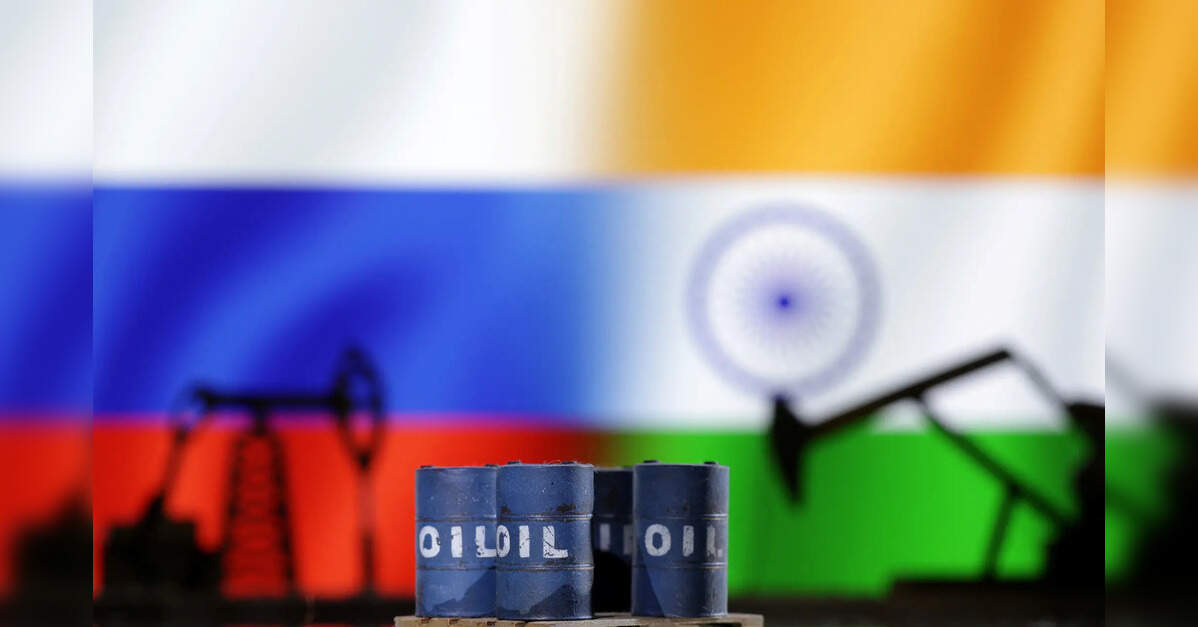
India’s role as a steadfast buyer of Russian crude continues to reshape global energy flows and challenge the efficacy of Western sanctions. Despite concerted efforts to curtail Russia’s oil revenues, New Delhi has consistently demonstrated its commitment to securing discounted crude for its vast refining capacity and burgeoning energy demand. This dynamic creates both opportunities and complexities for energy investors, influencing global supply-demand balances and price trajectories. Our proprietary market insights reveal that India’s strategic purchasing decisions are not only impacting immediate price action but are also setting long-term precedents for crude procurement in a multipolar world. Understanding the nuances of this trade relationship is paramount for any investor navigating the volatile oil and gas landscape.
India’s Persistent Appetite for Russian Crude Amidst Sanction Pressure
The resilience of India’s Russian oil imports has been a defining characteristic of the post-sanctions era. Far from declining, these volumes have steadily climbed, reaching a peak near 2 million barrels per day (bpd) in June of last year. More recently, November saw imports hit 1.77 million bpd, a 3.4% increase over October. Despite initial expectations for a sharp decline following Washington’s sanctions on key Russian producers, December arrivals are projected to exceed 1.2 million bpd, with some trade sources indicating potential to average 1.5 million bpd by month-end. This robust demand is largely driven by the availability of deep discounts and the emergence of non-sanctioned entities facilitating these transactions. The rush to finalize deals ahead of the November 21st deadline for specific Russian entities further bolstered December’s figures, with several such cargoes arriving at Indian ports. Looking into January, while some refiners may pause, overall volumes are still expected to remain substantial, possibly near December levels, as new suppliers step into the market.
Navigating Volatility: Market Prices and Investor Sentiment
This enduring trade flow unfolds against a backdrop of significant market volatility. As of today, Brent crude trades at $91.87 per barrel, reflecting a sharp 7.57% daily decline, while WTI crude sits at $84, down 7.86%. This recent price action is part of a broader trend, with Brent having shed $20.91, or 18.5%, from $112.78 just two weeks ago. Such dramatic swings underscore the uncertainty pervading the energy sector. Many investors are asking about the future trajectory of crude prices, with a common query being: “What do you predict the price of oil per barrel will be by end of 2026?” India’s sustained absorption of Russian crude acts as a crucial floor for Russian supply, preventing a glut that could otherwise exert even greater downward pressure on global benchmarks. Conversely, strong demand from the world’s third-largest crude importer helps to tighten the global market, providing some support amidst bearish news. The balance struck by India’s refiners between securing discounted supply and navigating sanction risks directly impacts this delicate equilibrium, influencing investment strategies in producers, refiners, and related energy infrastructure.
The Evolving Landscape of Indian Refiner Strategies
The commitment to Russian crude is not uniform across all Indian refiners, presenting a nuanced picture for investors. State-owned giants like Indian Oil Corp are reportedly purchasing Russian volumes in line with their pre-sanctions levels, signaling a return to established supply chains. Bharat Petroleum has significantly ramped up its January purchases to at least six cargoes from two in December, while Hindustan Petroleum is actively negotiating for January loadings. This aggressive posture from state refiners suggests a strategic imperative to secure cost-effective feedstock. Conversely, some private refiners are exercising caution. Reliance Industries, a major player, has halted new Russian oil purchases, with refining sources estimating their January volumes will be lower. HPCL Mittal Energy and Mangalore Refinery and Petrochemicals are also reportedly skipping Russian purchases for January. The private refiner Nayara Energy, however, majority-owned by Russian firms, continues to exclusively procure Russian crude, a pattern solidified after facing sanctions from the EU and Britain. These divergent strategies among Indian refiners highlight the complex risk-reward calculations each entity undertakes, influencing their operational resilience and profitability metrics.
Forward Outlook: Key Events Shaping Future Crude Flows
Looking ahead, several key events on the energy calendar will provide crucial context for India’s ongoing crude import strategies and their broader market impact. The upcoming OPEC+ Full Ministerial Meeting on April 18th is a critical juncture. Investors are keenly interested in “What are OPEC+ current production quotas?” and any signals regarding output adjustments will ripple through global markets. Should OPEC+ decide to maintain or even further reduce production, India’s reliable demand for Russian barrels could become an even more significant factor in stabilizing supply. Furthermore, the weekly API Crude Inventory data (April 21st, April 28th) and EIA Weekly Petroleum Status Reports (April 22nd, April 29th) will offer real-time insights into U.S. supply-demand dynamics, which always influence global benchmarks. The Baker Hughes Rig Count on April 24th and May 1st will also provide indicators of future North American production capacity. India’s ability to consistently source Russian crude, often bypassing traditional shipping and insurance channels, represents a structural shift that will continue to interact with these macroeconomic and geopolitical catalysts, shaping crude prices and investment opportunities for the foreseeable future. Investors must remain vigilant, as the interplay between geopolitical pressures, refining economics, and supply chain innovation will define the next phase of the global oil market.


