

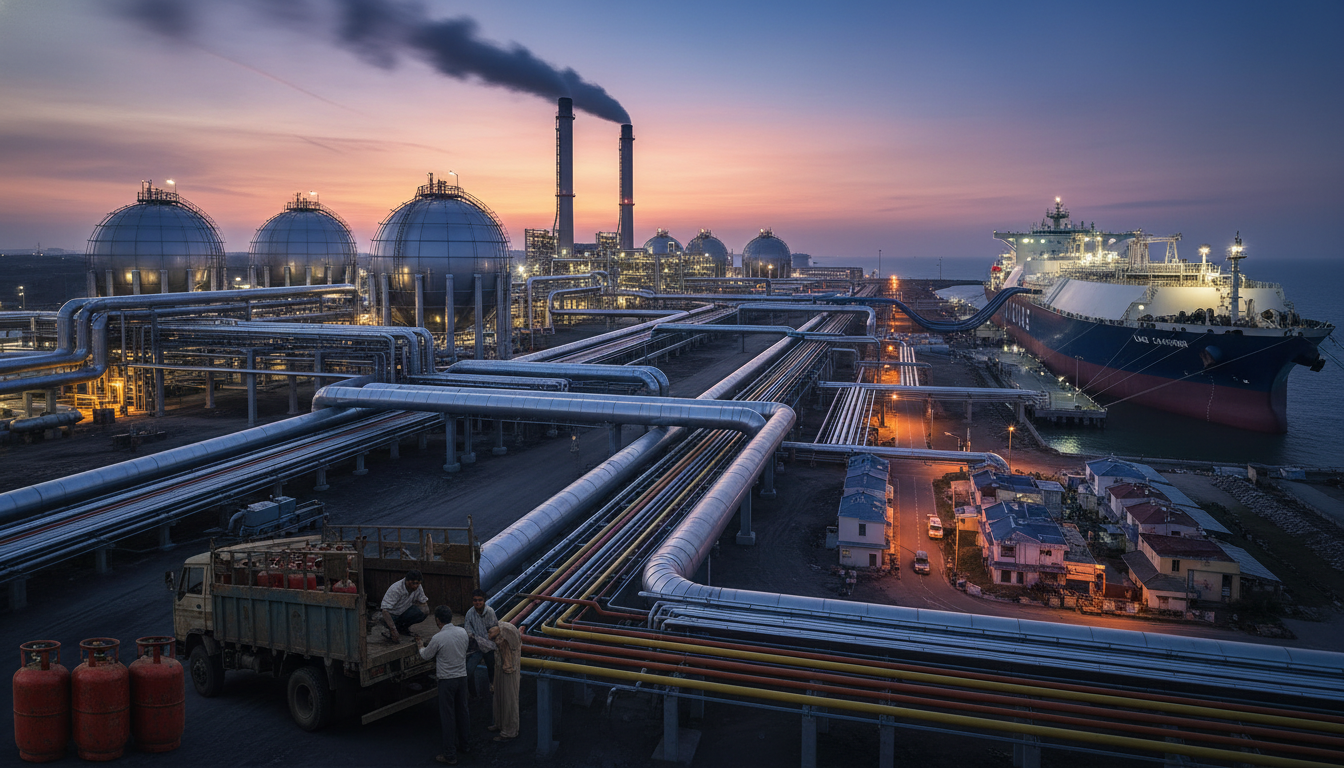
India is strategically harnessing the disruption in global cooking gas markets, exacerbated by geopolitical tensions, to fundamentally reshape its domestic energy distribution landscape. This assertive governmental push aims to rapidly expand the nation’s piped natural gas network, a crucial step designed to significantly curtail expensive liquefied petroleum gas (LPG) imports and alleviate a substantial subsidy burden.
In a series of decisive moves, the Indian government has activated emergency provisions to prioritize the allocation of limited LPG supplies strictly for household consumption. A key policy directive stipulates that customers transitioning to piped natural gas connections will have their LPG cylinder deliveries halted after a three-month grace period. This coercive, yet ultimately beneficial, measure underscores the urgency and commitment behind the national energy transition.
Further bolstering this initiative, regulatory frameworks have been streamlined. Last month, India introduced an order setting clear deadlines for new pipeline approvals. Notably, if authorities fail to respond within the stipulated timeframe, permissions are automatically deemed granted. Concurrently, the new directives mandate cooperation from landowners and local administrative bodies to facilitate necessary access for pipeline infrastructure development. These proactive regulatory changes signal a robust intent to overcome traditional bureaucratic hurdles and accelerate project execution.
Neeraj Mittal, the esteemed Secretary of the Ministry of Petroleum and Natural Gas, aptly characterized the situation on social media, observing a “rapid expansion of the City Gas Distribution (CGD) network across the country,” emphasizing that “a crisis turned into an opportunity.” This sentiment resonates strongly with investors keen on long-term growth stories in emerging energy markets.
The impact of these policies is already evident. Data released on Tuesday revealed that India successfully connected 580,000 new households to its piped gas supply network in March, a significant surge compared to the 342,300 connections made during the same period a year prior. This acceleration highlights the enhanced efficiency and renewed focus on expanding last-mile gas connectivity.
As the world’s second-largest importer of LPG, India traditionally relies on overseas purchases for approximately 60% of its cooking gas requirements. In 2025 alone, the nation imported an estimated 22 million metric tons of LPG, primarily sourced from the Middle East, incurring a formidable cost of nearly $12 billion. This substantial outlay represents a significant drain on foreign exchange reserves and exposes the country to volatile international commodity prices and geopolitical risks.
Geopolitical Volatility Exposes Energy Import Vulnerabilities
The recent disruptions in LPG supplies, triggered by global geopolitical events, have starkly exposed the inherent vulnerabilities within India’s import-dependent energy ecosystem. This exposure has catalyzed a robust policy response aimed at strategically managing both supply and demand dynamics domestically. For oil and gas investors, this signifies a concentrated push towards indigenous energy solutions and infrastructure development, creating attractive entry points.
Industry analysts project a tangible reduction in India’s LPG import dependency. Prashant Vashist, an expert with credit-rating agency ICRA, anticipates a decline of approximately 10% to 15% in LPG imports by 2030, directly attributable to the comprehensive measures being implemented, including the aggressive expansion of the piped gas network. This shift aligns with India’s broader energy strategy, where it already satisfies half of its total natural gas consumption through imports of liquefied natural gas (LNG).
Vashist further elaborated on the financial benefits, stating that this pivot towards natural gas will effectively “cut the companies’ revenue losses on the sale of domestic LPG and would also reduce the subsidy burden.” This financial rationalization is crucial. By steering consumers towards piped gas, which is typically sold at rates closer to prevailing market prices, the government can effectively mitigate fiscal pressures while simultaneously enhancing overall supply chain efficiency within the energy sector. This move offers a more sustainable economic model for gas retailers and the national exchequer.
Currently, the pricing structure for LPG involves a dual system: commercial users purchase LPG at market rates, whereas households, particularly low-income families, receive cooking fuel at heavily subsidized prices, often around 56% cheaper than commercial rates. This subsidy mechanism imposes a significant fiscal strain; in the past year, the limited compensation extended to retailers alone cost the government an estimated $3.4 billion. Reducing this subsidy through increased piped gas adoption represents a direct fiscal saving and a more efficient allocation of public funds.
Leading gas suppliers and distributors have quickly responded to the government’s strategic shift by introducing various incentives. Companies such as Indraprastha Gas, Mahanagar Gas, GAIL Gas, and Bharat Petroleum Corp have been offering reductions in installation charges for new piped gas connections, making the transition more appealing and affordable for households. This collaborative effort between policy and industry is vital for accelerating adoption rates.
Accelerating Connections: A Growth Story for Gas Infrastructure
India’s current household energy landscape includes a vast customer base of 333.7 million LPG users, with 106 million low-income families benefiting from subsidized gas. Historically, local gas suppliers have been connecting between 2 million and 2.5 million new consumers to the piped gas network annually, culminating in a total of 16.3 million connections by the end of December.
However, the recent decisive policy changes are set to dramatically increase this pace. Gajendra Singh, a former member of the Petroleum and Natural Gas Regulatory Board, forecasts that the new policy environment should elevate the annual rate of connections to approximately 7.5 million. This aggressive target projects the national total of piped gas connections to reach an impressive 35 million to 40 million by 2030. Such a rapid expansion presents substantial investment opportunities in gas transmission, distribution infrastructure, and related services.
Singh emphasized the dual benefits of this ambitious expansion, noting that it “would cut LPG imports and offer a safer, more convenient alternative for households.” Beyond the immediate economic advantages of reduced import bills and subsidy savings, the shift to piped natural gas offers environmental benefits through cleaner burning fuel and enhanced safety for consumers compared to bottled LPG. For investors, India’s pivot towards a robust domestic gas infrastructure represents a long-term growth narrative in one of the world’s most dynamic energy markets, underscoring the potential for sustained returns from companies actively participating in this transformative journey.
