

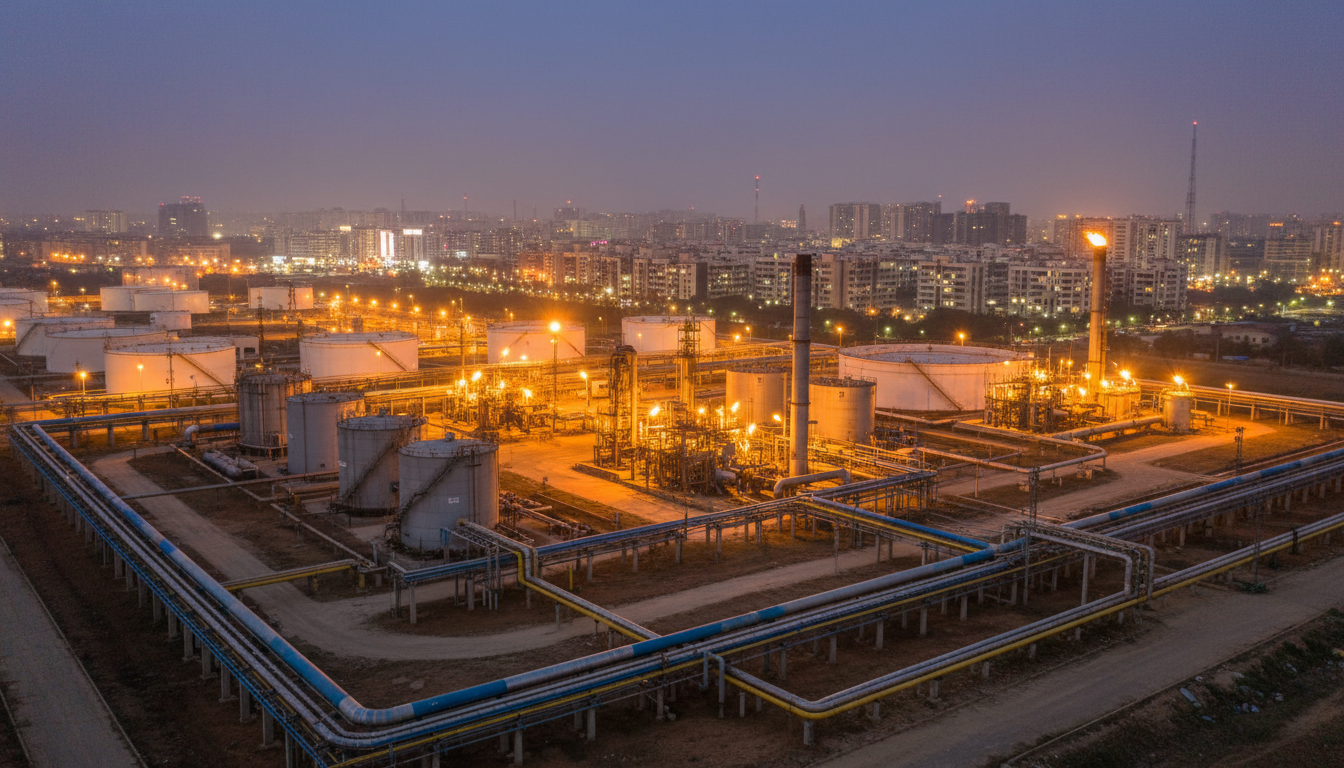
India Accelerates Natural Gas Expansion Amidst Global Energy Volatility
The Indian central administration is aggressively advancing its piped natural gas (PNG) infrastructure, a critical strategic move aimed at bolstering domestic energy security amidst persistent global market volatility. This instability, particularly stemming from geopolitical tensions in the Middle East, underscores the urgency of diversifying and strengthening national energy pathways. As of April 5, 2026, the Ministry of Petroleum & Natural Gas confirmed a significant acceleration in PNG network expansion, signaling robust opportunities for investors in the burgeoning Indian energy sector. This strategic pivot highlights a comprehensive approach to energy management, encompassing both extensive infrastructure development and enhanced oversight of liquefied petroleum gas (LPG) distribution. Investors keenly observing India’s energy landscape will find these developments indicative of a market committed to stability, transparency, and sustainable growth, even as the nation navigates complex global energy supply dynamics.
PNG Expansion Fuels Market Growth and Infrastructure Investment
The government’s ambitious drive for wider PNG accessibility across the nation is gaining formidable momentum. Since March 2026, the program has attracted a substantial influx of over 390,000 new household registrations, translating into a direct pipeline of demand for natural gas suppliers and infrastructure developers. Concurrently, approximately 360,000 of these newly registered connections have already been successfully gasified, demonstrating rapid execution and the government’s steadfast commitment to expediting household access to cleaner, more efficient fuel. This swift deployment provides a clear signal to domestic and international energy companies regarding the government’s sustained commitment to natural gas as a cornerstone of its future energy mix. For stakeholders, this translates into expanded market reach, predictable demand growth, and compelling investment opportunities in infrastructure development and gas distribution networks in the coming years.
Digital Transformation Enhances LPG Distribution Integrity
Parallel to the PNG rollout, the government has dramatically enhanced the integrity of its LPG supply chain through the widespread adoption of Delivery Authentication Code (DAC)-based deliveries. This critical initiative, specifically designed to curtail fuel diversion and elevate transactional transparency across the distribution network, has seen its implementation surge from 53% in February 2026 to a commanding 90% as of yesterday. This advanced digital verification system ensures that LPG cylinders reach their intended recipients, thereby mitigating black market activities and safeguarding consumer interests. For astute investors, this signifies a more secure and predictable revenue stream for LPG distributors, significantly reducing operational risks associated with pilferage and unauthorized sales. The government’s commitment to digital solutions also hints at a broader, strategic intent to modernize India’s entire energy delivery system, promising further efficiencies and technological advancements.
Intensified Enforcement Bolsters Energy Market Confidence
The dramatic increase in DAC-based deliveries forms an integral part of a broader, intensified enforcement campaign by authorities, aimed squarely at ensuring fair practices and preventing irregularities across the LPG distribution network. Since March 2026, regulatory bodies have conducted extensive inspections and monitoring operations, yielding substantial results. Over 50,000 LPG cylinders have been confiscated due to various irregularities, and more than 1,400 show-cause notices have been meticulously served to distributors suspected of malpractices. Furthermore, 36 distributorships have faced temporary suspensions, underscoring the government’s zero-tolerance policy for illicit activities that undermine market integrity. These decisive regulatory actions are designed to instil greater confidence among both consumers and investors, assuring a level playing field and significantly reducing the financial exposure of legitimate market participants to fraudulent schemes. The emphasis on robust regulatory vigilance strengthens the overall investment climate within the Indian energy sector, making it a more attractive proposition for long-term capital deployment.
Ensuring Robust Supply and Broadening Energy Accessibility
Despite the rigorous enforcement activities, the Ministry has unequivocally confirmed that the domestic LPG supply remains exceptionally stable, with absolutely no reported shortages impacting distributors across the nation. This remarkable stability is further evidenced by a record single-day delivery of over 5.1 million LPG cylinders, showcasing the inherent resilience and operational efficiency of the country’s extensive logistical network. To strategically broaden energy accessibility, particularly for vulnerable populations such as migrant workers and low-income households, the government has championed the sale of five-kilogram free trade LPG cylinders. In a single day, over 90,000 of these smaller cylinders were successfully sold, requiring only valid identification for purchase, thereby strategically removing the barrier of address proof. This inclusive initiative not only addresses critical aspects of social equity but also significantly expands the customer base for LPG providers, effectively opening up previously underserved market segments and promising sustained demand.
Digital Adoption and India’s Future Energy Outlook
The digital transformation of India’s energy sector continues its rapid ascent, with online LPG bookings now accounting for a remarkable 95% of all transactions industry-wide. This widespread adoption of digital platforms significantly enhances operational efficiency, substantially reduces administrative overheads, and provides greater convenience for millions of consumers, who are actively encouraged to utilize these online channels rather than making physical visits to distributors. Looking ahead, the Ministry has unequivocally reaffirmed its commitment to prioritizing domestic energy supply and critical sectors while vigorously promoting the adoption of alternative fuels. The strategic encouragement of PNG, induction cooking, and electric cooking solutions forms an integral part of a comprehensive national energy management strategy aimed at diversifying the national energy portfolio, reducing reliance on traditional fuels, and ultimately bolstering India’s energy independence. This forward-looking approach presents compelling opportunities for innovation and substantial investment in renewable energy technologies and smart grid infrastructure.
Investment Implications of India’s Dynamic Energy Strategy
India’s proactive stance on energy infrastructure development and distribution integrity offers a compelling narrative for investors seeking high-growth opportunities. The rapid expansion of PNG networks promises sustained revenue growth and operational scalability for gas utilities and associated infrastructure companies. Simultaneously, the enhanced transparency and rigorous enforcement within the LPG sector significantly mitigate operational risks and secure revenue streams for distributors and suppliers. The government’s dual focus on supply stability and social inclusion strategically expands market reach and fosters broader consumer adoption. Its embrace of digital platforms and commitment to alternative fuels clearly signals a long-term strategic direction towards a diversified and sustainable energy future. For funds and corporations looking to capitalize on a rapidly expanding and increasingly stable energy market, India’s current policies present a robust and attractive investment proposition, underpinned by strong regulatory oversight and a clear vision for energy security and sustainability in the coming decades.
