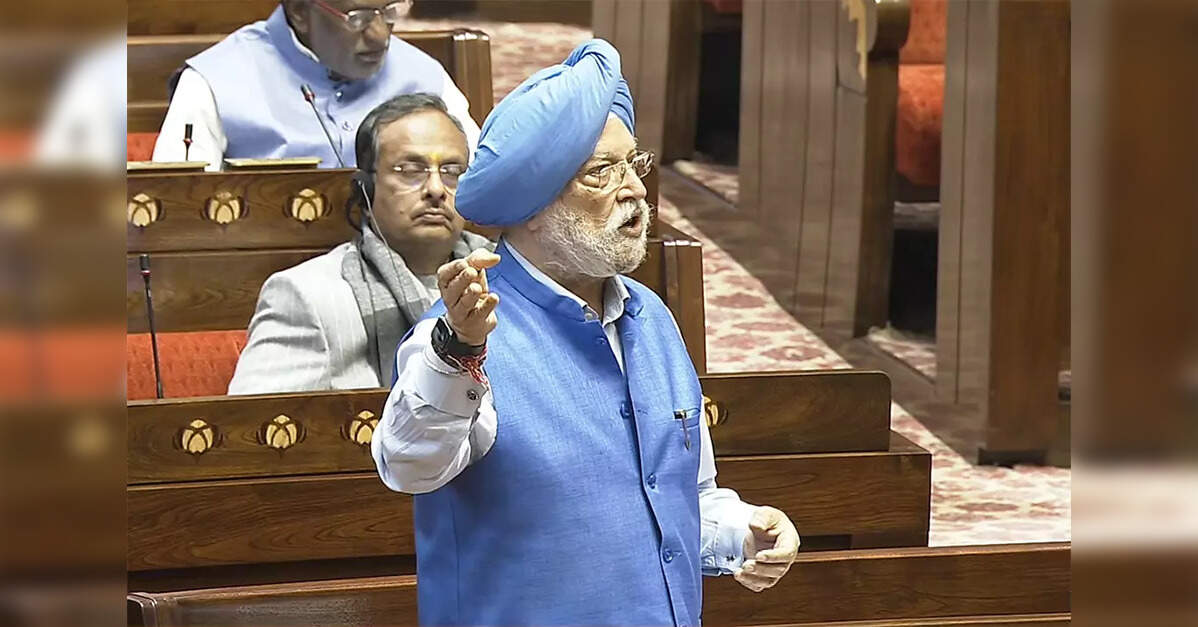
India’s petroleum reserves are sufficient to meet domestic demand for about 74 days in the event of global disruptions, Oil Minister Hardeep Singh Puri told the Rajya Sabha on Monday, reports PTI.
Replying to supplementary questions during Question Hour, Puri said a fast-growing economy like India must maintain a robust and secure petroleum reserve to avoid vulnerability during periods of global turbulence. He noted that India, now the world’s third-largest crude oil consumer, has a diversified refining base on both the west and east coasts.
Citing International Energy Agency (IEA) benchmarks, the minister said countries are advised to hold around 90 days of oil reserves. “If you look at our stocks across strategic caverns, refineries, floating storage at ports and petroleum products, it adds up to about 74 days,” he said, adding that while the level provides comfort, the government could consider increasing reserves over time.
Strategic reserves and capacity
Puri said India currently has the world’s fourth-largest refining capacity at around 260 million tonnes per annum, which is set to rise to 320 million tonnes, and is also the fifth-largest exporter of petroleum products globally. Strategic reserves are held not just in underground caverns but also across refineries and ports.
In a written reply, the minister said the government, through Indian Strategic Petroleum Reserve Ltd (ISPRL), has built crude storage capacity of 5.33 million metric tonnes at three locations in Andhra Pradesh and Karnataka, with plans to start a facility in Odisha. At present, around 4.094 million tonnes of crude—about 77 per cent of capacity—is stored in these caverns, with half the total capacity earmarked for commercial use.
Cost advantage from market cycles
Puri also highlighted how India benefited from volatile global oil prices. Strategic reserves were filled to full capacity during April-May 2020, when crude prices had crashed during the Covid-19 period, resulting in notional savings of about ₹5,000 crore. The weighted average cost of crude procured for the reserves using government budgetary support remains roughly half of prevailing oil prices, he added.