

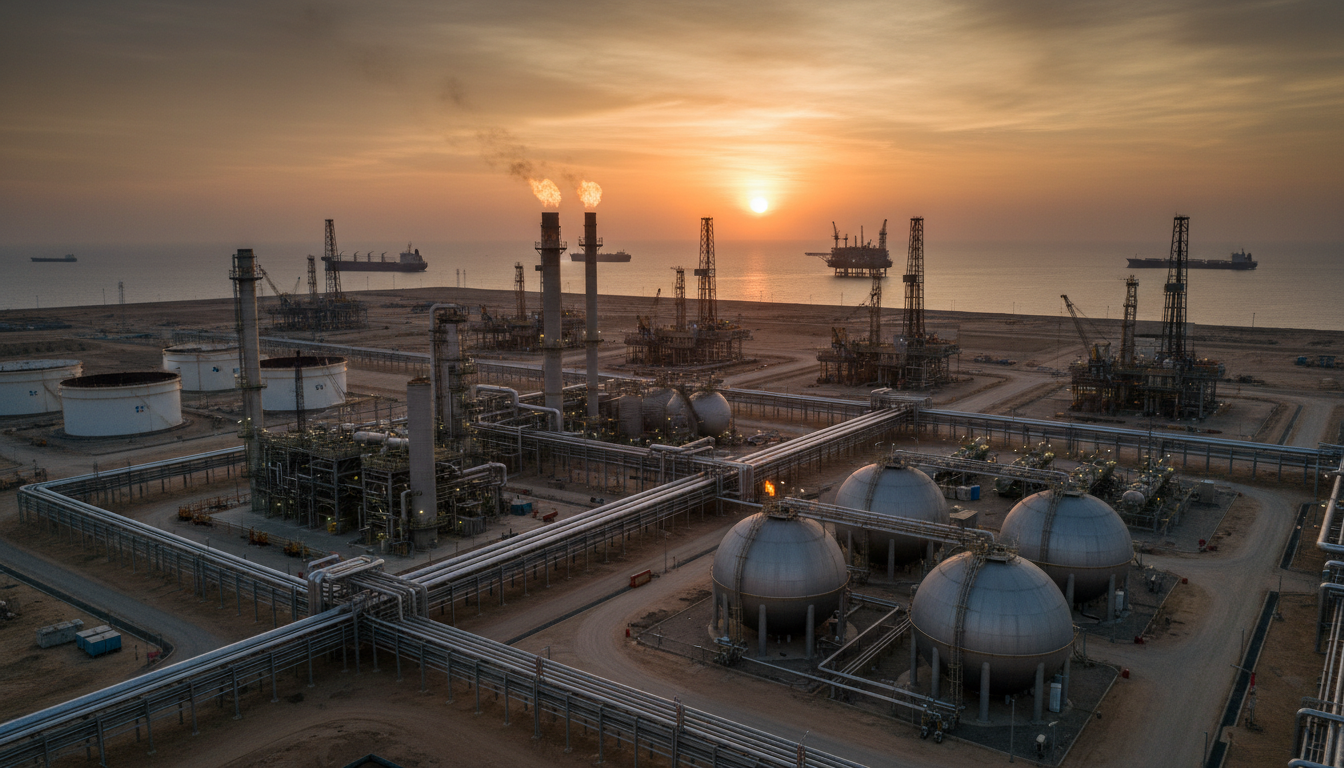
Strait of Hormuz Transit Signals Complexities in West Asia Energy Corridors
In a significant development for global energy markets, an Indian liquefied petroleum gas (LPG) carrier, the Green Sanvi, has successfully navigated the highly sensitive Strait of Hormuz, arriving safely en route to India. This transit, confirmed by Gujarat Deputy Chief Minister Harsh Sanghavi on April 4 via social media, has been lauded as a diplomatic achievement for India amidst escalating geopolitical tensions in West Asia. For investors monitoring the volatile energy landscape, this event offers a crucial data point on the navigability of key chokepoints and the delicate balance between regional conflict and essential trade flows.
Sanghavi’s declaration of a “victory of Indian diplomacy” underscores the critical nature of this maritime passage. The Strait of Hormuz, connecting the Persian Gulf with the Arabian Sea, remains the world’s most vital oil transit chokepoint, through which a substantial portion of global seaborne crude oil and LPG passes daily. India, a rapidly growing energy consumer, relies heavily on these maritime routes for its extensive energy imports, making the security and unhindered passage of its vessels through West Asia paramount for its economic stability and energy security. The safe transit of the Green Sanvi, therefore, provides a momentary sigh of relief for stakeholders concerned about supply chain disruptions.
Geopolitical Volatility and Maritime Risk Premiums
The successful journey of the Green Sanvi unfolds against a backdrop of intensifying military and political friction in West Asia, involving key players like the US, Israel, and Iran. This protracted conflict has cast a long shadow over maritime commerce in the region, introducing significant risk premiums into crude oil and LPG pricing. Concerns about potential blockades or attacks on shipping vessels have repeatedly fueled market anxieties, highlighting the vulnerability of global energy supplies to regional instability. While the Strait of Hormuz is often characterized by various actors as being ‘choked off,’ the consistent, albeit tense, passage of numerous vessels, including multiple India-linked ships in recent weeks, demonstrates a complex reality where geopolitical maneuvering coexists with the imperative of international trade.
Market participants keenly observe these developments, as any significant disruption in the Strait could send shockwaves through global energy prices, impacting everything from refining margins to consumer costs. The resilience of Indian shipping in continuing to use this route signals both a necessity and, potentially, an underlying confidence in diplomatic and security arrangements that allow for such transits, even under duress. This ongoing navigation provides critical insights into the real-time operational risks for the tanker market and insurance underwriters.
India’s Diplomatic Imperative and Energy Strategy
India’s proactive engagement in ensuring its energy supplies, coupled with the diplomatic overtone attached to this recent transit, showcases the nation’s strategic focus on securing its energy lifelines. With a growing economy and an expanding population, India’s demand for energy, particularly LPG for domestic consumption, is on an upward trajectory. Any impediment to the flow of these resources could have severe domestic consequences, making robust diplomatic efforts to maintain regional stability and secure shipping corridors an economic imperative. The continued movement of Indian vessels through the Strait despite heightened tensions reflects a calculated strategy to protect national interests and maintain the integrity of its energy supply chain.
The official acknowledgment by Indian authorities, emphasizing “Indian diplomacy,” points to the multifaceted nature of energy security. It involves not just naval presence or risk mitigation strategies but also active diplomatic channels and bilateral engagements that facilitate safe passage even when the broader regional atmosphere is fraught with peril. For investors, this highlights the often-underestimated role of international relations in commodity markets.
Iran’s Response and Bilateral Ties
Adding another layer to this complex narrative, the Consulate General of Iran in Mumbai responded to Sanghavi’s remarks on Saturday, underscoring the enduring historical and civilizational bonds between India and Iran. The Iranian mission explicitly referenced the centuries-old welcome extended to Parsis or Zoroastrians who migrated from Iran to Sanjan in Gujarat nearly 1,300 years ago, reaffirming their commitment to strengthening bilateral friendship and cooperation. This diplomatic outreach from Tehran, amidst direct threats from the US President Donald Trump, who on Saturday renewed warnings for Iran to open the Strait of Hormuz by Monday or face “devastating consequences,” presents a nuanced picture of regional dynamics.
The Iranian statement suggests a willingness to maintain functional relations with key trading partners like India, even while engaging in confrontational rhetoric with Western powers. For investors, this duality is critical. It implies that while overarching geopolitical tensions involving the US and Iran remain high, specific bilateral relationships and historical ties might still play a role in mitigating direct impacts on essential trade routes. The ongoing dialogue, however subtle, provides a glimmer of stability for a region perpetually on the brink, and thus warrants close attention from those with stakes in the oil and gas sector.
Investment Outlook Amidst Enduring Uncertainty
The safe passage of the Green Sanvi, while a positive signal, does not eradicate the deep-seated uncertainties inherent in West Asia’s energy corridors. Investors must continue to factor in the persistent geopolitical risks, the potential for sudden escalation, and the significant implications for maritime insurance costs and commodity prices. The Strait of Hormuz will undoubtedly remain a focal point for global energy market analysis. The interplay of diplomatic initiatives, military posturing, and the sheer necessity of maintaining global energy flows will continue to define the operational environment for oil and gas companies reliant on these routes.
Moving forward, the ability of nations like India to navigate these complex waters, both diplomatically and operationally, will serve as a bellwether for the stability of global energy supply chains. For sophisticated investors, continuous monitoring of official statements, maritime intelligence, and evolving geopolitical alliances will be crucial in formulating robust investment strategies that account for both the risks and opportunities presented by this volatile yet indispensable region.
