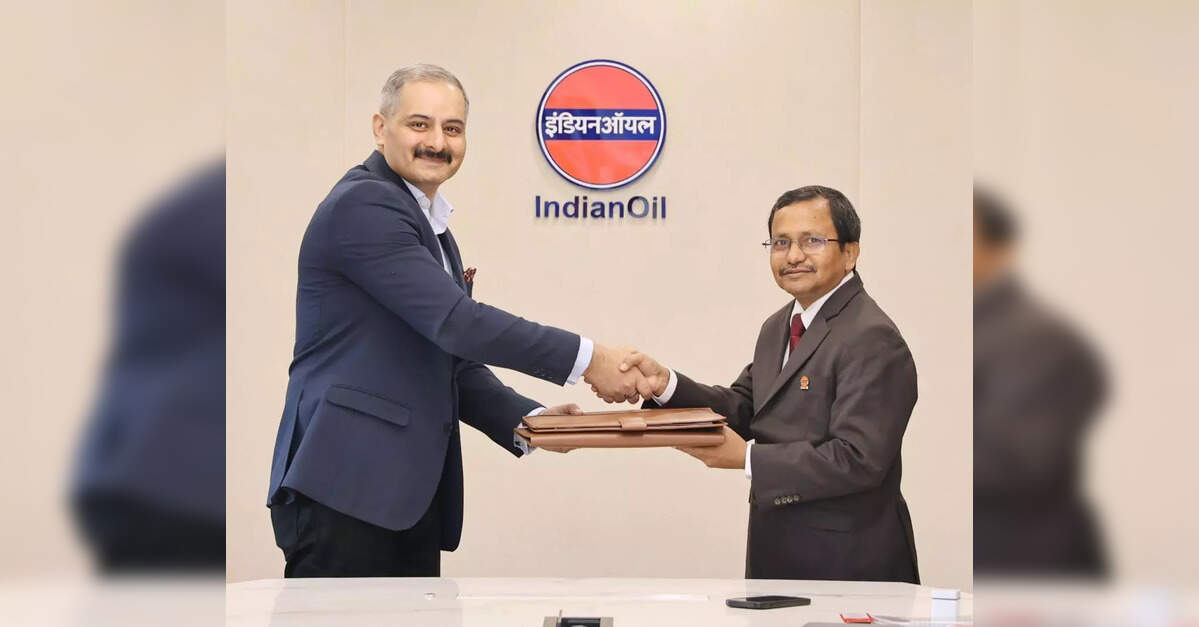
The global energy landscape is continually evolving, driven by both market fundamentals and strategic pivots towards sustainability. Indian Oil Corporation Ltd’s recent Memorandum of Understanding (MoU) with Re Sustainability to develop a nationwide used lubricating oil recycling ecosystem represents a significant move in this direction. This collaboration, aimed at establishing a circular economy framework for India’s lubricants sector, signals a critical shift for one of the world’s largest energy consumers. For astute investors, this initiative offers a lens into the future of demand dynamics for virgin crude, the growing importance of environmental, social, and governance (ESG) factors, and emerging investment opportunities within the resource recovery sector.
Strategic Circularity: Reshaping India’s Lubricant Value Chain
Indian Oil’s partnership with Re Sustainability is a clear strategic maneuver to enhance resource efficiency and reduce reliance on imported virgin crude for base oils. The core of this initiative involves creating a robust national platform for the collection, reverse logistics, and re-refining of used lubricating oil from both industrial and automotive sectors. The ambitious plan targets an annual collection of approximately 100 kilotonnes of used oil. Furthermore, the collaborators intend to establish a Special Purpose Vehicle (SPV) to oversee the development of re-refining infrastructure, including a facility with a processing capacity of 50–100 KTA (kilotonnes per annum) expected to be operational within three years. This facility will produce high-quality Re-Refined Base Oil (RRBO), specifically Group I and Group II+ base oils, meeting stringent BIS and international standards. This commitment by a national oil major underscores a proactive approach to building sustainable value chains, signaling a long-term vision for material efficiency and reduced import dependency in a critical energy segment.
Market Implications Amidst Volatile Crude Prices
While the immediate impact on global crude prices from a 100 KTA re-refining capacity might seem modest on the surface, its long-term implications for demand patterns are noteworthy. As of today, Brent crude trades at $92.99, reflecting a slight dip of 0.27% within a day range of $92.57-$94.21. Similarly, WTI crude stands at $89.44, down 0.26%, oscillating between $88.76 and $90.71. These figures come against a backdrop where Brent has seen a notable decline of $7.07, or approximately 7%, over the past 14 days, falling from $101.16 on April 1st to $94.09 on April 21st. The consistent investment in used oil recycling, while focused on the lubricants segment, directly mitigates demand for virgin crude-derived base oils. This initiative, when scaled across a rapidly industrializing economy like India, contributes to a broader trend of demand erosion for conventional crude, albeit gradually. Investors must recognize that such circular economy projects, even if localized initially, represent a structural shift that will increasingly factor into long-term crude demand forecasts and influence price stability over time. The 100 kilotonnes annual collection, while equivalent to roughly 2,000 barrels per day of crude input avoidance, establishes a significant precedent for future expansion and adoption across the energy value chain.
ESG Credentials and Shifting Investor Sentiment
Our proprietary data indicates that investors are increasingly scrutinizing the sustainability practices of energy companies, with questions frequently surfacing about long-term oil price predictions and the factors driving them. Indian Oil’s venture into used oil recycling directly addresses several key ESG concerns, positively influencing investor perception. The project aims to reduce environmental impact by transitioning from waste management to resource recovery, aligning with global efforts to minimize carbon footprints and promote sustainable resource utilization. Furthermore, the initiative includes the recycling of plastic lubricant containers, adhering to Extended Producer Responsibility (EPR) norms and demonstrating a holistic approach to environmental compliance. For investors weighing the future viability of energy giants, such proactive measures in circularity and waste reduction are becoming non-negotiable. Companies that demonstrate a clear commitment to sustainable practices, like Indian Oil’s move here, are better positioned to attract capital from a growing pool of ESG-mandated funds, potentially offering a buffer against market volatility and enhancing long-term shareholder value. This strategic pivot provides a tangible answer to the underlying drivers of long-term oil price forecasts: demand is not just about consumption, but also about the source of that consumption, increasingly favoring recycled and sustainable inputs.
Forward Outlook: Growth Avenues and Future Demand Signals
The commissioning of the 50-100 KTA re-refining facility within three years marks a crucial milestone for Indian Oil and the broader Indian energy sector. This forward-looking approach creates new growth avenues in the resource recovery space, beyond traditional upstream and downstream operations. As investors look ahead, they should consider how such initiatives will impact future energy outlooks. While weekly reports like the EIA Weekly Petroleum Status Report (due April 22nd and April 29th) and the API Weekly Crude Inventory (April 28th and May 5th) focus on immediate supply-demand dynamics, the underlying shift towards circularity will increasingly be captured in more comprehensive long-term analyses. The EIA Short-Term Energy Outlook, set for release on May 2nd, will offer a broader perspective, and it is within these longer-term forecasts that the cumulative impact of such projects becomes visible, potentially influencing the “price of oil per barrel by end of 2026,” a key question on many investors’ minds. The success of this collaboration could spur similar ventures, not just in India but across other developing economies seeking to optimize resource utilization and enhance energy security. For investors, this signals potential for new partnerships, technology investments, and market expansion in the specialized field of re-refining and circular economy solutions, moving beyond conventional energy plays.


