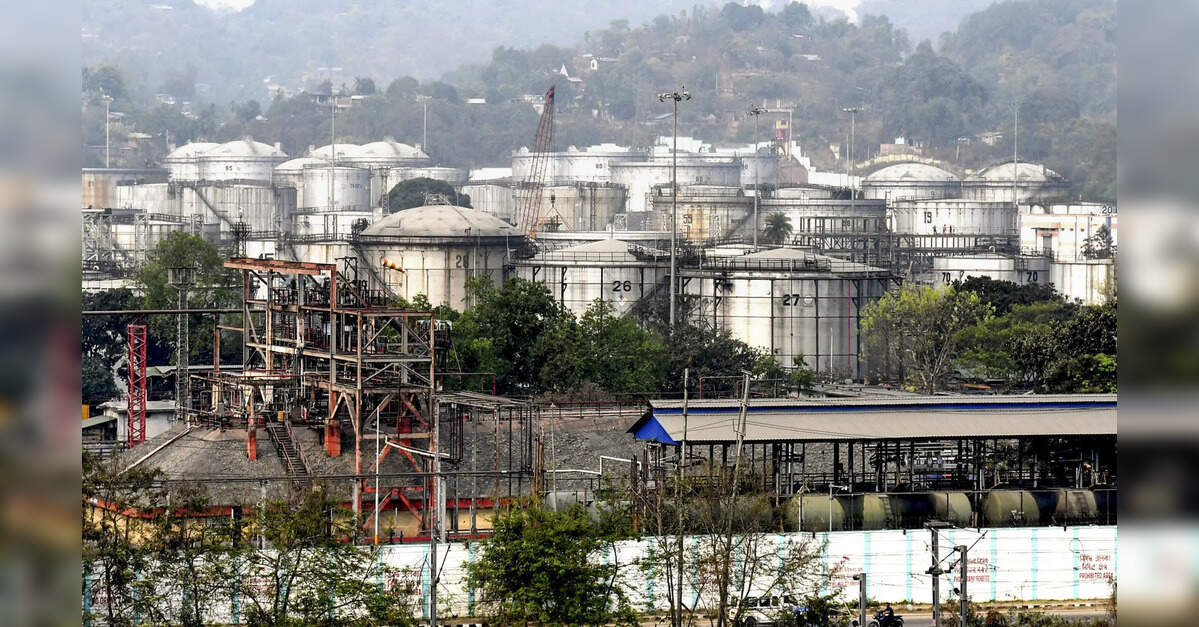
The intricate web of global energy supply chains is constantly tested by geopolitical shifts, and a recent development in Himachal Pradesh, India, offers a potent illustration. While domestic liquefied petroleum gas (LPG) supplies are assured by Indian Oil Corporation (IOC), the region’s commercial sector is grappling with a significant shortage of LPG cylinders, a direct consequence of ongoing tensions in West Asia. This localized disruption, affecting an estimated 55,000 commercial connections, serves as a critical reminder for investors about the fragility of downstream energy markets and the critical role of state-backed entities in maintaining stability amidst international volatility.
Geopolitical Headwinds and Commercial LPG Disruption
The current shortfall of commercial LPG cylinders in Himachal Pradesh stems directly from the broader “West Asia crisis,” as confirmed by Indian Oil Corporation officials. While the three bottling plants in Baddi, Una, and Jalandhar continue to ensure a steady flow of domestic LPG to the state’s 155 distributors, the commercial segment faces a stark reality: supply for larger 47 kg and 425 kg industrial cylinders has been interrupted. Even the smaller 19 kg commercial cylinders, crucial for hospitals, educational institutions, and the vital tourism sector, are being rationed from existing dealer stocks. This situation has led to acute operational challenges for local businesses, with restaurant owners like Arun Bhatia and Shyam Sharma reporting severe impacts on their daily operations, including a cessation of commercial cylinder supply for three days. The inability to secure essential commercial fuel underscores the direct economic repercussions of distant geopolitical conflicts on local economies, creating an environment of uncertainty for businesses reliant on consistent energy inputs.
Market Resilience Amidst Shocks: Investor Insights
For investors tracking the global energy landscape, the situation in India provides a nuanced perspective on market resilience. As of today, Brent crude trades at $92.85, marking a -0.42% dip within a day range of $92.57-$94.21. WTI crude similarly sits at $89.39, down -0.31% over the same period, trading between $88.76 and $90.71. Gasoline prices are also experiencing a slight decline, currently at $3.11, down -0.64%. These figures reflect a market attempting to absorb various inputs, from supply concerns to demand fluctuations. Our proprietary data indicates a 14-day Brent trend from $101.16 on April 1st to $94.09 on April 21st, representing a notable decline of $7.07 or approximately 7%. This downward trend, even with geopolitical tensions, suggests a complex interplay of factors, including potential demand concerns or increased supply assurance from other regions. Investors frequently ask about the future direction of crude prices, with questions such as “is WTI going up or down?” highlighting the prevailing uncertainty. While specific short-term movements are always subject to immediate news, the broader context of localized supply disruptions, even when domestic supplies are stable, contributes to the overall narrative of energy market volatility that influences investor sentiment and hedging strategies.
Navigating the Future: Upcoming Data and Policy Responses
The Indian Ministry of Petroleum’s planned high-level meeting to assess commercial cylinder demand is a critical event for understanding potential policy interventions and future supply stabilization efforts. From a broader market perspective, investors should closely monitor upcoming energy reports for clues on global supply-demand balances that will inevitably influence regional pricing and availability. The EIA Weekly Petroleum Status Reports, scheduled for April 22nd, April 29th, and May 6th, will offer crucial insights into U.S. crude oil and product inventories, refinery utilization, and demand indicators. These are vital for forecasting global market conditions. Furthermore, the Baker Hughes Rig Count, set for release on April 24th and May 1st, provides a forward-looking view of drilling activity and potential future production capacity. The EIA Short-Term Energy Outlook on May 2nd will offer comprehensive projections for global energy markets, directly addressing investor queries about long-term price trajectories, such as “what do you predict the price of oil per barrel will be by end of 2026?” These recurring data releases, coupled with the ongoing geopolitical landscape, will shape the environment for energy companies operating in and supplying to India, influencing investment decisions and strategic planning.
Investment Implications and Risk Mitigation Strategies
For investors with exposure to Indian energy companies, the current situation underscores the importance of supply chain resilience and governmental support. While Indian Oil Corporation has effectively ring-fenced domestic consumers, ensuring stable supply from its Baddi, Una, and Jalandhar bottling plants, the commercial sector remains vulnerable. This dichotomy suggests that companies with diversified portfolios and robust domestic infrastructure are better positioned to weather such storms. The appeal to hotel and restaurant owners to utilize domestic connections for staff feeding, while a practical short-term measure, highlights a potential shift in consumption patterns or a grey market dynamic that could impact official commercial sales volumes in the long run. Investors must evaluate the regulatory landscape and the government’s ability to balance commercial imperatives with social stability. The assurance of sufficient domestic stocks and the plea to avoid panic buying indicate a proactive stance by authorities, which can mitigate extreme market reactions. However, the prolonged absence of commercial cylinder supply for three days, as reported by local businesses, signals an underlying vulnerability that requires strategic, long-term solutions beyond immediate crisis management. Companies demonstrating agility in sourcing, logistics, and customer diversification will be better poised for sustained performance in this evolving energy market.


