

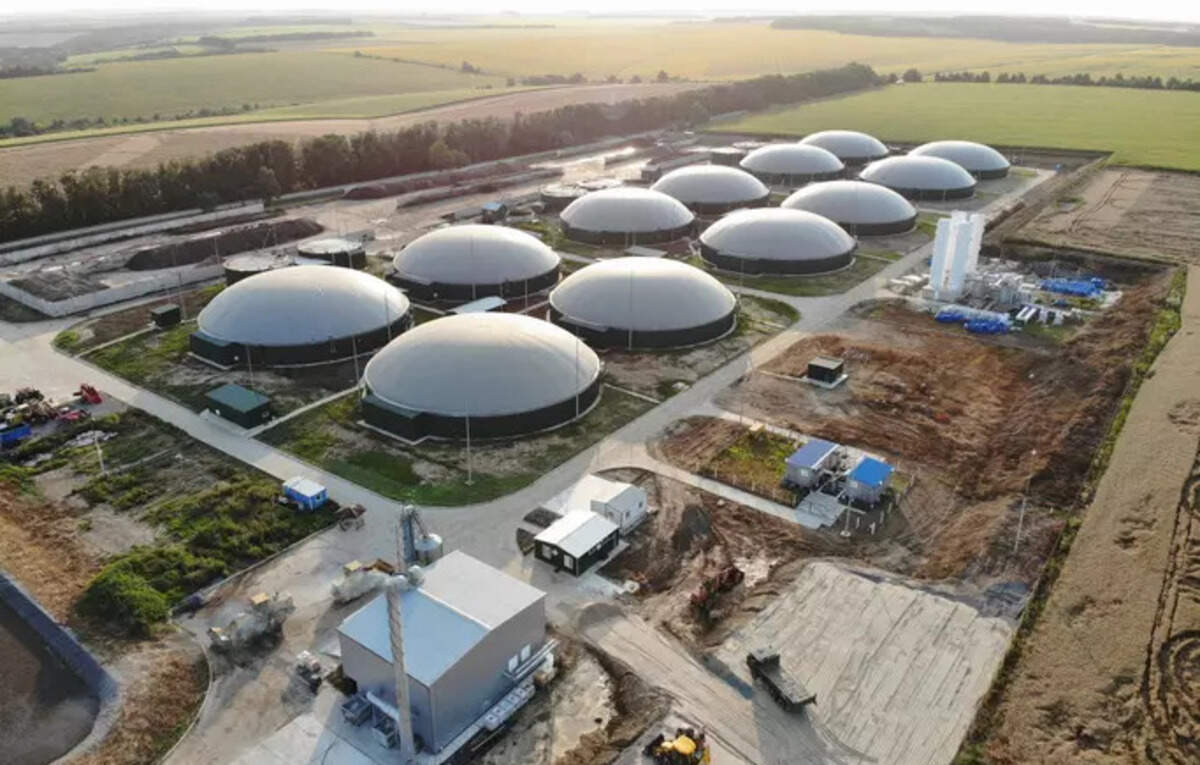
Indian Oil’s $145 Million Biogas Push Signals Strategic Energy Transition
The Indian energy landscape is witnessing a pivotal shift as major players strategically pivot towards sustainable solutions. In a move set to significantly bolster the nation’s burgeoning biofuel sector, a newly formed joint venture, Indian Oil GPS Renewables (IGRPL), has committed approximately Rs 1,200 crore, equivalent to roughly $145 million, towards the establishment of ten state-of-the-art Compressed Biogas (CBG) facilities. This substantial capital allocation represents a critical development for investors closely monitoring the dynamic interplay between conventional oil and gas operations and the accelerating embrace of renewable energy sources in India.
Formed in June 2024, IGRPL is a strategic collaboration between the prominent energy conglomerate Indian Oil Corporation (IOC) and the specialized renewable energy firm GPS Renewables. This partnership’s core mandate is the rapid development and operationalization of a robust CBG infrastructure. The joint venture has set an ambitious target to bring all ten plants online within a year, with a firm commissioning deadline slated for March 2026. This aggressive timeline underscores the strategic imperative and urgency driving domestic biofuel production, a key component of India’s broader energy transition objectives and a compelling indicator for those seeking investment opportunities in the clean energy space.
Strategic Investment Underpins India’s Biofuel Future
Each of the ten planned facilities will boast an impressive capacity to produce 15 tonnes per day (TPD) of biogas. Based on intricate technological considerations and feedstock availability, the estimated capital expenditure for constructing each individual plant is approximately Rs 120 crore. This modular investment strategy facilitates efficient scalability and widespread deployment across the chosen regions of Uttar Pradesh, Haryana, Chhattisgarh, and Andhra Pradesh. These states have been strategically selected due to their rich agricultural output, providing abundant feedstock, and their significant energy demand, ensuring a ready market for the produced CBG. Upon full operation, the combined annual capacity of these ten plants will reach a substantial 52,500 tonnes per annum, marking a significant augmentation of India’s clean energy infrastructure and offering a tangible asset base for investors.
This substantial investment directly aligns with India’s overarching national strategy to diversify its energy matrix and progressively reduce its reliance on imported fossil fuels. For investors entrenched in the oil and gas sector, these projects present a compelling avenue to engage with the rapidly expanding renewable energy market, particularly within a nation characterized by robust and sustained energy consumption growth. The focus on CBG, specifically derived from agricultural waste such as rice straw, also addresses critical environmental concerns by effectively converting biomass that might otherwise be burned or left to decompose into valuable and sustainable energy resources. This dual benefit of energy security and environmental stewardship makes these projects particularly attractive from an ESG (Environmental, Social, Governance) investment perspective.
Project Economics and Robust Funding Structure
The financial architecture underpinning IGRPL’s Rs 1,200 crore capital expenditure is strategically structured with a balanced 30 percent equity and 70 percent debt model. This capital deployment strategy is designed to optimize financial leverage while ensuring a solid equity base. Both Indian Oil Corporation and GPS Renewables are committing 15 percent equity each, collectively forming the 30 percent equity portion of the total investment. This balanced financing approach demonstrates the strong commitment from both partners, signaling confidence in the project’s viability and long-term returns. Investors will note that such a debt-heavy, yet strategically backed, structure can offer attractive returns on equity if project execution and operational efficiencies are met, a common feature in infrastructure and renewable energy developments.
The selection of key agricultural states like Uttar Pradesh, Haryana, Chhattisgarh, and Andhra Pradesh is not arbitrary. These regions are major agricultural hubs, ensuring a consistent and cost-effective supply of biomass feedstock, a critical factor for the sustained profitability of CBG plants. The ability to source agricultural waste, such as rice straw, locally minimizes transportation costs and strengthens the regional agricultural economy by providing an additional revenue stream for farmers. This integrated approach not only secures the raw material supply but also fosters local economic development, further enhancing the project’s sustainability profile for discerning investors.
The Growing Promise of Compressed Biogas in India’s Energy Mix
Compressed Biogas holds immense potential as a clean, indigenous energy source. It can be utilized as a direct substitute for natural gas in various applications, including industrial processes, commercial use, and as a transportation fuel. This versatility makes CBG a valuable component in India’s energy diversification strategy, reducing the import bill for fossil fuels and enhancing energy security. The technological advancements in biogas production, coupled with government incentives and a rising demand for cleaner fuels, create a fertile ground for market expansion. For investors, this represents a significant growth vector within the broader Indian energy sector, offering exposure to a market with strong governmental backing and inherent demand drivers.
The collaboration between an established energy major like Indian Oil and a specialized renewable firm like GPS Renewables creates a powerful synergy. Indian Oil brings extensive experience in energy infrastructure, logistics, and market reach, while GPS Renewables contributes its technical expertise in biogas plant development and operation. This combination mitigates risks and enhances the probability of successful project execution, a crucial consideration for financial stakeholders. The ability to leverage existing infrastructure and distribution networks of IOC could provide a significant competitive advantage in bringing CBG to market efficiently.
Investor Outlook: A Green Horizon in Indian Energy
For investors focused on the Indian energy market, this $145 million commitment to CBG projects by IGRPL represents more than just a capital expenditure; it signifies a definitive strategic direction. It underscores the accelerating pace of India’s energy transition and the willingness of its largest energy companies to lead the charge. Opportunities lie not only in direct investment in such ventures but also in ancillary industries, technology providers, and logistics support that will inevitably grow around this expanding biofuel ecosystem. The push for indigenous, clean energy sources also aligns with global climate goals and growing investor demand for sustainable and ESG-compliant portfolios.
The aggressive timeline to commission these ten plants by March 2026 highlights the urgency and scalability of India’s renewable energy ambitions. As these projects come online, they will provide valuable operational data and proof points for future expansion, potentially attracting further investment and fostering a robust CBG market. Market participants should view this investment as a strong signal of future growth in India’s green energy infrastructure, offering compelling long-term prospects within a rapidly evolving global energy paradigm.
